
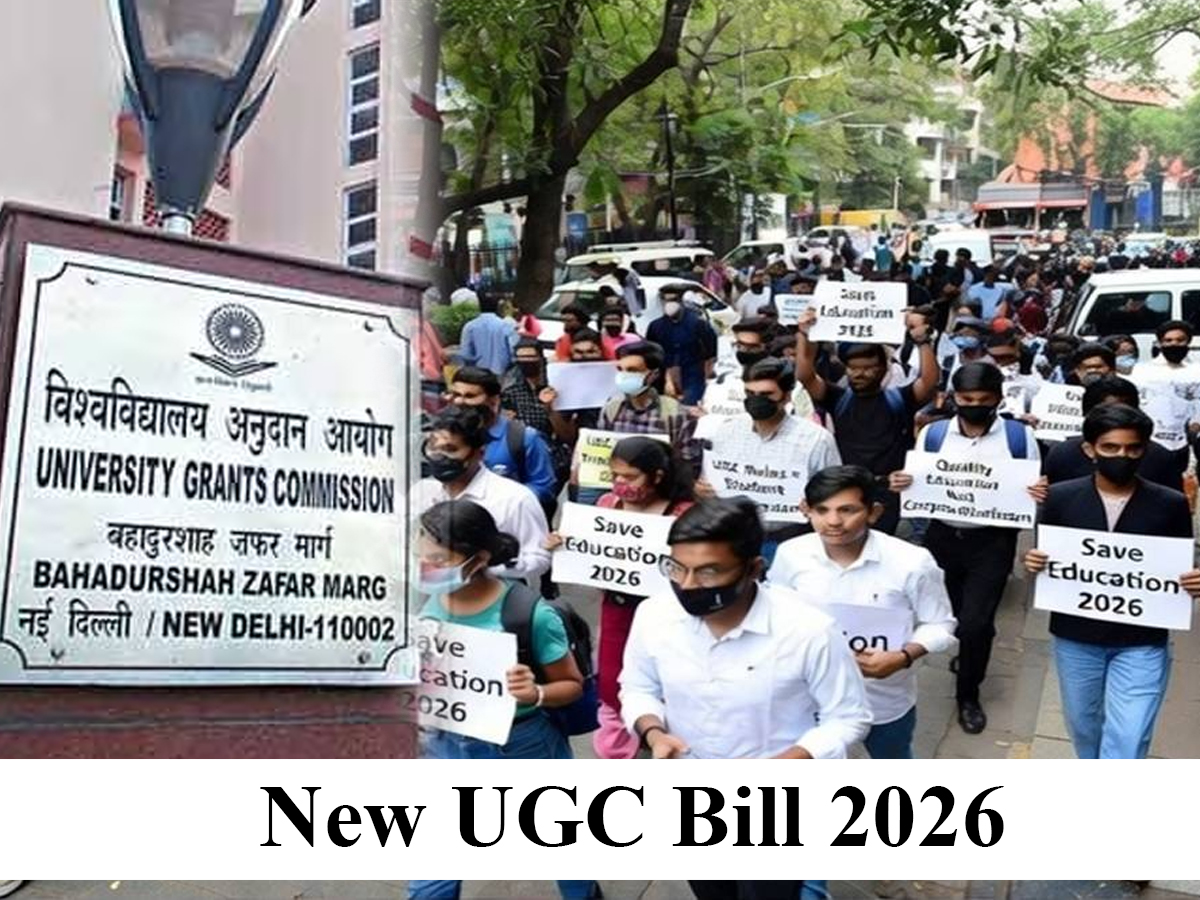
The University Grants Commission (UGC) has stirred a nationwide debate with its new Promotion of Equity in Higher Education Institutions Regulations, 2026, which take effect immediately and apply to all colleges and universities in India.
The rules aim to curb discrimination and promote inclusion, but they have also triggered protests, political opposition, and legal challenges. Supporters see stronger equity enforcement as overdue, while critics argue the language and mechanisms could lead to confusion, bias and even campus unrest.
What is the New UGC Bill 2026?
The 2026 UGC regulations supersede the 2012 anti-discrimination guidelines with a legally binding framework that defines discrimination broadly and mandates proactive measures to promote equity in higher education institutions.
The rules outline the responsibilities of colleges and universities to establish formal mechanisms for preventing, addressing, and monitoring discriminatory conduct on campuses. Key changes include wider definitions of unfair treatment and an enforceable compliance regime with penalties for institutions that fail to meet requirements.
What is the UGC New Rule Controversy?
The controversy centres on the expanded scope of who is protected and how complaints will be handled. The inclusion of Other Backwards Classes (OBCs) alongside Scheduled Castes and Scheduled Tribes has drawn sharp reactions, with some arguing it blurs long-standing affirmative action policy distinctions.
Critics also say the broad definitions of “discrimination” and new procedures could be misused or unfairly applied, leading to campus conflict rather than resolution.
What’s Behind the New UGC Guidelines?
UGC says the updated rules respond to a significant rise in caste-based discrimination complaints in recent years, complaints that reportedly more than doubled over five years. The new regulations also align with judicial directions that regulators strengthen discrimination redressal mechanisms in educational institutions to protect student welfare.
New UGC Bill 2026: Why the Guidelines Are Controversial?
The inclusion of OBCs as a protected group drew sharp criticism from political and student groups, who argue the rules may blur long-standing affirmative action policies. The broad and somewhat vague definitions of discrimination have also sparked fears of misuse or overreach by campus authorities.
In several states, protests erupted as students and general category groups demanded a rollback of the regulations, arguing they could lead to reverse discrimination or chaos on campuses. A Public Interest Litigation has been filed in the Supreme Court seeking judicial review of aspects of the new rules.
Some bureaucrats and political figures have even resigned in protest, calling the regulations a “black law” and warning they could incite unrest rather than promote harmony.
What is an Ombudsperson in the New UGC Rules 2026?
An Ombudsperson is an independent authority designated to hear appeals when internal campus mechanisms fail. The role is intended to ensure impartial grievance resolution and transparency, giving complainants an additional avenue of recourse beyond institutional bodies.
New UGC Bill 2026: Expanded Anti-Discrimination Definition
Under the 2026 regulations, discrimination covers unfair treatment based on caste, religion, gender, disability, race, place of birth and other grounds. The definition includes both direct and indirect actions that hinder equality or human dignity.
For the first time, the guidelines explicitly include Other Backward Classes (OBCs) alongside Scheduled Castes (SCs) and Scheduled Tribes (STs) under protected categories — a core point of contention
New UGC Bill 2026: Institutional Requirements & Campus Mechanisms
Under the 2026 rules, every higher education institution must establish an Equal Opportunity Centre (EOC). These centres will promote inclusion, support disadvantaged students and receive and handle discrimination complaints.
Each EOC must have an Equity Committee with representation from SCs, STs, OBCs, women and persons with disabilities. Committees must meet at least twice a year and report on discrimination issues, including bi-annual reports.
Other measures include round-the-clock helplines and “Equity Squads” or “Equity Ambassadors” to monitor vulnerable campus areas.
New UGC Bill 2026: Implementation & Accountability
Institutional heads, including vice-chancellors and principals, are held directly accountable for compliance, with annual reports required. Non-compliance could lead to serious penalties such as denial of UGC schemes, suspension of degree programmes, or even removal from the official list of recognised institutions.
New UGC Bill 2026: Supporters Argue Equity Is Long Overdue
Supporters, including civil society and education advocates, say India’s campuses have long lacked robust mechanisms to address bias and harassment. They argue the 2026 rules finally give institutions the authority and responsibility to act meaningfully.
Schools and universities previously relied on advisory frameworks that lacked enforcement power, limiting their ability to protect vulnerable groups, supporters note.
What’s Next?
All UGC-recognised institutions must now implement the 2026 regulations. The success of these rules will depend on how institutions interpret and enforce them, and whether institutions can balance equity protections with due process and fairness for all students.




