
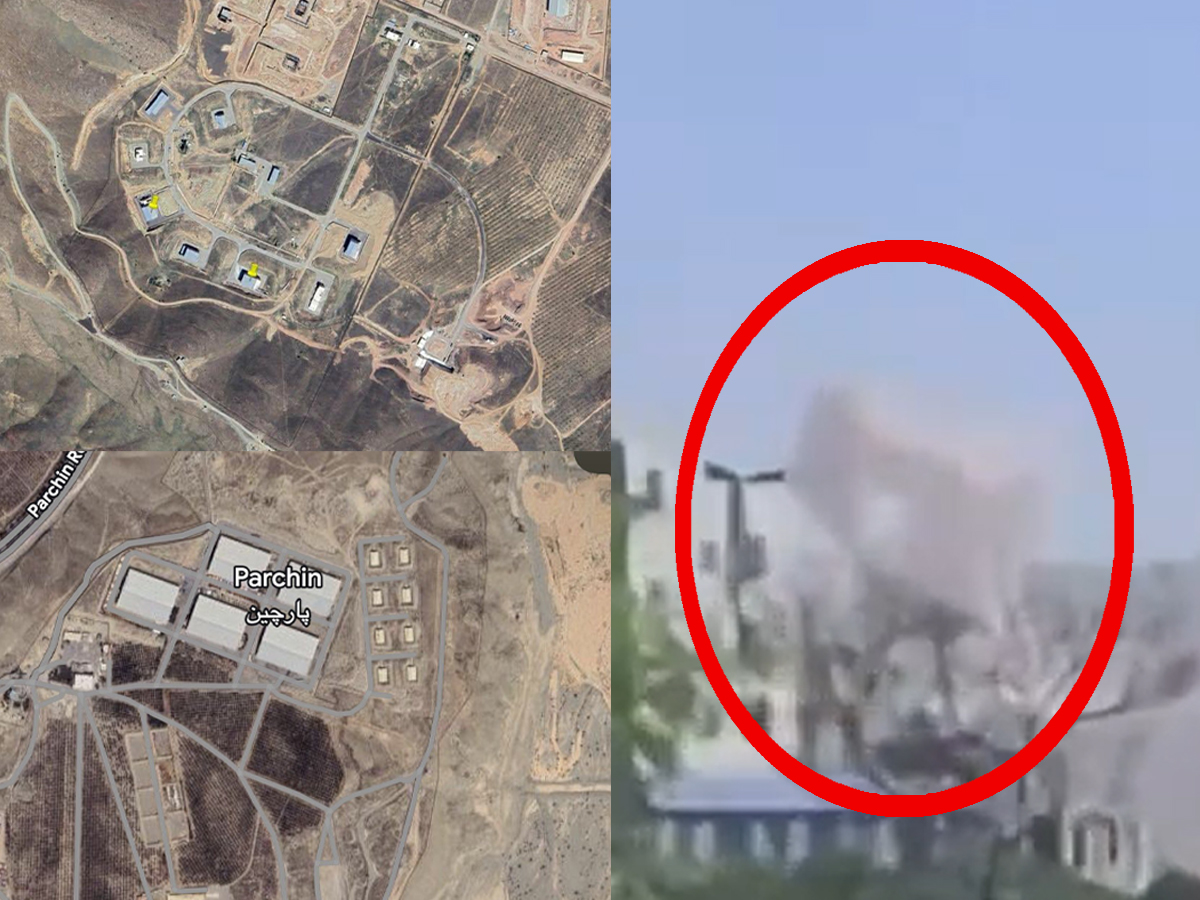
A reported explosion at Iran’s highly sensitive nuclear site, Parchin military complex, has intensified fears of a fresh escalation in the Middle East, as the United States positions major naval assets near the region and President Donald Trump openly weighs military options against Tehran.
The blast, reported on Tuesday, remains unconfirmed by Iranian authorities, but early information suggests it occurred inside the Parchin military complex, a site long linked to Iran’s controversial weapons programmes. The timing of the incident has drawn sharp attention, coming amid mounting pressure on Iran over its violent crackdown on nationwide protests and growing speculation of US military action.
⚠️ 𝐁𝐫𝐞𝐚𝐤𝐢𝐧𝐠 𝐍𝐞𝐰𝐬 ⚠️
Scenes from Iran, Parchin — Military & Nuclear Base… pic.twitter.com/mWc9g6r9eN
— Iran Spectator (@IranSpec) January 27, 2026
According to Open Source Intel, a media monitoring service, an explosion was reported at the Parchin “military complex,” citing journalist and Iranian political analyst Behnam Gholipour. As of now, officials have not clarified the cause of the blast, leaving room for speculation at a moment of heightened geopolitical tension.
US-Iran Conflict: Why Is Iran’s Parchin Military Complex So Sensitive?
The Parchin facility has remained under international scrutiny for years due to allegations that it played a role in Iran’s nuclear weapons development. Western intelligence agencies have repeatedly flagged the site as a potential testing ground for explosive components linked to nuclear research.
Last year, the complex reportedly came under Israeli airstrikes during a broader campaign targeting Iran’s nuclear and missile infrastructure. Any incident at Parchin, confirmed or not, sends immediate ripples through diplomatic and security circles across the Middle East and beyond.
US-Iran Conflict: USS Abraham Lincoln Deployment Raises Stakes
The reported explosion comes as the US dramatically boosts its military presence in the region. The USS Abraham Lincoln aircraft carrier strike group has arrived with guided missile destroyers, giving Washington a direct and rapid strike capability against Iran if ordered.
Gulf Arab states, despite hosting US military forces, have already signalled they intend to stay out of any direct conflict, highlighting concerns about being drawn into a wider regional war.
President Trump has recently warned Tehran of consequences, particularly over its handling of mass protests and alleged executions. He has threatened military action if Iran continues killing peaceful protesters or escalates repression further.
US-Iran Conflict: Iran Protests, Death Toll, and Economic Pressure
Iran currently faces one of the most severe internal crises in decades. Nationwide protests, driven by economic hardship and anger against Supreme Leader Ayatollah Ali Khamenei, have triggered a brutal response from security forces.
The US-based Human Rights Activists News Agency has put the death toll from the crackdown at 6,126 people, stating that the dead include 5,777 protesters, 214 government-affiliated forces, 86 children, and 49 civilians who were not demonstrating. The agency also reported more than 41,800 arrests.
Meanwhile, Iran’s economy continues to deteriorate under sanctions and mismanagement. Rising prices of basic goods have pushed daily living costs beyond the reach of many Iranians, increasing the risk of renewed unrest.
Could This Trigger a Wider Middle East Conflict?
Iran has warned that any attack could drag the entire Middle East into war. However, its military capabilities remain strained following last year’s conflict with Israel, which reportedly damaged air defence systems and key installations.
While it remains unclear whether the reported explosion was accidental, sabotage, or a warning signal, the incident adds another volatile element to an already explosive situation.
As US forces mobilise and domestic pressure mounts inside Iran, the coming days could prove critical for the future of regional stability.




