
New UGC Rules 2026: India’s top court on Thursday intervened in the rollout of the UGC Equity Regulations 2026, temporarily halting the new rules aimed at preventing caste-based discrimination in higher education institutions.
With concerns raised over the exclusion of general category students and vague provisions, the Supreme Court has stayed the regulations and reinstated the 2012 UGC rules until a detailed hearing scheduled for March 19, 2026.
New UGC Rules 2026: Next SC Hearing on March 19
The Supreme Court has scheduled a detailed hearing on March 19, 2026, when it will examine the constitutional validity of the UGC 2026 regulations.
At that time, the bench will consider arguments on whether the new language violates Articles 14, 15 and other constitutional protections by restricting the definition of caste‑based discrimination to Scheduled Castes (SC), Scheduled Tribes (ST) and Other Backwards Classes (OBC).
Petitioners argue that the rules deny grievance redressal and institutional protection to the general or unreserved category, and that this could amount to impermissible State discrimination. Until the March hearing, the 2012 equity regulations, which were more advisory and inclusive in approach, will remain in force.
New UGC Rules 2026: What Happened in Today’s Hearing?
During Thursday’s proceedings, a bench led by Chief Justice Surya Kant and Justice Joymalya Bagchi flagged several issues with the 2026 regulations:
- The definition of caste-based discrimination under Section 3(c) excludes general category students, while Section 3(e) has a broader definition. The court questioned the need for a separate provision.
- The regulations were deemed vague and potentially open to misuse, prompting the CJI to suggest review by an expert committee.
- The court issued notice to the UGC and the Centre, directing that the 2026 regulations remain in abeyance until the next hearing.
- Petitioners argued that excluding general category students violates Article 14 of the Constitution and could encourage discrimination rather than prevent it.
- The bench emphasized social cohesion, warning that unchecked rules could divide society and have a “dangerous impact” if implemented without review.
Supreme Court Halts New UGC Equity Regulations 2026
The Supreme Court on Thursday stayed the University Grants Commission’s (UGC) Promotion of Equity in Higher Education Institutions Regulations, 2026, and directed that the earlier UGC Regulations 2012 will continue to operate until further orders. The next hearing is scheduled for March 19.
A bench led by Chief Justice of India Surya Kant and Justice Joymalya Bagchi heard multiple petitions challenging the new equity rules notified on January 13, 2026. These regulations aimed to deal with discrimination in colleges and universities, but have sparked legal and public debates since their release.
What Are the New UGC Equity Regulations 2026?
The UGC (Promotion of Equity in Higher Education Institutions) Regulations, 2026, were introduced to more strongly address caste and other forms of discrimination on campus than the largely advisory 2012 regulations. Under the new rules:
- Higher education institutions must set up Equal Opportunity Centres and Equity Committees.
- Institutions must have grievance mechanisms to investigate complaints and promote inclusion.
- The rules define discrimination and lay out steps for handling complaints.
However, several petitions argued that the new regulations define “caste-based discrimination” narrowly, limited to discrimination against Scheduled Castes (SC), Scheduled Tribes (ST) and Other Backwards Classes (OBC), and exclude general category students from institutional protection.
New UGC Rules 2026: Why the Supreme Court Halts the 2026 Regulations?
During Thursday’s hearing, the Supreme Court expressed serious concerns about the new regulations, calling parts of the language “vague” and susceptible to misuse. The bench said the provisions need expert scrutiny to avoid unintended consequences.
“If we don’t intervene, it will lead to a dangerous impact, will divide the society and will have a grave impact,” the court said, highlighting the potential societal consequences of implementing the rules without careful review.
The court also flagged an inconsistency between the definitions of discrimination under different sections of the regulations, indicating that the broader definition might conflict with the specific caste‑based definition, causing confusion and exclusion.
2012 UGC Regulations to Stay in Force
While the 2026 regulations are under judicial review, the Supreme Court ordered that the earlier UGC (Promotion of Equity in Higher Educational Institutions) Regulations, 2012, remain in effect. This means institutions must continue following the old framework for now.
The court also issued notices to the UGC and the Central government, and asked for their responses by the next scheduled hearing on March 19, 2026.
New UGC Rules 2026: Why Petitioners & Critics Are Opposing?
While the intent was to curb discrimination, critics say the 2026 rules narrow the definition of caste‑based discrimination so much that it excludes those outside SC/ST/OBC categories from redressal, even if they face caste‑linked bias.
The challenge argues this approach creates legal inequality by effectively giving rights to some groups but not others, potentially violating fundamental rights under the Constitution.
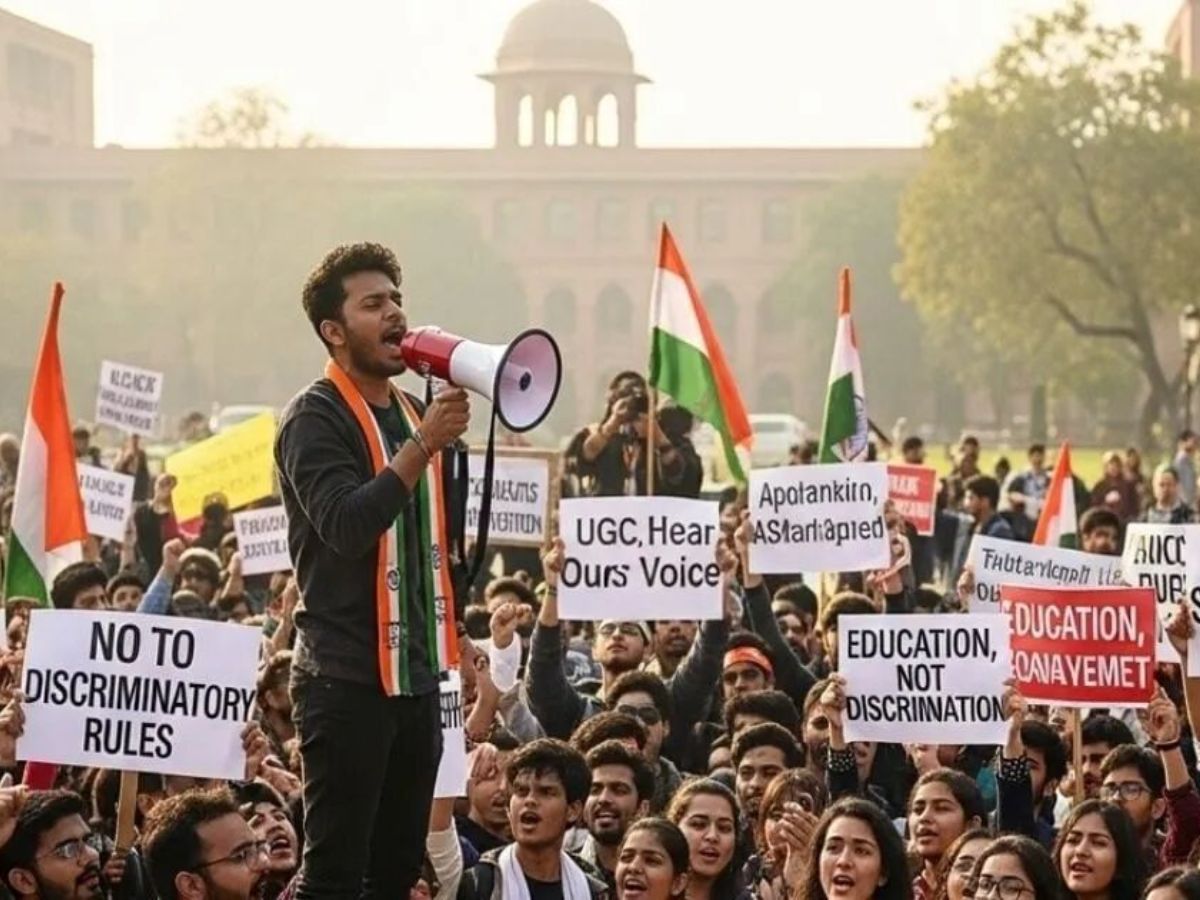
Student protests have also erupted across the country, as many upper‑caste groups and general category students claim the rules could be misused or weaponised against them. Demonstrations have been reported in Delhi, Patna, Lucknow and other cities.
New UGC Rules 2026: Protests & Public Response
The new equity regulations have drawn protests in some regions. In Pilibhit, members of the general category protested, saying the rules threaten their rights and lack safeguards against false accusations.
Political responses have varied. Some leaders argue the equity rules are necessary and fair, defending the inclusion of historically marginalised groups and urging dialogue over protest.
New UGC Rules 2026: Why This Matters for Students & Institutions?
This ruling affects every student and staff member in India’s higher education system, as it determines which rules govern discrimination complaints and institutional obligations. It also signals the judiciary’s careful approach to wide‑ranging policy changes in educational governance.
The March 19 hearing will be closely watched for a broader interpretation of equality rights and the balance between equity protections and inclusiveness in campus governance.




