
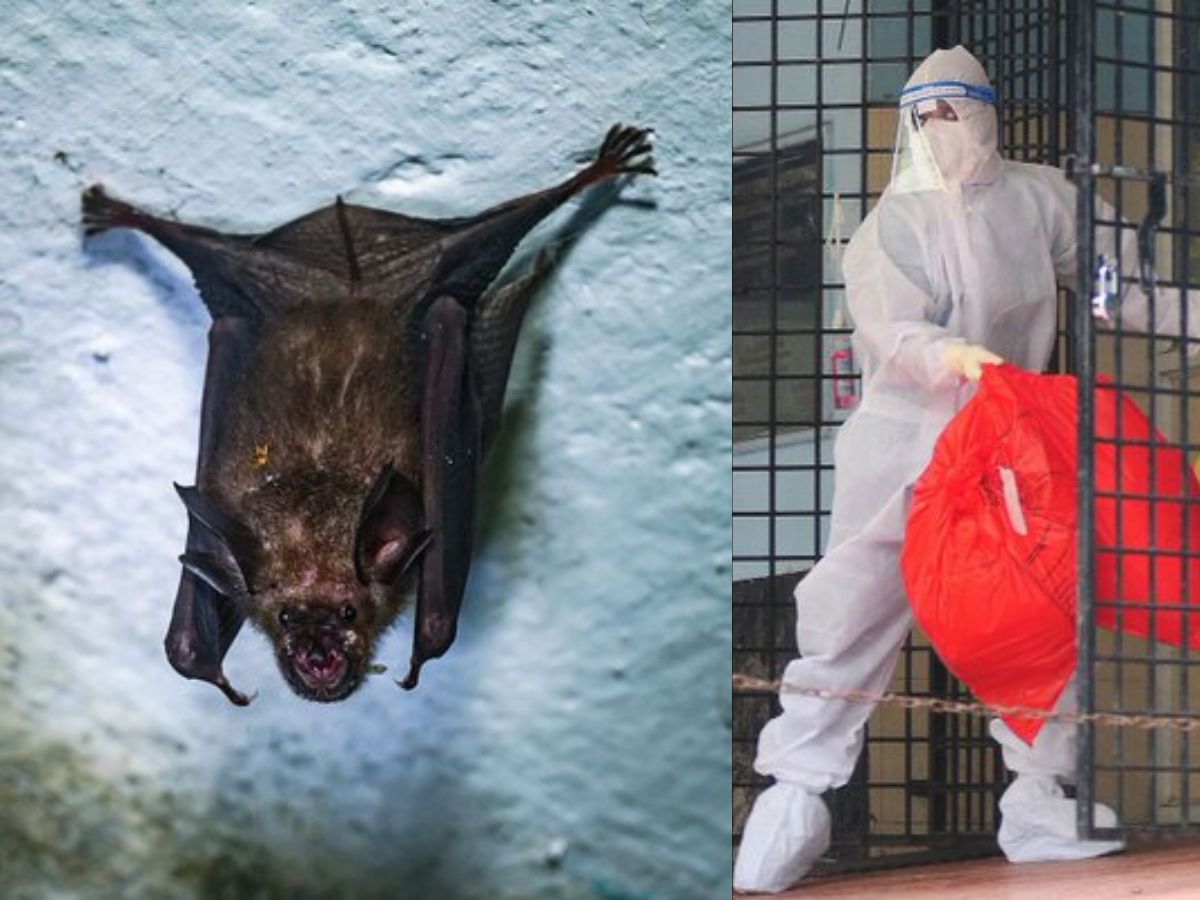
As Nipah virus cases re-emerge in parts of India, including Kerala and West Bengal, health authorities remain on high alert. With airport screenings, strict isolation protocols and contact tracing back in focus, public concern is growing around one key question: what exactly happens inside the body after the Nipah virus enters, and why does it so often turn fatal?
According to the World Health Organisation (WHO), the Nipah virus carries a fatality rate ranging between 40 per cent and 75 per cent, making it one of the deadliest zoonotic infections known to humans. Medical experts warn that its ability to attack blood vessels and directly invade the brain makes it especially dangerous.
Nipah Virus: Early & Severe Symptoms
Symptoms often begin mildly but worsen rapidly.
- Initial flu-like symptoms: High fever, headache, muscle pain, sore throat and general weakness are often the first signs.
- Rapid neurological involvement: The virus can quickly affect the brain, leading to confusion, drowsiness and altered mental state.
- Seizures and loss of consciousness: As brain inflammation worsens, patients may experience seizures, fainting or coma.
- Breathing difficulties: Lung involvement can cause shortness of breath and severe respiratory distress in some cases.
- Encephalitis (brain swelling): Severe infection triggers inflammation of brain tissue, disrupting vital functions like breathing and heart rate control.
- High risk of death: The disease can progress rapidly within days, making early detection and intensive medical care critical.
Nipah Virus: How Does It Enter the Human Body?
Humans contract the Nipah virus mainly through infected fruit bats, contaminated food, or close contact with an infected person. Once the virus enters the body, it does not remain confined to one area.
Dr Bharath Kumar Surisetti, Consultant Neurologist at Yashoda Hospitals, Hyderabad, explained, Humans contract the Nipah virus when it enters through their respiratory system or when they consume infected food. The virus first infects cells in the mouth, throat, or lungs, where it begins to replicate.
This early replication allows the virus to multiply quickly before spreading further inside the body.
Nipah Virus: How Does It Spread Through the Bloodstream?
After multiplying in the respiratory tract, the Nipah virus moves into the bloodstream. Its surface proteins bind to ephrin-B2 and ephrin-B3 receptors, which are found widely in the human body, especially on the lining of blood vessels.
Dr Surisetti said, “After the virus completes its initial replication process, it starts spreading through the bloodstream, which enables its distribution throughout various body parts.” At this stage, the virus begins infecting vital organs, setting the stage for severe complications.
Why Blood Vessel Damage Makes Nipah Virus So Dangerous?
One of the Nipah virus’s most lethal traits is its strong preference for endothelial cells, which line blood vessels. Dr Deep Das, Neurologist at CK Birla Hospitals, CMRI, explained,
“Nipah first establishes its presence in human beings through upper respiratory tract replication before spreading to the bloodstream, which then allows it to infect both the cardiovascular system and various other body parts.”
Once blood vessels become infected, inflammation known as vasculitis develops. This damages blood vessels across the body, affecting organs such as the lungs, kidneys and spleen.
Dr Surisetti added, “After these cells are infected, it results in inflammation, causing vasculitis and leading to the destruction of blood vessels and damage of organ that include the lungs, kidneys and spleen, causing serious breathing problems in the lungs.”
Nipah Virus: How Does It Cross Into the Brain?
Once the Nipah virus enters the human body, it usually begins by infecting cells in the nose, throat, or lungs. In this early stage, the virus multiplies rapidly in the upper respiratory tract, often causing mild symptoms such as fever, headache and body pain. This initial phase allows the virus to establish itself before spreading further.
After replication, the virus enters the bloodstream, where it targets the lining of blood vessels, known as endothelial cells. Nipah has a strong affinity for these cells because they carry specific receptors that the virus easily binds to. This leads to inflammation of blood vessels, a condition called vasculitis, which weakens vessel walls and disrupts normal blood flow.
As blood vessels become damaged, the virus gains the ability to cross the blood–brain barrier — a protective layer that normally prevents harmful substances from reaching the brain. Nipah can breach this barrier either through damaged vessels or by travelling inside infected immune cells and nerve pathways connected to the nasal cavity.
Once inside the brain, the virus triggers severe inflammation of brain tissue, known as encephalitis. This causes swelling that restricts blood circulation and directly injures neurons. As pressure builds inside the skull, vital brain functions such as breathing, heart rate control and consciousness become compromised, leading to seizures, coma and, in many cases, death if immediate medical care is not provided.
Nipah Virus & Brain Inflammation (Encephalitis)
Once the Nipah virus enters the human body, it typically begins by infecting cells in the nose, throat, or lungs, where it rapidly multiplies before spreading into the bloodstream. From there, the virus targets blood vessel linings, causing inflammation and damage that allows it to breach the blood–brain barrier.
When Nipah reaches the brain, it triggers severe encephalitis, leading to swelling of brain tissue and disruption of vital neurological functions. This process results in symptoms such as intense headaches, confusion, seizures, loss of consciousness and, in severe cases, coma or death.
The brain swelling can interfere with breathing, heart rate regulation and blood circulation, making Nipah infections medical emergencies that require immediate isolation, intensive care and neurological monitoring.
Nipah Virus: Long-Term Effects in Survivors
Even when patients survive a Nipah virus infection, doctors warn that recovery is often incomplete, as the virus can leave long-lasting and sometimes delayed neurological damage.
Dr Bharath Kumar Surisetti explained that survivors may develop persistent brain-related problems or experience a return of brain inflammation months or even years later, a condition known as relapsing encephalitis.
This can cause memory loss, difficulty concentrating, seizures, personality changes, weakness, speech problems and impaired coordination.
Nipah Virus: Why Immediate Detection & Isolation Are Critical?
Doctors stress that early diagnosis, strict isolation and intensive neurological care remain the only effective tools against the Nipah virus, as no specific antiviral treatment currently exists.
With India maintaining heightened surveillance, health experts continue to urge caution, awareness and rapid medical response — because once the Nipah virus reaches the brain, time becomes the biggest enemy.




