
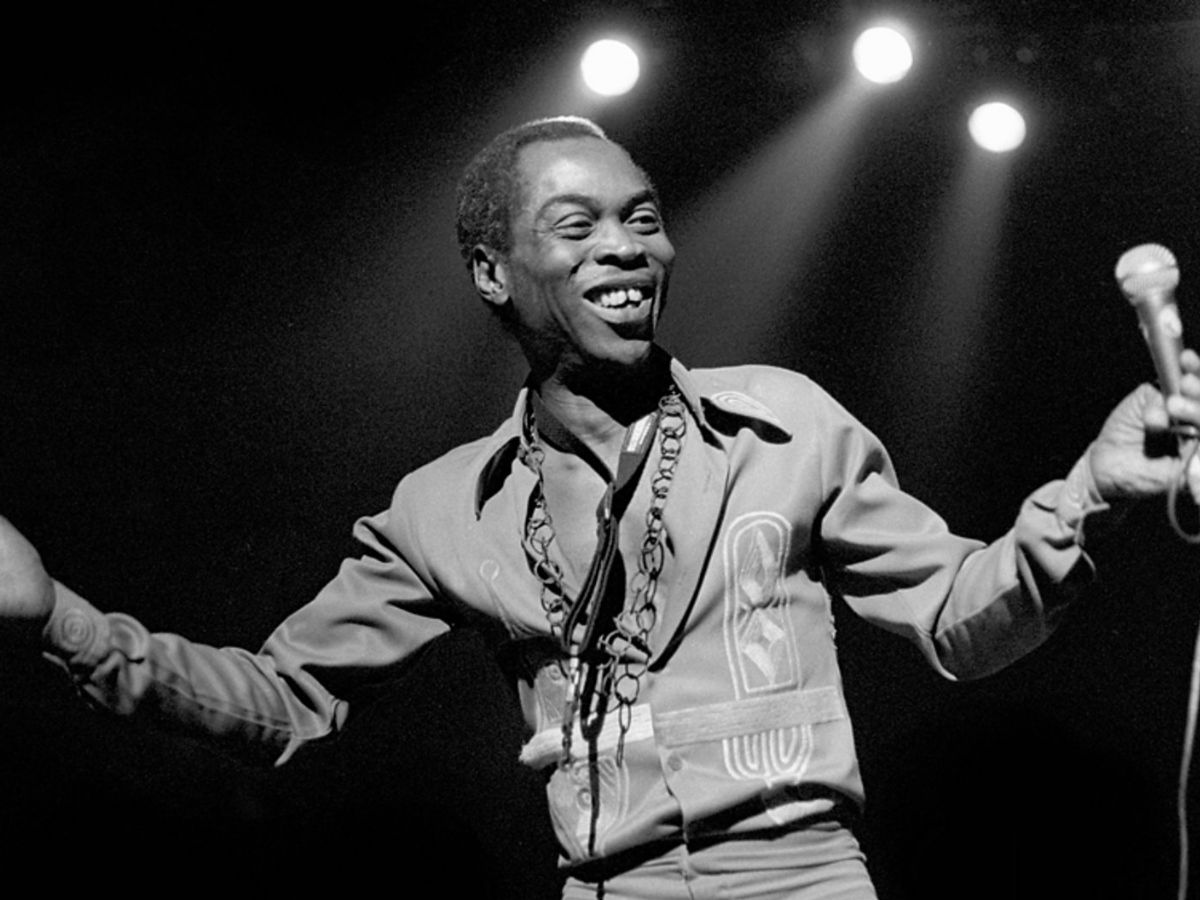
Long before Afrobeat became a global music force and Nigerian artists started dominating international charts, Fela Anikulapo Kuti had already built the foundation. Now, the Grammy Awards are recognising his legacy. The iconic musician and activist will become the first African artist to receive the Grammys’ Lifetime Achievement Award.
The honour will be given posthumously at a special ceremony in Los Angeles on Saturday, one day before the main Grammy event. Nearly three decades after his passing, this award represents a major international recognition of Fela’s powerful impact on music and culture worldwide.
This year, Fela’s name appears alongside major global stars such as Cher, Whitney Houston, Carlos Santana, Paul Simon, and Chaka Khan. Many believe this recognition is long overdue, considering how strongly his work influenced modern music, far beyond Nigeria.
Who was Fela Kuti?
Fela Anikulapo Kuti was a Nigerian musician, composer, and political activist best known as the creator of Afrobeat. In the 1970s, he developed this unique genre by blending jazz, funk, and traditional African rhythms into a bold and powerful sound. He was also famous for his energetic stage performances and his ability to play multiple instruments.
Often called the “Black President” for his fearless political stance, Fela used music as a tool to speak against corruption, injustice, and military rule in Nigeria. He died in 1997 at the age of 58, but his influence continues through his family and generations of musicians worldwide.
How Fela Kuti Shaped Modern Afrobeats
Fela’s Afrobeat later evolved into Afrobeats a more modern genre that combines African rhythms with contemporary pop music. Today, Afrobeats dominates global charts and streaming platforms.
The Grammys recognised this shift by introducing the Best African Performance category in 2024. Since then, Nigerian artists have led the category, including Tems, who won last year. This year, three of the five nominees are Nigerian, showing how strong the country’s presence has become.
“Fela’s influence spans generations, inspiring artists such as Beyonce, Paul McCartney and Thom Yorke, and shaping modern Nigerian Afrobeats,” said a citation on the Grammys list of this year’s honorees.
Fela Kuti Family Legacy
Fela’s musical journey continues through his sons, Femi Kuti and Seun Kuti, and his grandson Made Kuti, all active Afrobeat performers.
Yemisi Ransome-Kuti, Fela’s first cousin and family head, said the award is a moment of pride not just for the family but for all Africans. “A celebration for the African people and they should take .. as their award. Another African is being celebrated,” she told.
She also noted that recognition often comes late. “But we also want to send a message to those who are giving these acknowledgements, please …not wait till people are dead,” she said.
She added, “I’m sure he would have said better late than never” although “in his lifetime he was not particularly interested in being recognised in the external world particularly the western world”.
Fela Kuti’s Political Activism and Struggles
Throughout his career, Fela was frequently arrested by Nigeria’s military governments because of his outspoken political views. His 1974 album Zombie, widely seen as a direct attack on the military regime, led to one of his earliest major confrontations with authorities. His music openly criticised corruption and those in power.
How the Grammy Award Could Boost Fela’s Music Globally
Rikki Stein, Fela’s former manager, spoke from Los Angeles, where he will attend the ceremony with the Kuti family. He said the award could help introduce Fela’s music to a younger generation.
The recognition, he explained, would significantly uplift Fela’s music. “Fifty albums out there. I’m sure it’s going to continue onward and upward.”
He added, “An increasing number of people what weren’t even born when Fela died are expressing interest in listening to Fela’s music and hopefully Fela’s message,” he told.




