
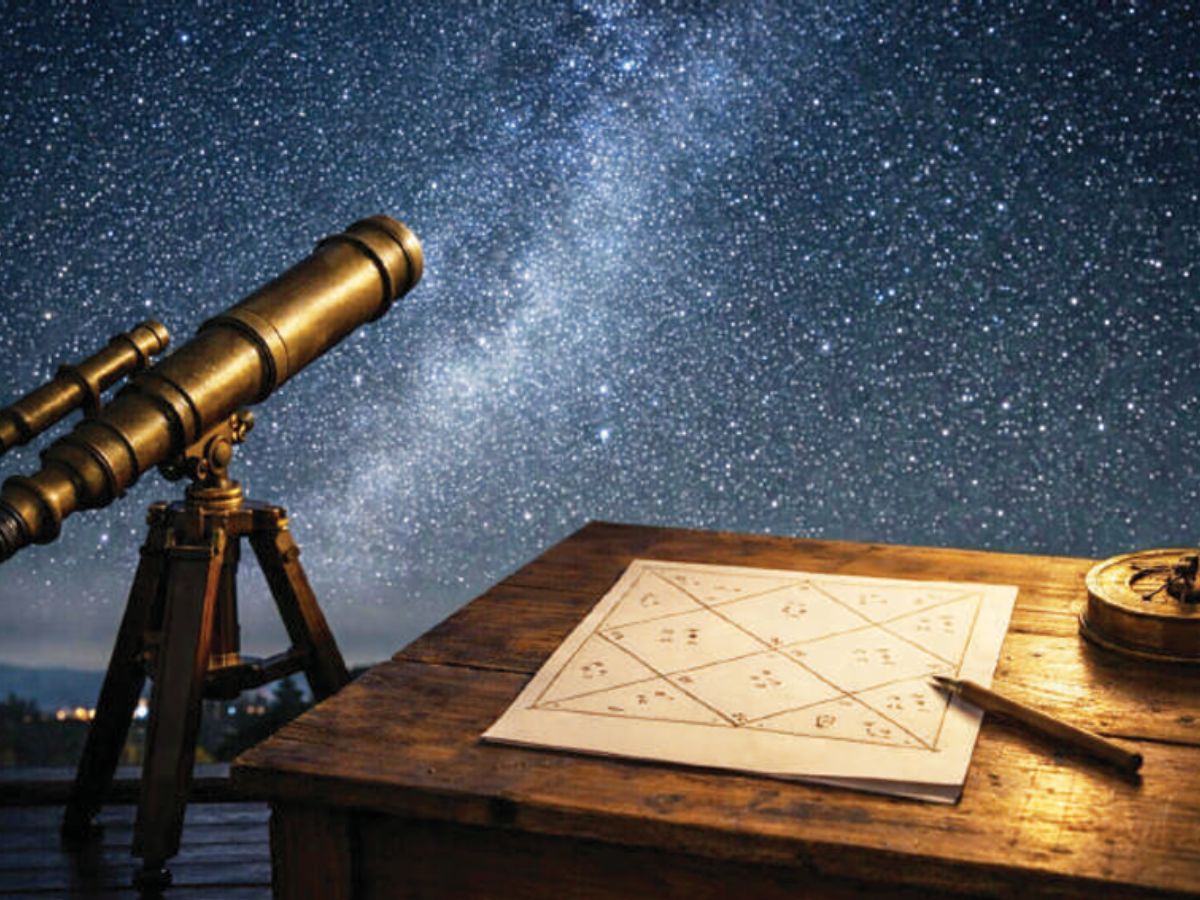
Which tools a civilisation chooses to build reveals what it truly values. One civilisation may invest in instruments that measure the world; another may invest in instruments that offer comfort and reassurance. The consequences of that choice can take centuries to unfold, but they always unfold.
In 1610, English emissaries arrived at the court of Mughal Emperor Jahangir bearing gifts from King James I. Among the offerings was a small mechanical clock. Jahangir received the gifts graciously, distributed return presents of gold and jewels, and then asked his courtiers a telling question: “Is the King of England even a significant monarch?” The Emperor had received treasures from other rulers. This English king had sent a small ticking device.
That ticking box contained India’s future subjugation. But Jahangir could not see it, because he was looking with the wrong eyes.
The clock was not a timepiece. It was a civilisational declaration. Behind that small mechanism lay decades of scientific investment, rigorous astronomical observation, and mathematical precision that India had once possessed but had long since traded for something more comforting: belief. Within a century and a half, the descendants of those gift-bearing merchants would rule Jahangir’s descendants. In that clock, there was not merely time; there was organised power.
While We Consulted horosCopes, they built telescopes
What was India doing during these centuries?
India had ships, some excellent; the British themselves purchased vessels from Indian shipyards. India had mathematical traditions; the ancient inheritance was sophisticated. But somewhere between the tenth century and the eighteenth, the spirit of inquiry curdled into the comfort of belief. The energy that could have gone into observing the heavens went instead into interpreting them for personal fortune.
Britain is an island. Its survival depended on mastering the seas; its prosperity required controlling maritime trade. But ocean navigation had a fatal flaw: longitude. Latitude was simple, observe the sun at noon. Longitude was murderous. Ships miscalculated their east-west position, struck rocks, drowned entire crews. In 1707, a British naval fleet hit the Isles of Scilly after a longitude error; nearly two thousand sailors perished in a single night.
Britain’s response was not prayer. It was science.
In 1675, King Charles II established the Royal Observatory at Greenwich with a single mission: solve the longitude problem. By the mid-eighteenth century, Britain had succeeded. Its ships could navigate anywhere on Earth with unprecedented precision. The same astronomical knowledge enabled accurate maps of coastlines, harbours, entire continents.
When British merchant guards arrived at Plassey in 1757, they numbered fewer than three thousand against fifty thousand. They won, not through numbers but through the organisational confidence that comes from having mastered fundamental problems while the other side was consulting astrologers about auspicious battle timings.
This is where the wound began. Until roughly the tenth century, India’s philosophical trajectory was toward Advaita, the radical insistence that liberation is self-knowledge, that truth resides within, that no external power determines your destiny. After Adi Shankaracharya, this trajectory reversed. Belief-based systems, ritualism, and fatalism gradually displaced the Upanishadic demand for inquiry. The retreat from self-knowledge was also a retreat from self-reliance. The moment India declared that God sits outside rather than within, it became a nation of puppets waiting for someone to pull the strings. The colonisers merely obliged.
The British had a phrase, arrogant but accurate: “You pray to the heavens; we measure them.”
Consider the contrast. While calculus was arriving in Europe and Newton was measuring light, Mughal courts were building opulent tombs and patronising poetry. The priorities were visible; the consequences were inevitable. The Great Trigonometrical Survey of India, begun in 1802, gave the colonisers better maps than any Indian ruler possessed. When the 1857 uprising erupted, the British knew precisely which rivers to cross, which passes to hold. Maps made from measuring stars became instruments for ruling the land.
Meanwhile, Indian courts produced horoscopes for wedding dates. Even now, we perform a miracle of self-contradiction: we carry a Gita in one hand and a kundli in the other, as if the two belong together. One calls you to stand up in clarity; the other trains you to kneel in fear.
The Psychology behind the stars
Why did astrology flourish while astronomy withered? The answer lies not in the stars but in the structure of the human ego.
Astrology offers two irresistible comforts. First, it abolishes responsibility. If my life is failing, the fault lies not in my choices but in my planetary configurations. Saturn is malefic; what can I do? The alternative, that my suffering stems from my own ignorance, my own cowardice, is unbearable.
Second, astrology promises control over an uncertain future. The astrologer offers certainty: this period will be difficult, that period will bring fortune, perform these rituals, and the planets will soften. False certainty, but false certainty feels better than honest uncertainty.
If you do not know that the power to shape your life sits within you, you will spend that life on your knees before anyone who claims to know your fate. Either I am the author of my life, or someone else is; if I do not know my own inner capacity, I will imagine an external controller, and whether it is called Saturn or fate or karma matters far less than the surrender it conceals.
Now observe what people actually ask astrologers. Will I get that promotion? Will my daughter find a suitable husband? Will my visa be approved? The questions are always about external acquisition. Nobody walks into an astrologer’s chamber and asks: “When will I become a truthful person? When will I know myself?”
Why don’t they ask these questions? Because those questions cannot be outsourced. The astrologer can promise you a job; he cannot promise you integrity. Someone goes to a baba asking about a foreign visa; the baba himself has never had a passport made. And since we would rather acquire than inquire, we keep asking the questions astrologers can pretend to answer. Astrology becomes the manager of desire; it does not liberate from craving but merely gives craving a timetable.
This is not merely historical. Astrology applications today rank among the most heavily engaged-with categories on smartphones, particularly in urban and educated demographics. These platforms attract serious venture capital; the same firms often fund both astrology apps and online betting platforms. Both profit from the same weakness: the belief that external forces determine outcomes, that one need not take responsibility for one’s own life. This is national energy, society’s wealth. We complain that schools are broken and research underfunded, then pour crores into superstition.
These apps claim scientific validity. But science operates by a ruthless principle: if even one rigorous experiment contradicts a theory, the theory is wrong. Astrology operates inversely. Nine hundred and ninety-nine predictions fail, but one coincidentally proves accurate, and that single success is trumpeted as validation. This is not science; this is the architecture of fraud.
Do not imagine that because you scorn astrology, you have escaped the same surrender. Wherever you have outsourced your sense of worth, to salary, status, approval, there too you kneel. The form changes; the prostration remains.
The only astrology worth practising
The Upanishads do not ask you to worship external powers. They ask: who are you? They do not locate a treasure within the individual; they dissolve the very boundary that made you feel external to truth. The Upanishadic Mahavakya Tat tvam asi (you are That) is not a consolation, but a confrontation: if you are That, then who is this one begging the stars for answers? That question is not a conclusion to rest in; it is a direction to move toward until the seeker and the seeking have dissolved.
India possessed this radical teaching and largely abandoned it. We traded the telescope of inward inquiry for the horoscope of external dependence. Europe recovered from its dark ages through the Renaissance, a return to the Greek spirit of rational inquiry. India needs its own renaissance now, a return to the Upanishadic demand for self-knowledge that preceded the long sleep of belief. Without this, what happened once will happen again.
The clock that Jahangir dismissed was a warning. We did not heed it then. We have fewer excuses now.
The stars do not control your destiny; your own unexamined mind does. The only astrology worth practising is the rigorous observation of your own inner sky: the fears that drive you, the desires that own you, the patterns that repeat while you pretend each day is new. That inquiry demands no app, no subscription, no Baba’s fee. It demands only what the ego finds most expensive: the willingness to see yourself as you are, and to keep seeing until the seer himself is seen through.
That honest seeing built no empire, founded no religion, and left behind no comfortable doctrine. It only ever dissolved the one who dared to look.
-
Acharya Prashant is a teacher and author whose work centres on self-inquiry and its application to contemporary life.




