
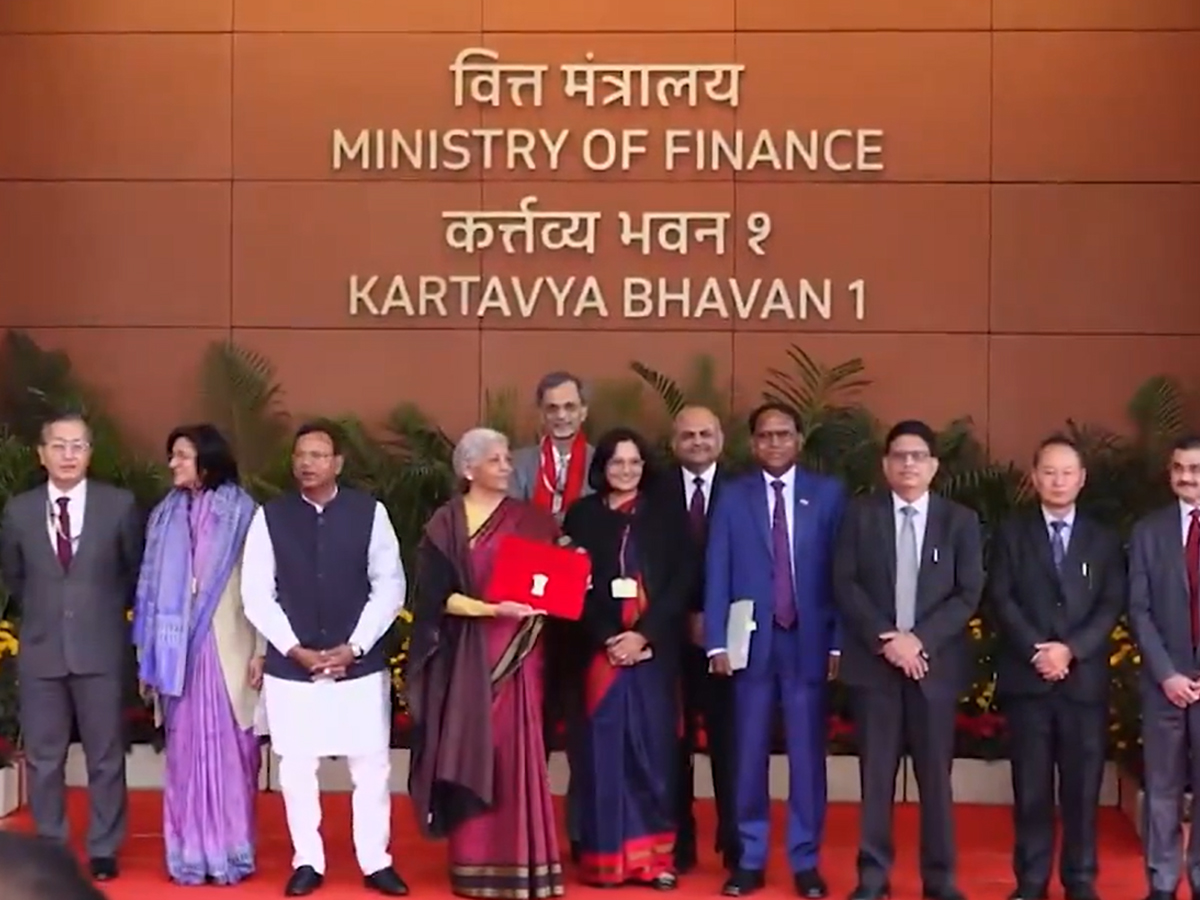
Every year on Budget Day, attention in India extends beyond numbers and policies, and it also lands on what Union Finance Minister Nirmala Sitharaman wears as she enters Parliament. Over nearly a decade of presenting the Union Budget, her saree choices have become part of the national conversation, appreciated not just for style but for the stories they tell about India’s rich textile heritage and regional craftsmanship.
Budget 2026: The Tradition of Budget Day Sarees of Nirmala Sitharaman
Finance Minister Nirmala Sitharaman will present her ninth consecutive Union Budget this year, an achievement that has helped make her saree wardrobe on this occasion a much-discussed tradition. Rather than simple fashion choices, these sarees have become a symbol of Indian artistry and cultural pride.
Observers note that Sitharaman’s sarees often highlight hand-woven textiles from across India, showcasing skilled artisans and weaving communities. Whether silk or cotton, these fabric selections reflect a deep connection to India’s handloom legacy.
Looking Back: Nirmala Sitharaman’s Sarees That Told Stories
Since her first Budget in 2019, Sitharaman’s Wardrobe has been a canvas of India’s diverse weaving traditions:
- 2019: She wore a bright pink Mangalgiri silk saree with a gold border, marking her first Budget and a departure from the traditional leather briefcase — opting instead for a traditional bahi khata for holding documents.
- 2020: The minister chose a vibrant yellow silk saree with blue borders, a colour often associated with prosperity and optimism.
- 2021: Sitharaman wrapped herself in an off-white Pochampally silk saree with red borders — a handloom from Telangana known for its Ikat patterns, highlighting the Vocal for Local movement.
- 2022: She wore a rust-brown Bomkai saree from Odisha, symbolising centuries-old textile traditions.
- 2023: A red silk saree with a black temple border and Kasuti embroidery from Karnataka reflected another rich weaving heritage.
- 2024 (Interim Budget): She chose a blue Tussar silk saree with Kantha embroidery from West Bengal, emphasising diverse regional crafts.
- 2025: Sitharaman wore an off-white Madhubani saree with fish motifs, gifted by Padma Shri awardee Dulari Devi, celebrating the traditional Madhubani art form of Bihar.
These choices go beyond fashion — they highlight regional identities, artisanal skills, and the government’s push for local crafts.
Why Nirmala Sitharaman Saree Choices Matter More Than Style
Nirmala Sitharaman’s Budget Day sarees consistently attract interest because they represent India’s craft heritage on a national stage. Each drape serves as a tribute to weaving clusters, artisan communities, and traditional techniques that have earned Geographical Indication (GI) tags and international recognition.
While she has not publicly explained the deeper meanings behind her attire, experts and fashion enthusiasts see her sartorial decisions as subtle cultural statements — supporting handloom sectors and rural livelihoods through visibility and influence.
Saree Watch 2026: What Might She Choose?
As the Budget 2026 approaches, speculation has already begun about which weave Sitharaman may pick this year. With major state elections ahead in regions known for unique textiles, such as West Bengal’s Jamdani or Baluchari, Assam’s Muga silk, or Tamil Nadu’s Kanchipuram silk, the attire could once again blend cultural pride with symbolic messaging.
With her saree choices now part of the annual Budget narrative, all eyes will not just be on the Budget numbers but also on how her attire represents India’s cultural wealth, one weave at a time.




