
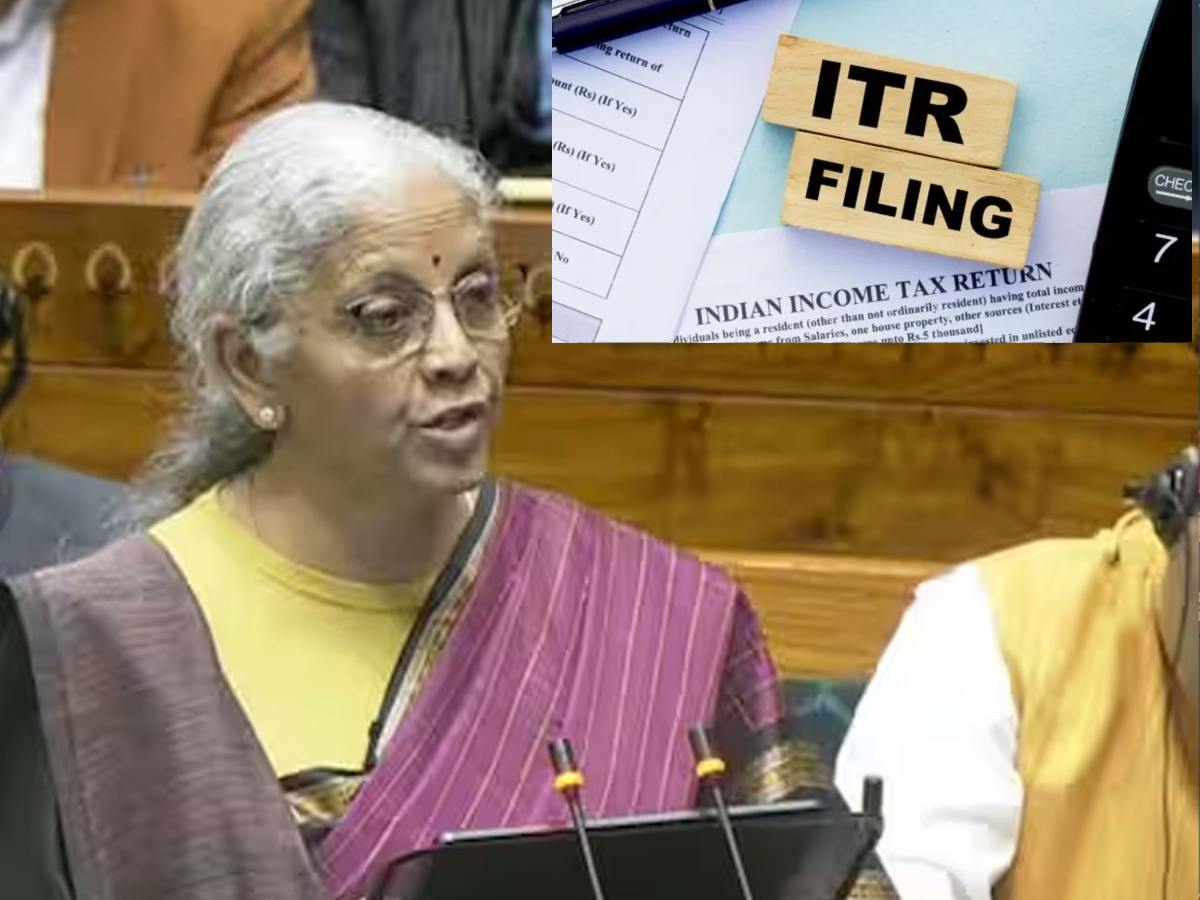
The government has announced fresh changes to income tax return (ITR) filing rules in the latest Budget cycle, giving taxpayers more time and flexibility to correct their tax returns. Under the new provisions, the deadline to revise ITRs has been extended to March 31 with a nominal fee, offering much‑needed breathing room for taxpayers who missed earlier windows.
Finance Minister Nirmala Sitharaman, in her Budget speech, said, “I propose to extend time available for revising returns from 31st December to up to 31st March with the payment of a nominal fee.” She also outlined a staggered schedule for ITR filing, individuals using ITR‑1 and ITR‑2 forms will continue to file returns until July 31, while non‑audit business cases and trusts will have until August 31 to file.
Watch Live: Smt @nsitharaman presents Union Budget 2026–27 in Parliament #ViksitBharatBudget @sansad_tv @PIB_India https://t.co/DieMezvgTp
— Nirmala Sitharaman Office (@nsitharamanoffc) February 1, 2026
Union Budget 2026: New ITR Filing Timeline for Taxpayers
Taxpayers often miss original deadlines for various reasons, including late receipt of documents or portal issues. With this adjustment, many individual taxpayers now have a clear extended window to update and correct returns without penalty, provided they pay the minimal fee.
Another major change targets non‑resident Indians (NRIs). Until now, NRIs selling immovable property were required to have the buyer deduct TDS using a Tax Deduction Account Number (TAN). The new rule shifts this responsibility to the resident buyer, simplifying compliance and reducing procedural complexity for NRI sellers.
Union Budget 2026: Post‑Reassessment Return Updates With 10% Tax
Taxpayers who receive reassessment notices can now still correct their ITR after assessment, but with a 10% tax liability on the amount of taxable income. This option provides a structured way to settle discrepancies even after formal scrutiny.
Overall, these changes aim to make tax compliance more flexible and taxpayer‑friendly by expanding revision windows, simplifying TDS processes for property transactions, and giving late filers a path to adjust their returns. Tax professionals say these measures could ease year‑end pressure on e‑filing portals and reduce the rush around traditional filing cut‑offs.




