
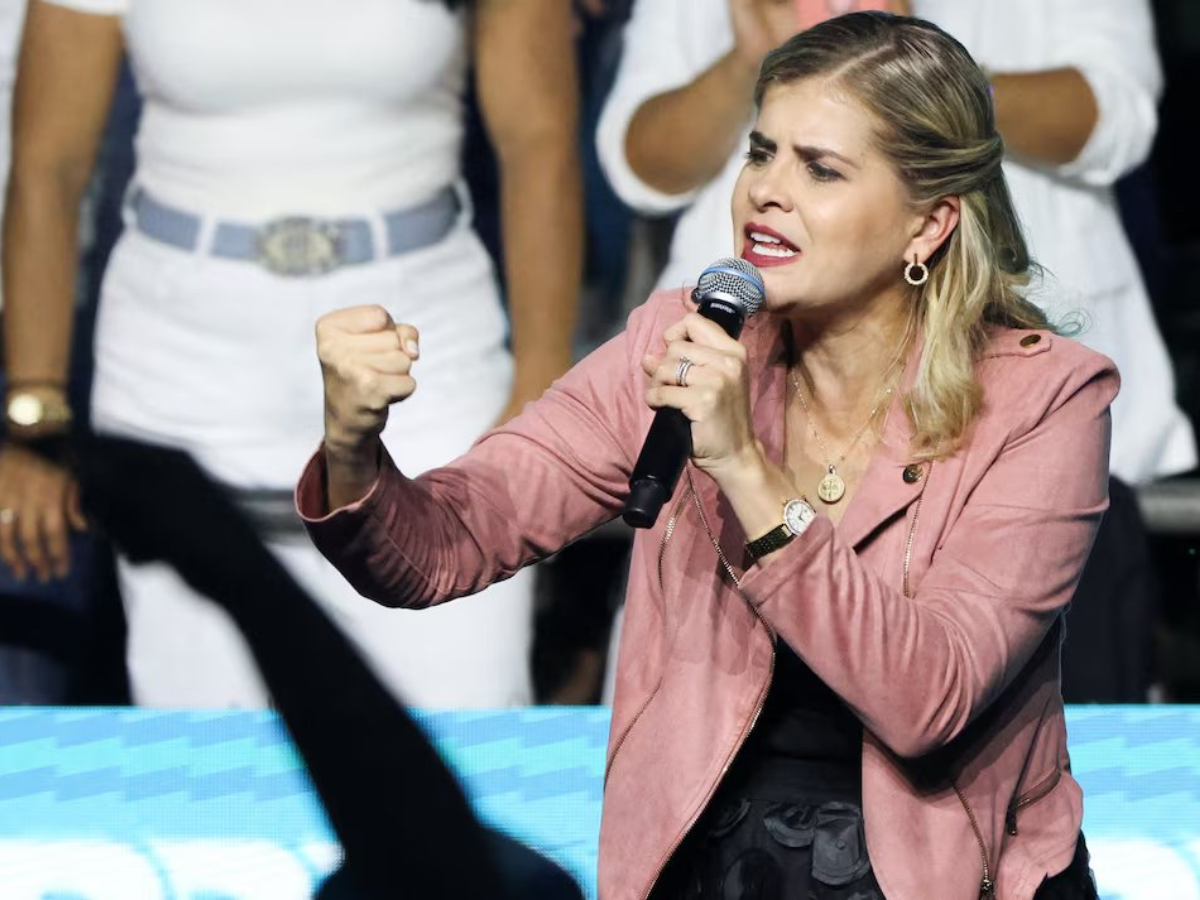
Costa Rica has made history with the election of Laura Virginia Fernandez Delgado as president at 39 years old, this political scientist from the Sovereign People’s Party received 48.3% of the votes in the general election of 2026, thus winning the election. This marks the second time a female leader will occupy the highest position in the country and it indicates a link with the outgoing conservative government of Rodrigo Chaves. Fernandez’s campaign is based on a tough stance against crime and a commitment to governance reform and economic policies.
Who is Laura Fernandez?
Laura Fernandez, born on July 4, 1986, in Puntarenas, is a Costa Rican politician and political scientist who has gained a national reputation through planning and policy-making in the government. She rose through the ranks to become a minister before entering the political arena with a presidential campaign that gained much attention with a pragmatic yet confident style, Fernandez has taken cues from Nayib Bukele’s tough stand on crime, incorporating aspects of this strategy to combat the rising levels of violence associated with organized crime.
Laura Fernandez Educational Background
Fernandez’s studied at the University of Costa Rica focused on public policy and democratic governance, providing a strong foundation for policy analysis and public administration. This background in political science influences her approach to public sector reform, budget management and strategic planning this education has served her well in the complex web of politics and legislation throughout her career in the civil service.
Laura Fernandez Career Journey
Fernandez’s career in public service spans over a decade:
- 2008–2010: Consultant for the Ministry of National Planning and Economic Policy’s State Reform Program with the German Agency for Technical Cooperation (GIZ).
- 2010–2014: Civil servant at the Ministry, serving as modernization and dispatch advisor.
- 2014–2018: Legislative Assembly advisor, focusing on public spending, finance, income and government reforms.
- 2018: Vice-presidential candidate for Mario Redondo; researcher for the Ministry of National Planning, studying government cooperation, public employment and administrative reform.
- 2020–2021: Director of strategic planning, municipality of Cartago.
- 2022–2025: Minister of National Planning and Economic Policy under President Rodrigo Chaves.
- 2024–2025: Minister of the Presidency, overseeing government coordination and signing landmark decrees including one commemorating women’s suffrage.
- 2025: Resigned ministerial roles to pursue the presidency and officially announced candidacy for the Sovereign People’s Party.
Laura Fernandez Wins Costa Rica Presidential Election
Fernandez won the presidency with 48.3% of the vote, easily outdistancing the nine-point lead that would have secured a first-round victory with her main opponent, centrist economist Alvaro Ramos, received 33% of the vote. Her campaign platform included completing a mega-prison for dangerous criminals and utilizing state of emergency powers in crime-ridden areas, taking a page from El Salvador’s playbook. This election marks a new era for Costa Rica with a hardline security agenda while maintaining continuity with the Chaves government.
Laura Fernandez Net Worth
Laura Fernandez’s estimated net worth ranges between $445 and $2,670 with her wealth mainly comes from her career in public service, consulting roles and government positions including her tenure as Minister of National Planning and Minister of the Presidency.
Where is Costa Rica
Costa Rica is located in Central America, between Nicaragua to the north and Panama to the southeast with the Caribbean Sea to the northeast and the Pacific Ocean to the southwest. The country has a population of approximately five million people and a land area of about 51,180 square kilometers (19,760 square miles). San José is the capital, has a population of 350,000, while the metropolitan area surrounding the city has a population of two million. Costa Rica has long been regarded as a stable democracy but has recently been experiencing security issues that have led the country to emphasize crime prevention and changes in law enforcement.




