
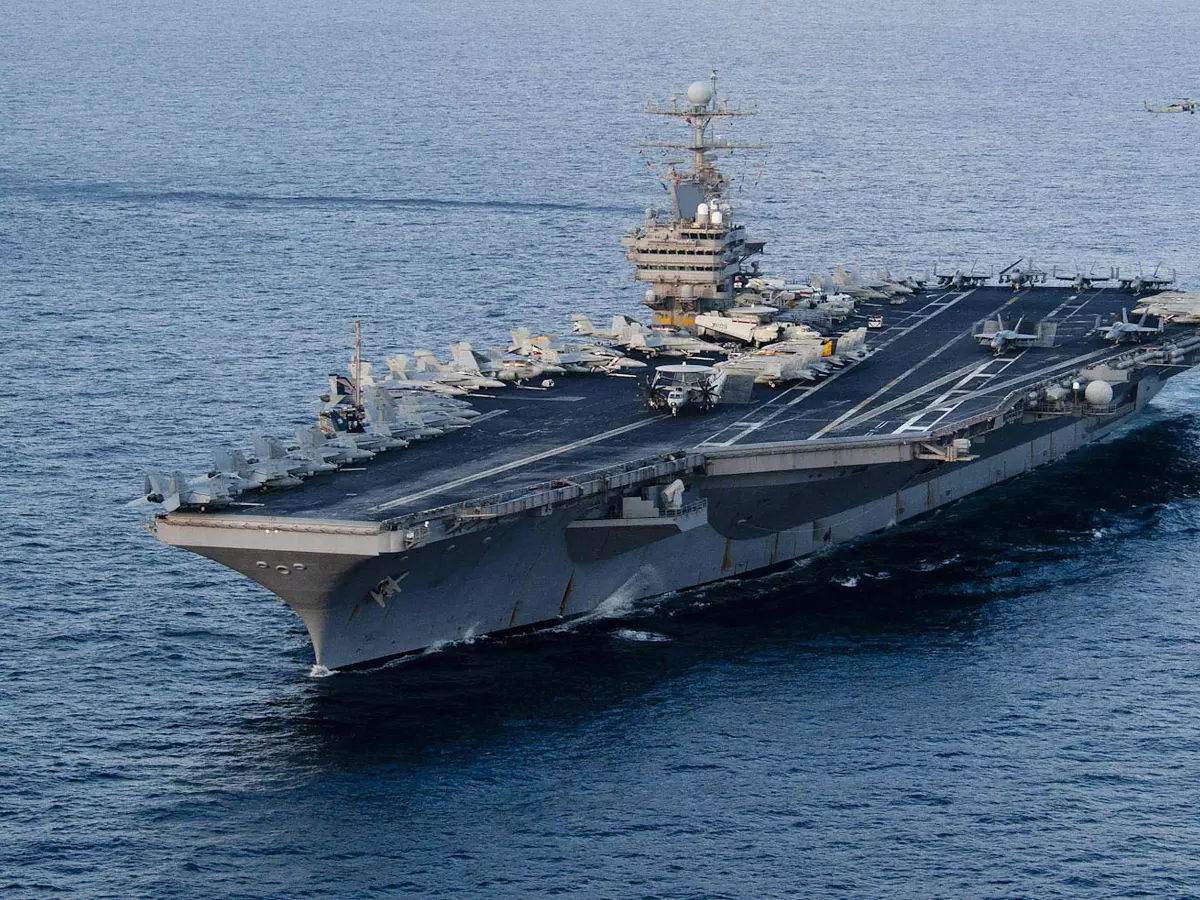
In a tense military encounter on Tuesday, a U.S. Navy fighter jet shot down an Iranian Shahed-139 drone as it neared the aircraft carrier USS Abraham Lincoln (CVN-72) in the Arabian Sea, U.S. Central Command confirmed.
The incident occurred about 500 miles (800 km) from Iran’s southern coast, where the carrier strike group was operating in international waters according to U.S. military statements.
US Shoots Down Iran Drone: Drone Approached With “Unclear Intent”
U.S. officials said the drone “aggressively approached” the aircraft carrier despite efforts by U.S. forces to calm the situation. “An F-35C fighter jet from Abraham Lincoln shot down the Iranian drone in self-defense and to protect the aircraft carrier and personnel on board,” said Central Command spokesman Captain Tim Hawkins in a statement.
The U.S. military emphasized that no American troops were harmed and no equipment was damaged during the engagement. The Shahed-139 is a long-range unmanned aerial vehicle widely used for surveillance and potential strike missions. In this case, U.S. officials described the drone’s intentions as unclear, noting that it continued toward the carrier even after warnings.
US Shoots Down Iran Drone: What the US Said About the Threat
CENTCOM highlighted that U.S. forces attempted “de-escalatory measures” before engaging the drone, but the threat persisted. The F-35C stealth fighter, based aboard the USS Abraham Lincoln, was scrambled and successfully intercepted the drone in what U.S. military leaders called a defensive action to protect personnel and the carrier’s operations.
This marks a rare direct military confrontation between U.S. forces and Iranian-operated unmanned aircraft in a region already marked by heightened tensions.
Strait of Hormuz Incident: Iranian Gunboats Confront U.S.-Flagged Tanker
On the same day, U.S. military officials reported a separate confrontation in the Strait of Hormuz, a strategic maritime corridor linking the Persian Gulf with the Arabian Sea.
According to U.S. Central Command, two Iranian Revolutionary Guard Corps (IRGC) boats and an Iranian Mohajer drone approached the U.S.-flagged tanker Stena Imperative at high speeds.
The Iranian vessels threatened to board and seize the tanker, according to the U.S. military statement, but the merchant vessel maintained course and speed.
The guided-missile destroyer USS McFaul (DDG-74) responded to the scene and escorted the tanker with defensive air support from the U.S. Air Force. The situation eventually de-escalated, and the Stena Imperative continued sailing without reported damage or injuries.
Iran’s response to the tanker incident differed. Iranian state media claimed a vessel entered its territorial waters without proper authorization, was warned, and left without “any special security event taking place.”
US Shoots Down Iran Drone: Regional Security and Diplomatic Context
These developments come during a period of intensified U.S.–Iran tensions that include increased military deployments, earlier confrontations at sea, and diplomatic negotiations aimed at addressing broader issues, including Iran’s nuclear program.
The USS Abraham Lincoln and its accompanying strike group arrived in the region amid growing geopolitical risks, reflecting U.S. efforts to bolster deterrence and maintain freedom of navigation in key international waters.
The Strait of Hormuz remains one of the world’s most critical energy transit routes, with roughly a third of global oil passing through its waters. Episodes involving naval vessels and commercial ships in this corridor can quickly draw global attention due to their potential to disrupt trade and heighten regional tensions.
US Shoots Down Iran Drone: International Reaction and Next Steps
While the U.S. framed the drone shootdown as defensive, the incident adds to a series of confrontations that could influence wider diplomatic efforts. Talks between U.S. and Iranian officials are reportedly planned to address some points of contention, but these military encounters complicate a fragile negotiation environment.
Analysts note that clear communication and restraint on all sides are key to preventing further escalation, especially in a region where military and civilian vessels frequently transit close to sensitive geopolitical flashpoints.
The U.S. military continues to operate in the region, reinforcing its presence as tensions remain elevated between longtime adversaries.




