
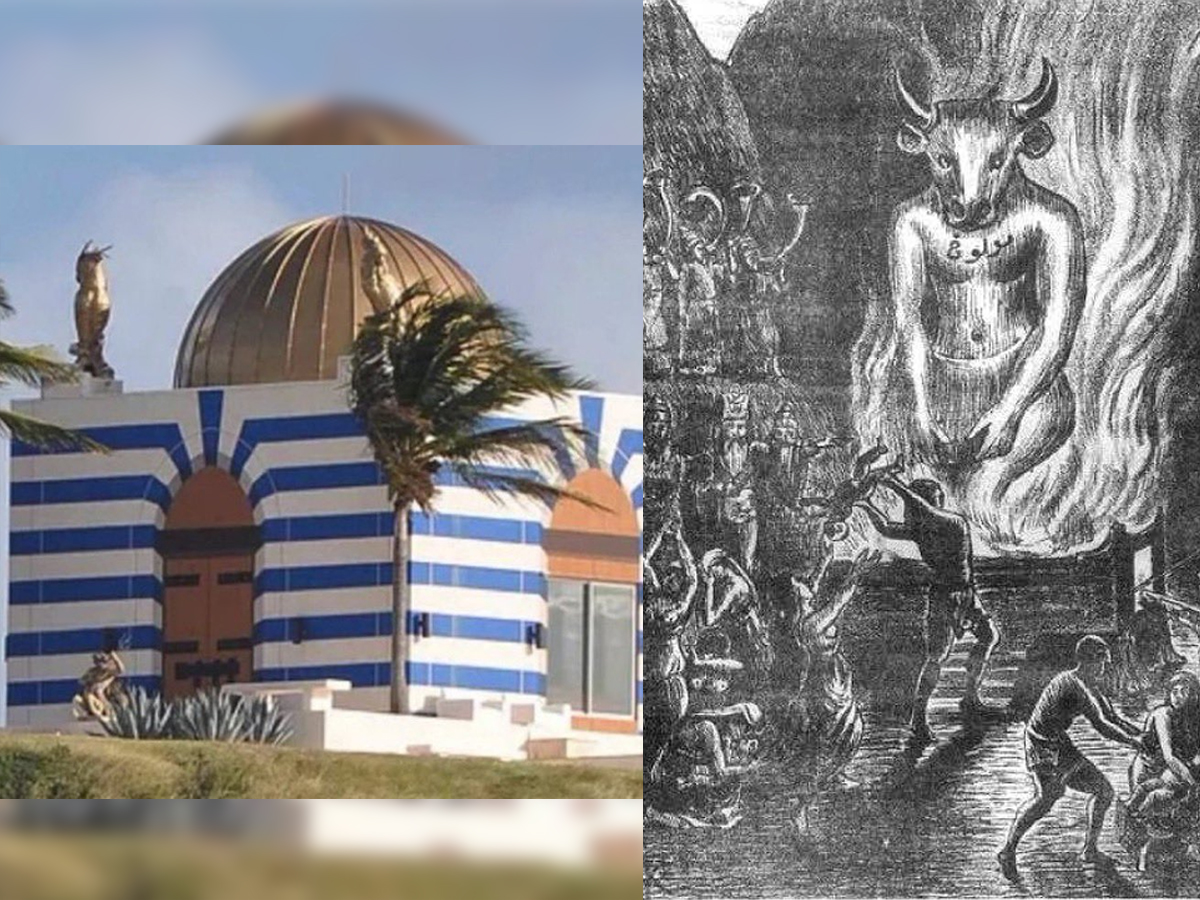
Jeffrey Epstein’s private Caribbean island, Little Saint James, has long attracted attention for its secrecy, powerful visitors, and disturbing criminal history. In recent days, a new wave of online claims has gone viral, asking a darker question: Did Epstein worship the demon Moloch and conduct rituals involving child sacrifice on his island?
The allegations resurfaced after renewed public interest in Epstein-related documents and images of a temple-like structure on the island. Social media posts and fringe commentators began linking the building to Moloch, an ancient deity sometimes associated in historical texts with child sacrifice.
However, no verified evidence supports these claims, according to investigators, journalists, and available records.
Jeffrey Epstein Island Temple: Where Is Epstein’s Island and What Is the “Temple”?
Little Saint James sits between St. Thomas and St. John in the US Virgin Islands. The 78-acre island includes a main residence, guest houses, and a distinctive dome-topped structure on its southwest point.
The building stands out because of its design, as it features blue horizontal stripes, a golden dome, arched doors, and statues painted gold. Palm trees surround the structure, and a terrace with a labyrinth-style pattern sits nearby.
Because the building resembles religious architecture, speculation quickly followed.
Jeffrey Epstein Island Temple: Why Do People Link Epstein to Demon Moloch?
Online theories claim the structure served as a temple dedicated to Moloch, a figure mentioned in ancient texts and later associated in some traditions with sacrifice. Posts allege that global elites worshipped demonic entities on the island.
However, these claims remain unverified conspiracy theories.
Experts point out that Moloch references often appear metaphorically, used to describe systems of power that exploit people. As some discussions describe it, Moloch represents a “system of power that demands sacrifice”, not a literal deity.
Jeffrey Epstein Island Temple: What Do Investigations Say About the Temple?
Reports based on photographs and video footage from inside the structure contradict claims of satanic rituals.
Investigators and journalists who reviewed the interior found a piano and a framed picture of the Pope, not altars, ritual markings, or symbols linked to demon worship.
Claims that children were sacrificed or that demons such as BES, Anunnaki, or other entities were worshipped have never been supported by physical evidence, witness testimony, or court findings.
Jeffrey Epstein Island Temple: Was Epstein’s Religion Part of This?
Epstein identified as Jewish, leading some to speculate the structure could have been a private synagogue. However, religious scholars note that statues and graven images would conflict with Jewish law, making that explanation unlikely.
At the same time, architectural elements resembling Islamic or classical temples do not align with known religious practices tied to Epstein.
This leaves the structure’s purpose unclear, but not proven sinister.
Jeffrey Epstein Island Temple: How Did These Claims Spread So Widely?
The Epstein case involves real, documented crimes, including sex trafficking and abuse of minors. That reality created fertile ground for extreme theories online.
Following document releases in early 2026, social media amplified speculative content, blending architecture, mythology, and outrage into viral narratives. None of these claims has been validated by law enforcement.
Jeffrey Epstein Island Temple: What We Know about the Claims
Epstein committed serious crimes that harmed real victims. Authorities documented those crimes through investigations and court records. But no evidence shows Epstein worshipped Moloch, conducted sacrifices, or ran occult rituals on his island.
The distinction matters. Mixing proven crimes with unsupported supernatural claims risks distracting from accountability and justice for victims.
Disclaimer: The information provided in this article is for informational purposes only and does not constitute financial or investment advice. While we strive for accuracy based on current market data and Budget 2026 announcements, The Sunday Guardian suggests that readers consult with a certified financial advisor before making any investment or money-related decisions. The views expressed here are those of the author and do not necessarily reflect the official policy or position of this publication. However, these claims remain unverified conspiracy theories.




