
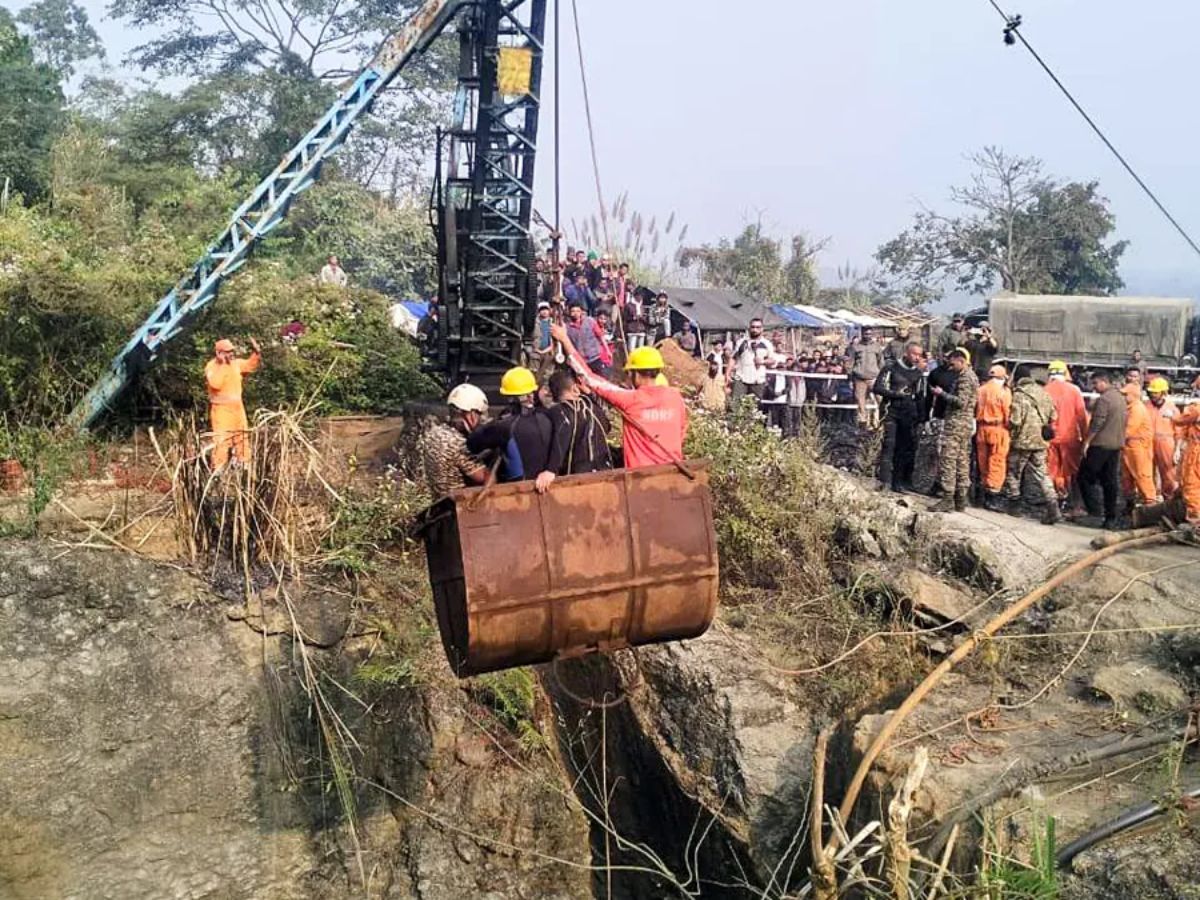
A powerful blast ripped through an illegal coal mine in Meghalaya’s East Jaintia Hills district on Thursday morning, killing at least 16 labourers and raising fears that others remain trapped underground, officials said. The explosion at the remote Thangsku area has prompted a large‑scale rescue and investigation, putting a spotlight on persistent dangers associated with unregulated mining in the region.
Authorities confirmed that rescue teams from the National Disaster Response Force (NDRF) and the State Disaster Response Force (SDRF) are on site, combing through rubble to locate survivors and recover victims.
Meghalaya Mining Blast Death Toll
Police and disaster response officials have so far recovered 16 bodies from the blast site, but the total number of workers present inside the tunnel at the time of the explosion has not been confirmed. Several others are still feared trapped deep within the mine’s collapsed sections.
One injured man survived the explosion and was initially treated locally before being referred to a hospital in Shillong for advanced medical care. Authorities continue to monitor his condition as the rescue operation proceeds.
Meghalaya Mining Blast: What Caused the Illegal Coal Mine Explosion?
Preliminary information suggests that the blast occurred during active mining operations inside an illegal coal mine, possibly linked to the use of dynamite or similar explosives without proper safety protocols. Experts warn that these unscientific practices greatly increase the risk of catastrophic incidents.
“Some indications suggest the explosion took place during mining activity,” said a senior police official, adding that a thorough inquiry will determine the exact cause and identify responsibility. Rescue teams have faced delays due to unstable ground, debris, and challenging terrain, which complicates efforts to reach deeper areas where miners could be trapped.
Meghalaya Mining Blast Rescue Operation: NDRF & SDRF Mobilised
Authorities deployed specialized teams, including the NDRF and SDRF, shortly after the blast. These teams are trained to handle emergencies in hazardous environments and are working alongside local police and fire services to secure the site and locate any survivors.
Rescuers have been careful to navigate unstable earth and tunnel collapses within the mine, which pose ongoing risks to both trapped workers and response personnel. Officials have described conditions as complex and dangerous as they push forward with recovery work.
Meghalaya Mining Blast: Who Were the Victims?
While authorities have not released the identities of all the victims, preliminary reports indicate that many of the deceased were migrant labourers from neighbouring states, including Assam. Local officials are working to notify families as identification continues.
The blast has once again underscored the vulnerability of low‑wage workers engaged in illegal mining, who often labour without safety oversight or protection.
Meghalaya Mining Blast: Why Illegal Coal Mining Persists in East Jaintia Hills?
Meghalaya’s East Jaintia Hills has a long history of illegal coal mining despite bans and environmental orders. The National Green Tribunal (NGT) imposed strict restrictions on unscientific mining methods such as rat‑hole mining due to environmental damage and loss of life.
However, enforcement remains uneven, and illegal operations continue to exploit remote areas with little oversight, often using unsafe techniques that endanger workers and nearby communities.
Meghalaya Mining Blast: Local & Political Reaction
The explosion has drawn sharp reaction from residents and political leaders. Many have called for stronger enforcement of mining bans and tougher penalties for illegal operators. Some local activists urged authorities to prioritise safety reforms and strictly monitor coal extraction sites to prevent future tragedies.
Communities living near the mine described hearing a massive blast and feeling tremors across nearby hills, highlighting the blast’s force and the inherent dangers of unregulated mining operations.
History of Coal Mining Accidents in Meghalaya
Meghalaya’s mining sector has witnessed several deadly incidents over the years. The combination of unregulated rat‑hole mining, poor safety practices and remote locations has repeatedly led to catastrophic collapses and worker deaths.
These events have drawn judicial scrutiny and human rights intervention, but the cycle of accidents continues, underscoring the need for stronger governance and worker protection.
Meghalaya Mining Blast: What Happens Next?
Police have ordered a formal probe into the blast, and an inquiry will assess mining records, safety lapses and legal violations. Authorities have promised that responsibility will be fixed once the investigation concludes.
In the meantime, rescue and clearance operations will continue until all victims are accounted for and the site is secured, officials said. Families of the dead and injured are expected to receive government support, and local leaders have urged full transparency in the investigation.




