
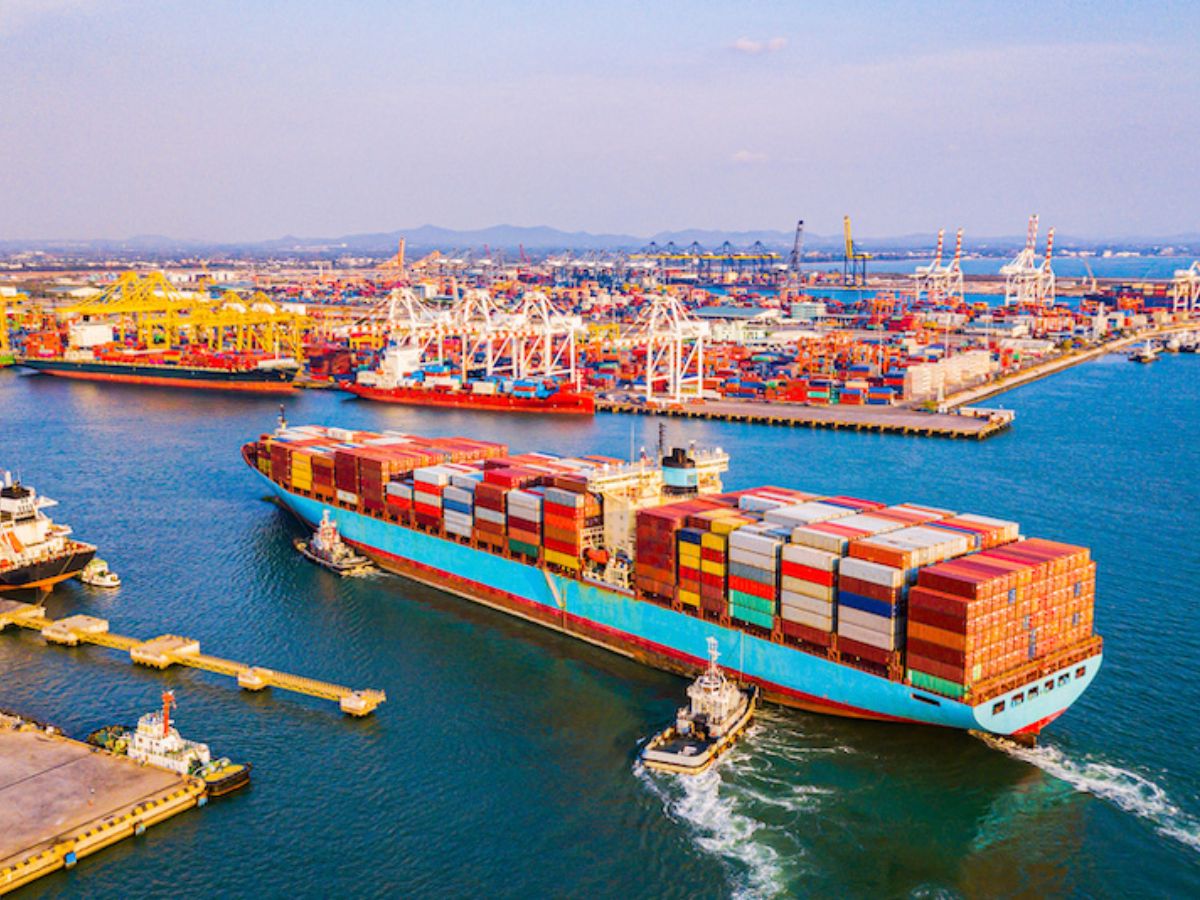
When a country cannot produce enough food, fuel, or other goods to meet domestic demand, it needs to import those goods from other nations. Imports become a necessity for such countries. Globally, trillions of dollars worth of goods and services are moved every year across borders. But which countries are most reliant on imported goods?
What is import dependence & which economies rely most on imports?
Import dependence is typically measured as imports of goods and services as a share of GDP. It is a ratio that reflects a country’s value of imports in the context of its gross domestic output.
According to World Bank data, Hong Kong, Luxembourg, San Marino, and Singapore are the top four economies who rely most heavily on imports. In the case of Hong Kong, its imports are 178% of its GDP, while for Singapore, it is 144%. Notably, both these countries are small in geographical size and deal with re-exports.
Are small countries naturally more dependent on imports?
No, this is a myth. The size of the country isn’t deterministic of its import dependence. What matters more is economic structure: access to resources, energy self-sufficiency, export capacity, and how an economy is integrated into global trade.
Both smaller economies and large ones rely on imports to varying degrees. Even major economies such as the United States depend heavily on imported oil, components, and manufactured goods, while countries like Japan, despite their economic scale, rely extensively on imports for energy and raw materials.
What are re-export economies & why is their import-dependence high?
Re-export economies are countries that import large volumes of goods mainly to export them again, with little or no processing in between. These countries, like Hong Kong and Singapore, act as trade, logistics, and distribution hubs, rather than final producers or consumers of the goods that pass through them. High import numbers show how much global trade passes through them, not that the country is weak or unable to produce what it needs.
Are highly import-dependent economies weak?
No, this is a misconception. High import-dependence does not translate directly to a weak economy. Many resource-poor industrial economies, such as Japan and South Korea, have strong economies because they export high-value goods and services and maintain strong foreign exchange buffers.
However, it is important to note that import dependence can become a vulnerability when an economy cannot reliably pay for those imports, as seen in Sri Lanka, where a collapse in dollar reserves in 2022 left the country unable to finance fuel, food, and medicine imports.
What does it mean to de-risk supply chains?
When countries rely excessively on imports, it is often because they are unable to produce enough goods and services for their domestic consumption. This becomes a foreign policy issue, as their economic stability becomes vulnerable. Geopolitical tensions, sanctions, wars, or other disruptions in the supplier countries can affect imports, which in turn affects the stability of the country’s economy.
When an import-dependent country tries to de-risk their supply chains, it means they are trying to reduce the risk of exposure to unforeseeable events. They often build reserves or diversify suppliers to avoid being over-dependent on other countries.




