
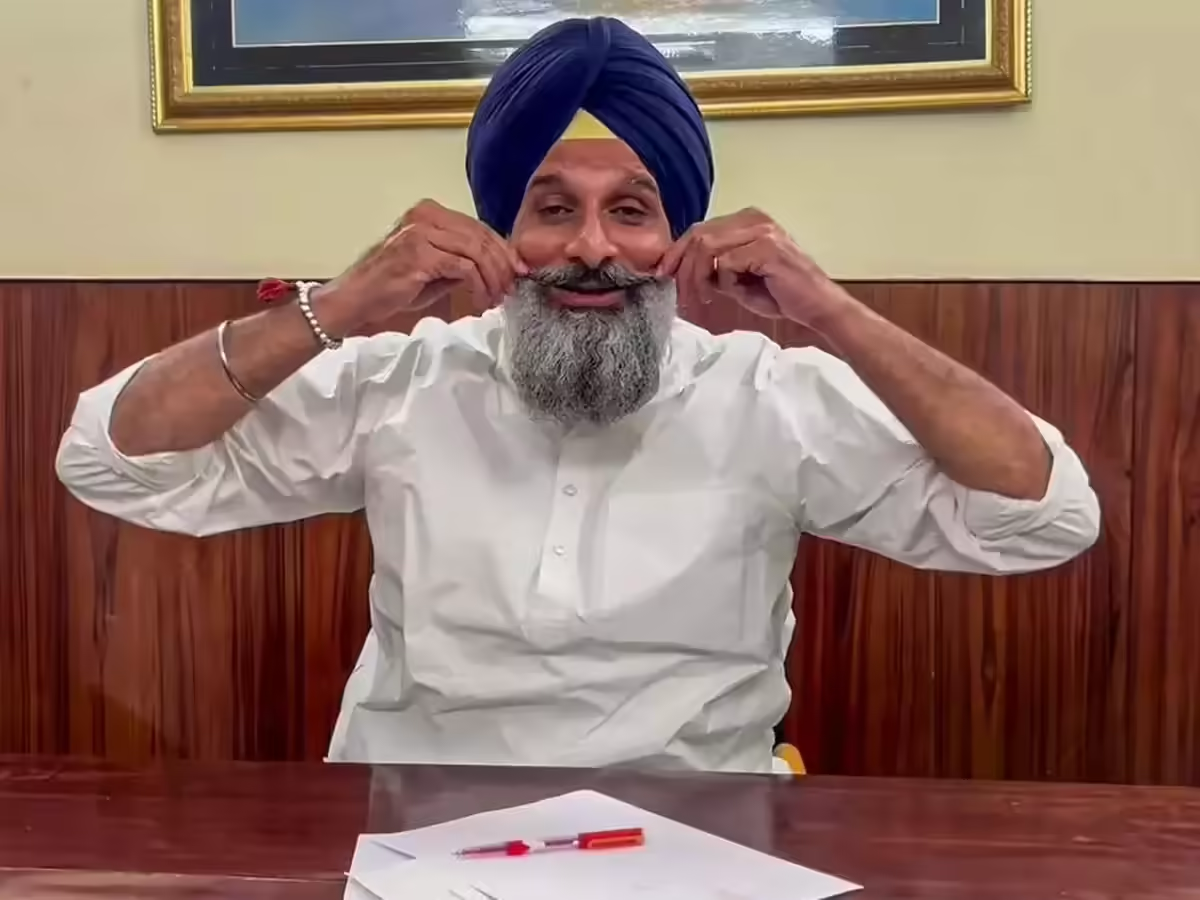
Chandigarh: The release of Shiromani Akali Dal leader Bikram Singh Majithia on bail this week has triggered fresh political churn in Punjab, reopening debates around political vendetta, corruption cases, and possible political realignments ahead of the 2027 Assembly elections. His return has also revived speculation about a potential alliance between the Shiromani Akali Dal (SAD) and the Bharatiya Janata Party (BJP), a partnership that once dominated the state’s political landscape.
Speaking to The Sunday Guardian, Majithia addressed the growing buzz over a possible SAD–BJP reunion following his bail. He said the decision was not his to make and rested entirely with the leadership of both parties.
“It is not in my hands to decide this. The leadership of both parties will take a call, so whether it happens or not, I have no idea. But this alliance has had three successful tenures, received a strong mandate in the past, and the people of Punjab have chosen this alliance before,” he said.
The statement is significant because it neither confirms nor rules out the possibility, yet acknowledges the political weight the alliance once carried. For many observers, even this measured response suggests that channels of communication may not be completely closed, especially at a time when opposition parties are reassessing strategies to counter the ruling Aam Aadmi Party (AAP).
Majithia had been lodged in Nabha jail for about seven months following his arrest in a disproportionate assets case registered by the Punjab Vigilance Bureau. The case alleged that the former minister accumulated assets far beyond his known sources of income. While granting bail, the Supreme Court noted that the investigation had been completed and that further custodial interrogation was not required.
His release was followed by celebrations among Akali workers, underlining that he continues to command influence within the party’s rank and file. For the Shiromani Akali Dal, which has been attempting to regain political relevance after its defeat in the 2022 Assembly elections, Majithia’s return could provide organisational momentum and a sharper political edge.
Soon after walking out of jail, Majithia launched a strong attack on the Bhagwant Mann-led government, accusing it of misusing state agencies to target political opponents. He described the vigilance case as politically motivated and maintained that the allegations against him were fabricated. His assertive tone suggests he is preparing for an aggressive political innings rather than a cautious comeback.
The AAP government, meanwhile, has maintained that the case is rooted in evidence and that the law will take its course. Senior leaders have reiterated that bail should not be misconstrued as a clean chit, setting the stage for a prolonged political and legal confrontation.
What makes Majithia’s release particularly consequential is the broader political signal it may carry. The Akali Dal has been working to rebuild its traditional support base after years of electoral setbacks. A leader known for his combative style could help the party sharpen its attack on the government, particularly on issues of governance, financial stress, and law and order.
At the same time, talk of a possible SAD–BJP rapprochement adds another layer of intrigue. The two parties shared power in Punjab for a decade, winning three consecutive Assembly elections together. Although their alliance collapsed during the farmers’ agitation, shifting political realities often compel former partners to reconsider earlier positions.
Majithia’s careful wording indicates an attempt to keep political options open without appearing eager for a tie-up. Analysts believe that even the perception of renewed engagement could alter opposition arithmetic in Punjab, where the Congress is also trying to reclaim lost ground and the BJP is gradually expanding its urban footprint.
For the ruling Aam Aadmi Party, the progress of high-profile corruption cases remains closely tied to its clean governance narrative. Any weakening of such cases offers the opposition an opportunity to question that claim, while a strong prosecution would allow the government to argue that it is holding powerful leaders accountable.
Ultimately, the political impact of Majithia’s release will depend on whether he can convert the moment into a sustained campaign that reconnects with voters on everyday concerns such as unemployment, agrarian distress, and the drug menace.
For now, his bail has injected fresh uncertainty into Punjab politics. With parties quietly recalibrating their strategies, Majithia’s re-entry into the arena ensures that the contest ahead is likely to grow sharper and more unpredictable. His remarks on a possible alliance only deepen that suspense, reinforcing the reality that in Punjab politics, old equations are rarely gone for good.




