
A few days before the Union Budget 2026-27 was to be unveiled by Union Finance Minister Nirmala Sitharaman, a group of stock traders from abroad bet massively on a short covering of the shares concerned. They would have gained several lakhs of crores had share prices gone massively down as they expected. Instead, in the early hours in India, President Trump announced the India-US Trade Deal. On hearing the news, the share market boomed, gaining Rs 13 lakh crores by the morning of February 3. The punters had not expected the friendly pre-dawn call President Trump had with Prime Minister Narendra Modi and the warm response on social media of the latter. Those betting against India deservedly lost, showing that betting against the fastest growing major economy in the world was a mistake. As always is the case in politics since 2014, any decision by the Union Government is instinctively opposed by the Opposition, with the Congress Party in the lead. There were times now long past when the Opposition leadership backed the Union Government, such as when the Indian Army, Navy and Air force liberated Bangladesh in 1971 from the genocidal grip of the forces of GHQ Rawalpindi. The military operations were successful, and 93,000 Pakistan Army troops led by General Amir Abdulla Khan Niazi surrendered to the Indian Armed Forces commanders in Dacca. Unfortunately, after the victory, Prime Minister Indira Prayadarshini Gandhi, the Iron Lady of India as she was known by supporters of the Iron Lady of the United Kingdom, Margaret Thatcher, allowed all the PoWs to return to Pakistan, brimming with thoughts of revenge against India i.e. Bharat. No concessions were exacted, including the broadening of the “Chicken’s Neck” connecting the rest of India with Assam and the northeastern states. Each unilateral concession by India to Pakistan has been met not by a cessation of hostilities and hate, but by an intensification by GHQ Rawalpindi of the hybrid war between India and Pakistan.
That error of unilateral concessions sans any countervailing gesture by the other side was not repeated by the Union Government when it was negotiating the India-US trade deal once Tump 2.0 began to occupy the White House. Unlike the leadership of several important countries, India refused to surrender to the tactics used by the White House, leading to a storm of hostile actions, such as the imposition of very high tariffs on India by the White House through the Departments functioning under it, principally Commerce. Some senior US Cabinet officials even went to the level of spewing abuse of India and its elected leadership. Prime Minister Modi and his senior Cabinet members refused to join in such a slanging match, maintaining politeness and dignity in their nevertheless clear responses each time.
Countries hostile to India such as Pakistan and China were gleeful, seeing in what seemed to be a growing rift in the India-US partnership an opportunity for themselves to further damage the economic prospects of India. Beneath the surface, unnoticed by media headlines, contacts between the two sides remained functional and effective, preventing any real damage to the partnership between the two largest democracies in the world. Many, indeed most, of the high-level officials in the Trump 2.0 administration were laser-focused on the China challenge to US global primacy, and understood the importance of India staying in the partnership to prevent the Indo-Pacific from falling under the domination of China. CCP General Secretary Xi Jinping was transparent through deeds and even on occasion words to displace US primacy with that of China. Eventually, even hardliners against India such as US Trade Representative Peter Navarro (who was a China hawk) read the tea leaves right and understood that bullying would not work against India.
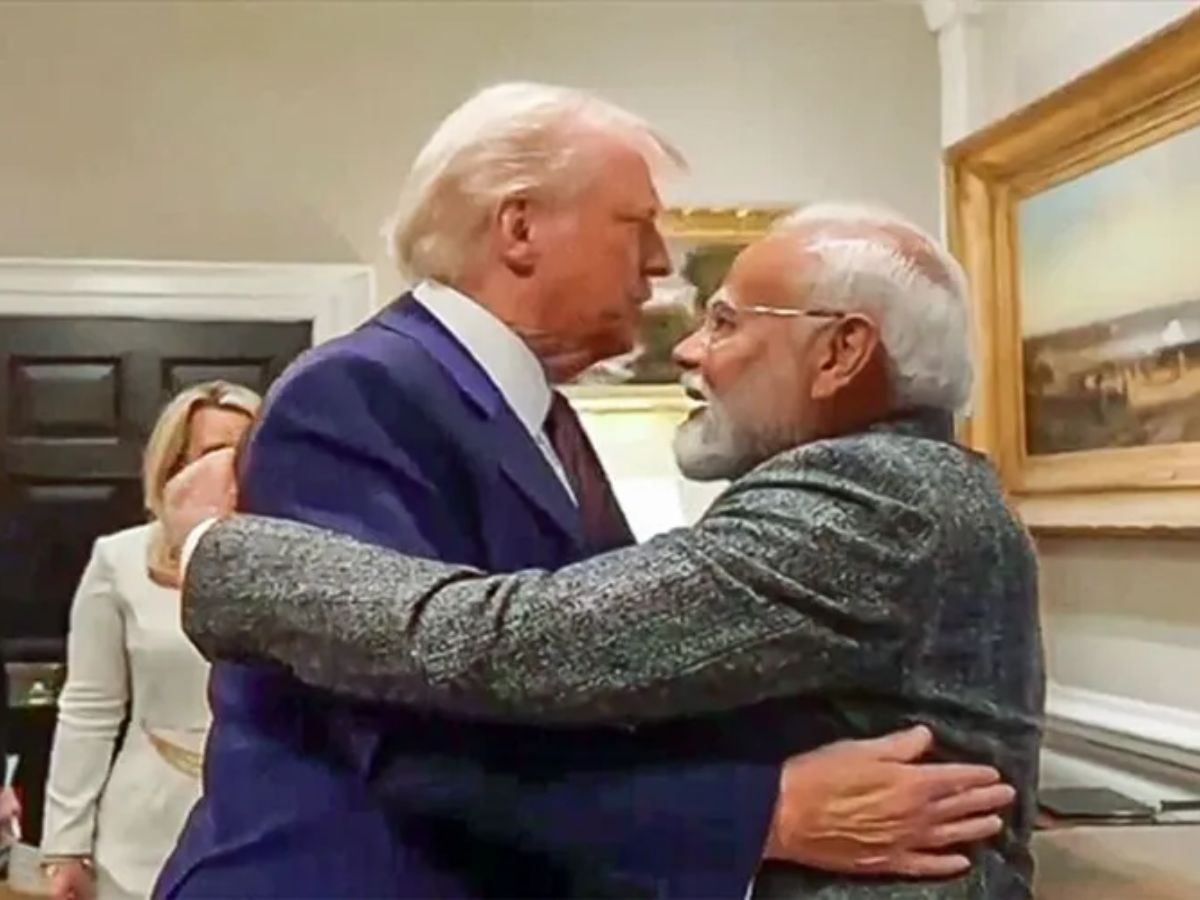
During the week, the first glimmer of hope of a possible return to the US-India partnership was the invitation to New Delhi to join in the global alliance of democracies to become self-sufficient in rare earths. In less than a day followed the historic call by President Trump to Prime Minister Modi on February 3, 2026, in which the US President told his counterpart in India Prime Minister Narendra Modi that the trade deal had finally been agreed to by the White House. President Trump said in a social media post that it was an “honour” to speak to PM Narendra Modi. The PM responded almost immediately by a social media post about his “good friend President Donald Trump” having spoken to him about the White House finally agreeing to a mutually acceptable trade agreement between the US and India.
This was a deal so important that it was handled by the principals themselves on both sides, President Trump and PM Narendra Modi. The logjam had broken and the US-India partnership came back on the track to a comprehensive partnership. On petroproduces, India would buy what was best for its own refineries, and open its markets to Venezuelan oil. The increase in global petroproduct supply caused by a normalisation of production in Venezuela will help lower the price. In much the same way, once the clerical regime is replaced by a democratic alternative (perhaps in months if not weeks), normalisation of production and sale of Iranian oil will increase supplies and lower costs.
The India-US trade agreement, following days after the India-EU Free Trade Agreement, will strengthen the Indian economy and raise the GDP of India perhaps to the long awaited double digit level. Globally, the profile of India will grow further, while the reputation of the Trump White House for unpredictability will fade with the resumption of normal trade between India and the US. Both countries, both peoples, will benefit from the Trump-Modi Trade Agreement, a welcome development in the relentless struggle that has for years been ongoing between the democracies and the authoritarian states.
Should a kinetic conflict break out between the democracies and the autocracies, such as a Chinese invasion of Taiwan, the Trump-Modi Trade Agreement would strengthen the hands of the democracies against the autocracies. Within the neighbourhood, the present leadership Of Pakistan, Bangladesh and China must be unhappy. They will become weaker both globally and internally and give their people greater chances of winning the rights and freedoms that are the inalienable rights of every occupant on Planet Earth.




