
NEW DELHI: When the chiefs of India’s armed forces—the Army, Air Force and Navy—retire from service, they are entitled to share their experiences and perspectives in the form of books. Such works often include accounts of military decisions, strategy, war memories, leadership principles and national security experiences. These books contribute to history, strategy and public discourse, but due to security restrictions and government regulations, they also face several limitations and objections.
Against this backdrop, the political storm triggered by excerpts from the unpublished book of former Army chief General M.M. Naravane has raised some serious concerns in the minds of journalists like me, as well as those who have served in the armed forces or intelligence services. Is there a domestic or foreign conspiracy at work to project the period from the Chinese intrusion to the subsequent pushback and relative calm along the borders not as a success of the Army and the government, but as a confrontation? Is this being done to disrupt parliamentary functioning, create conflict inside and outside Parliament, and humiliate General Naravane by accusing him of indiscipline, much like Admiral Vishnu Bhagwat was once targeted?
Rahul Gandhi, the Congress party, and some of their supporting leaders, advisers and sympathetic media outlets are using the pretext of Naravane’s book to portray Prime Minister Narendra Modi and his government as weak, while attempting to spread confusion in public opinion by projecting a rift between the government and the armed forces. But it cannot be forgotten that since 1971, foreign powers, agencies, and arms and defence equipment middlemen have repeatedly attempted to influence India’s security and democratic system for their own interests.
Disputes surrounding defence deals such as Mirage, Scorpene submarines, Bofors, Sukhoi and Rafale, or controversies timed around critical moments in India—China or India—Pakistan relations, have often been used to damage India’s strategic interests. Even today, security-related negotiations are ongoing with Russia, the US, France and several other countries. Free trade agreements are being finalised with the EU, the US and others. In such a scenario, it is entirely possible that certain forces are trying to destabilise the governance system.
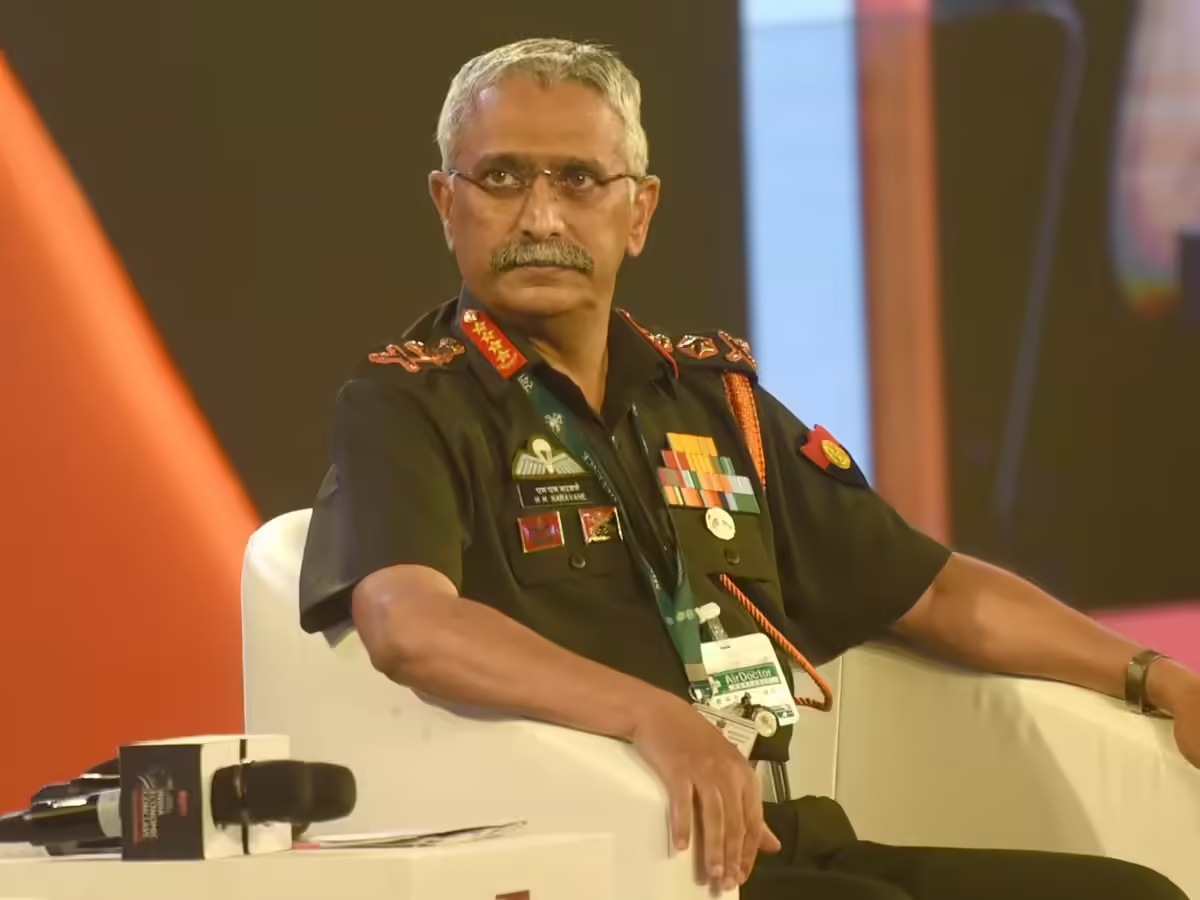
There is no doubt many senior Indian Army officers have written books and memoirs—whether about wars, leadership principles or national security experiences. However, the cover of General M.M. Naravane’s unpublished book Four Stars Destiny is being circulated inside and outside Parliament for publicity. The manuscript has not yet been officially published and is pending review by the Ministry of Defence. It is reported that in the book, Naravane has shared his experiences regarding border tensions (especially along the LAC and in the Galwan Valley), the Agnipath recruitment scheme, and military and political decision-making. Rahul Gandhi quoted some excerpts from this unpublished book in Parliament, prompting the government to object, arguing that this violated rules since the book is unpublished and may contain sensitive security-related information. The government’s position is that even retired officers are not permitted to publish sensitive information, and that service rules continue to apply even after retirement. The opposition, on the other hand, argues that transparency and discussion on defence policy are essential. General Naravane himself has stated that he has completed writing the book and that the process between the publisher and the MoD is ongoing, over which he has no direct control.
It must also be acknowledged that many politicians, officials and senior military officers are often encouraged by domestic and foreign publishers to write—or to have their experiences written—in the form of memoirs. Ghostwriters, whose names do not appear on the cover, are commonly involved and are paid well by publishers. This is where the game becomes possible. Behind the scenes, there can also be invisible forces providing funding, encouraging controversial content, ensuring publication, and then amplifying disputes.
Several senior officers associated with the Indian Army—whether former chiefs or senior commanders—have written or dictated books based on war experiences and leadership. General V.P. Malik’s book provides a detailed account of the 1999 Kargil War. Lieutenant General K.J.S. Dhillon has written about recent cross-border operations against Pakistan. Other books focusing on adventure, struggle and military life are also available, revealing soldiers’ personal experiences. These works typically describe military decisions, battlefield strategies, difficult leadership choices and the hardships faced by soldiers.
The IAF’s top leadership has also shared its experiences. Former Air Chief P.C. Lal and others have books to their credit focusing on Air Force history and personal missions. Numerous writings based on the biographies, war memories and leadership values of senior pilots and commanders exist. The Navy has comparatively fewer memoirs by top commanders, but some important books on naval operations and maritime strategy are available.
There is also noteworthy writing on the functioning and experiences of India’s intelligence community—less in the form of memoirs and more as analytical or biographical works. The dialogue-based book involving former RAW chief A.S. Dulat and former ISI chief Asad Durrani was highly controversial and remains a rare resource for understanding South Asia’s intelligence challenges. Analytical and biographical works on R.N. Kao, RAW’s first chief, describe the agency’s successes and challenges, while a book by B. Raman shares the experiences of talented operators from RAW’s early years. These writings provide rare insights into intelligence operations, decision-making processes and strategic conflicts.
The core issue is that senior officers of the armed forces and intelligence services are bound by strict rules regarding the publication of classified or sensitive information. These rules apply during service and, in many cases, even after retirement, to prevent sensitive information from reaching adversary nations. Prior approval from the MoD or the relevant agency is mandatory before publishing military experiences. If such approval is not granted, publication is delayed or stopped—as appears to be the case with Naravane’s book.
Given that the book reportedly contains detailed material on sensitive issues, publicly quoting its contents without approval is considered a violation of parliamentary rules. Books written by senior officials of the Army, Air Force, Navy and intelligence organisations not only illuminate military history and leadership values but also influence national security policy and democratic debate. Freedom of expression is essential, but it must be balanced against security priorities, confidentiality and established government rules. Indian military history also records the case of Admiral Vishnu Bhagwat (Navy Chief from 1996 to 1998), who was removed from office due to open dissent and confrontation with the government. Bhagwat publicly objected to government decisions to senior appointments and promotions in the Navy, calling them interference in professional autonomy. The government viewed this as indiscipline and defiance of orders. On December 30, 1998, Admiral Vishnu Bhagwat was dismissed from his post—the first and only instance in independent India of a serving service chief being removed in this manner. The episode continues to serve as a warning, clearly illustrating where the limits of dissent within the armed forces lie.




