
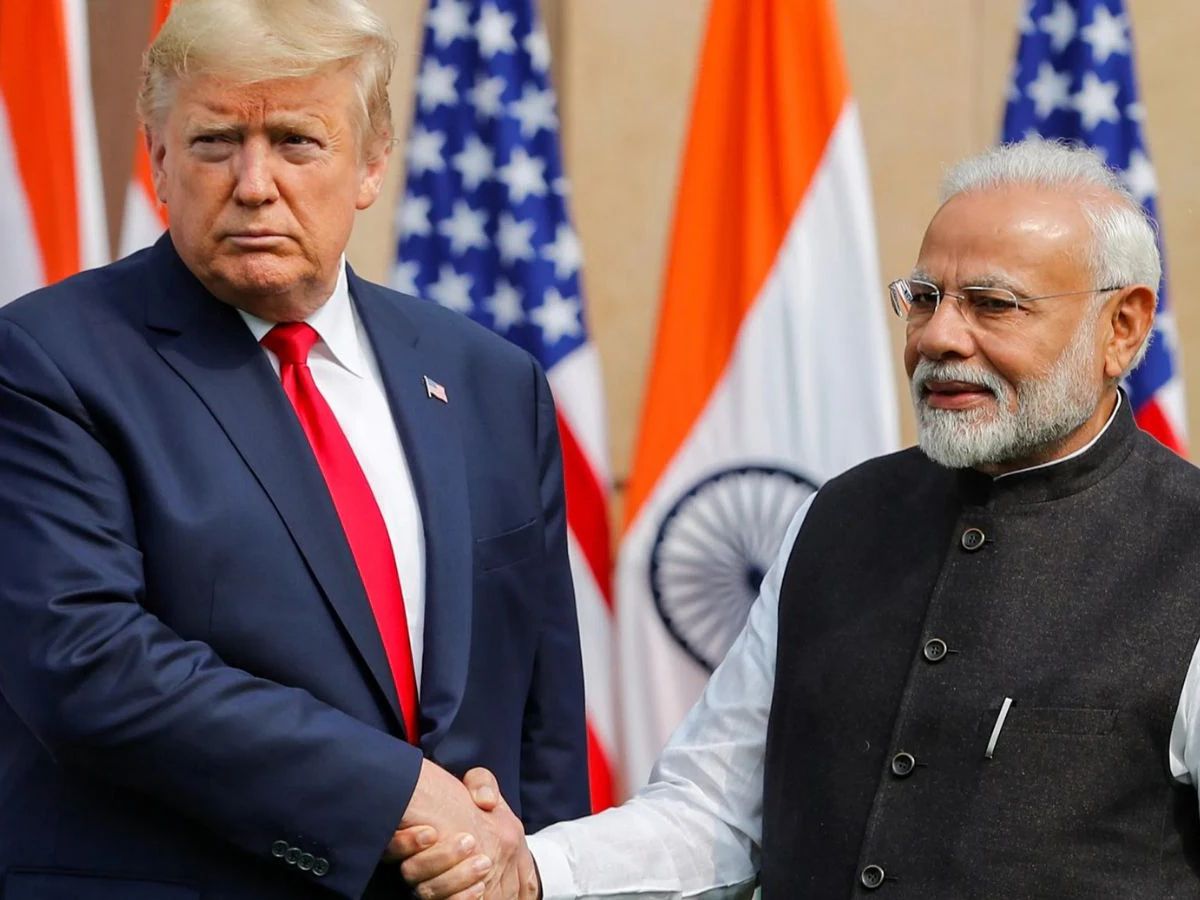
NEW DELHI: The framework for an Interim Agreement and the accompanying Executive Order signed by U.S. President Donald J. Trump collectively signal a fundamental reconstruction of the relationship between the United States and India. The shift moves the partnership away from traditional diplomacy toward a high-stakes, reciprocal trade alliance that prioritises economic security and geopolitical alignment.
This new architecture rests on a central trade-off: The United States is removing punitive “national security” barriers and offering preferential market access in exchange for India’s large-scale capital commitments and its formal exit from Russian energy markets.
The immediate catalyst for this shift is the Executive Order rescinding a 25 percent punitive tariff previously imposed on Indian goods due to India’s importation of Russian oil. By terminating this duty, Washington has formally acknowledged India’s commitment to stop directly or indirectly importing Russian energy and to pivot toward purchasing 500 billion dollars’ worth of US energy products, aircraft and aircraft parts, and technology over the next five years. This purchase commitment forms a cornerstone of the agreement, aimed at addressing trade imbalances while anchoring India more firmly within US-linked supply chains.
The Executive Order also establishes an enforcement mechanism. It authorises the Secretary of Commerce to monitor India’s energy imports and explicitly provides for the reimposition of the 25 percent duty if India resumes direct or indirect purchases of Russian oil.
On the trade front, the Joint Statement sets a reciprocal tariff rate of 18 percent on a wide range of Indian-origin goods, including textiles, apparel, leather and footwear. The rate is presented as a means of addressing persistent US trade deficits while offering India a stable baseline for its core export sectors. At the same time, Washington has agreed to remove or ease additional tariffs on Indian aircraft parts, generic pharmaceuticals and gems, and to provide a preferential tariff-rate quota for automotive parts. These concessions represent a significant gain for Indian industry, particularly in resolving long-standing disputes arising from Section 232 national security investigations covering steel, aluminium and copper.
In return, India has committed to substantial market liberalisation. The agreement requires India to eliminate or reduce tariffs on a broad range of US industrial and agricultural products, including dried distillers’ grains, soybean oil, fruits, nuts, wine and spirits. Beyond tariffs, India has agreed to dismantle non-tariff barriers that have historically restricted access to its domestic market. This includes addressing long-standing US concerns over medical devices, eliminating restrictive import licensing for information and communication technology goods, and streamlining testing and conformity requirements for US exports. Together, these measures open key segments of India’s technology and healthcare markets to increased US competition.
The documents also emphasise “economic security alignment,” including cooperation on export controls and inbound and outbound investment reviews aimed at addressing the non-market policies of third parties. By prioritising expanded trade in graphics processing units and other data-centre hardware, the framework positions India as a major regional hub for US-aligned digital infrastructure.
This alignment is further reinforced by a ten-year defence cooperation framework, which the Executive Order cites as a contributing factor in granting India preferential trade treatment.
India has gained preferential market access, lower effective tariffs, and access to high-end technology, but has also curtailed its strategic flexibility on Russia and opened sensitive domestic sectors to US industrial and agricultural producers. The agreement, official told this newspaper, serves as a blueprint for deep economic integration over the coming decade, binding India’s growth trajectory more closely to US trade and national security objectives.




