
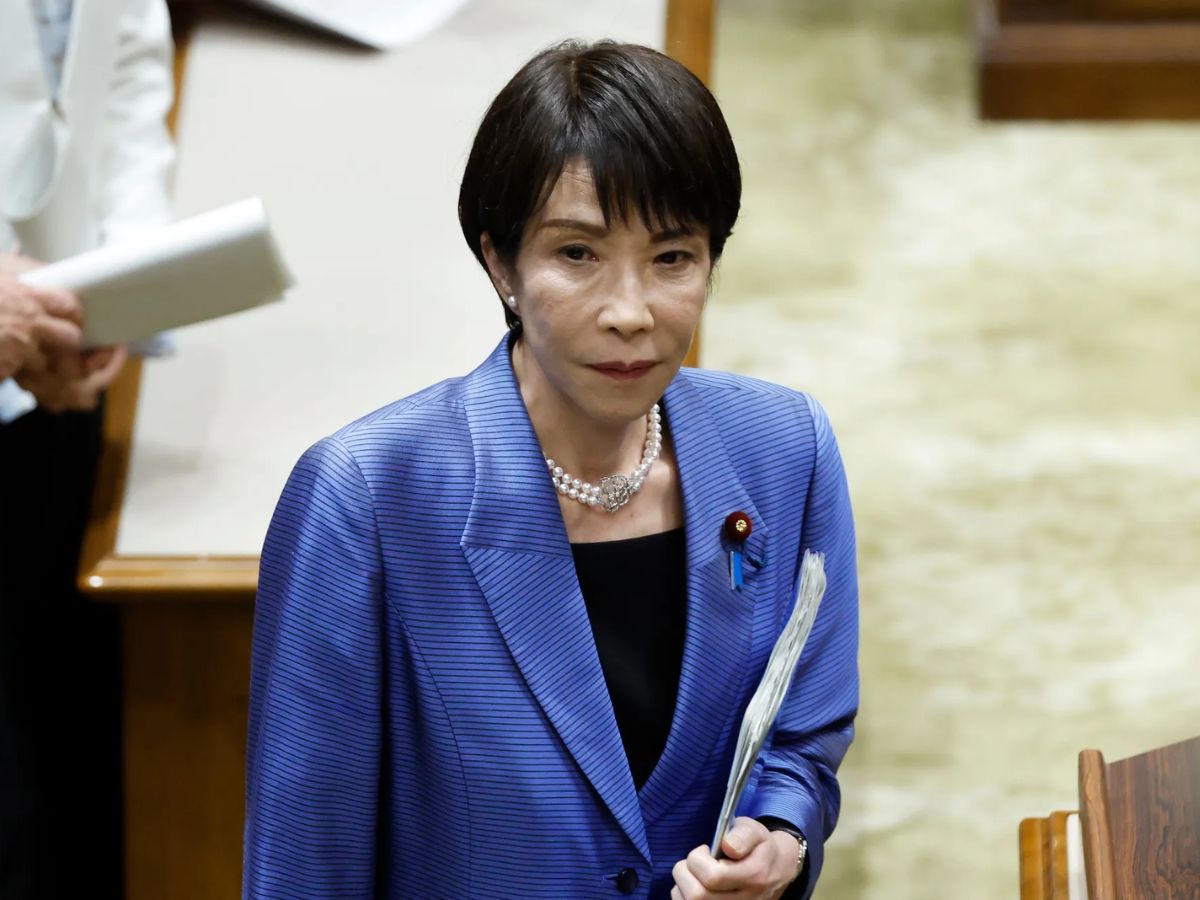
LONDON: In a stunning political manoeuvre, Japan’s Prime Minister Sanae Takaichi, who only took office in October 2025 as Japan’s first female prime minister, dissolved the House of Representatives in late January, setting the stage for today’s election barely two years into the current lower-house term. Takaichi’s decision to call early elections, widely seen as a bid to cement her authority and secure a firmer majority, comes amid the Liberal Democratic Party’s eroding grip on power. Her coalition between the LDP and the Japan Innovation Party holds only a slim majority in the lower house and is a minority in the upper chamber. Winning a decisive mandate would give her room to push through her economic and fiscal agenda and quell mounting public and internal party unease about Japan’s challenging economy.
For much of the past three decades, Japan has been a paradox. The world’s third-largest economy has endured stagnation, deflation, demographic decline, and a public debt load that would have sunk most nations. Yet it has avoided crisis with no sovereign default, no mass unemployment, and no social upheaval. Instead, Japan perfected the art of economic endurance. Today, that era may be ending. Economists, investors, and policymakers increasingly describe Japan as being at a “tipping point,” not because collapse is imminent, but because the economic model that sustained the country since the 1990s is losing its effectiveness. Long-suppressed forces are re-emerging all at once: inflation, rising interest rates, shortages, and fiscal strain. Japan now faces choices it has postponed for decades, and the cost of delay is rising. The underlying problem is that the country’s demographic time bomb has reached maturity.
Japan’s demographic decline is well known, but its economic impact is no longer theoretical. The country has the oldest population in the world, with nearly 30 percent of citizens aged 65 or older. Its total population has been shrinking since 2008, and its working-age population has been declining even longer. For years, Japan managed this reality through high labour participation among older workers, increased automation, and a strong culture of savings. But these buffers are eroding. Labour shortages are now chronic across sectors, from manufacturing and construction to healthcare and retail. Small businesses struggle to stay open as productivity gains are no longer sufficient to offset the shrinking workforce, while the fiscal burden of an aging society is ballooning. Pension pay-outs and healthcare costs continue to rise as the tax base shrinks. This creates a structural imbalance that cannot be solved through cyclical growth alone.
Japan’s public debt, exceeding 250 percent of GDP, has long defied conventional wisdom. In most countries, such levels would trigger capital flight or inflationary spirals. Japan avoided both largely because its debt was domestically held and financed at ultra-low interest rates, an arrangement made possible by the Bank of Japan’s extraordinary monetary policy. For decades, the central bank kept interest rates near zero, or even negative, while purchasing massive quantities of government bonds. The result was financial repression in exchange for stability. Savers earned little, but the government financed itself cheaply, and deflation kept prices in check. That bargain is now unravelling.
Inflation, dormant for a generation, has returned. While Japan’s inflation rate remains lower than in the United States or Europe, it has consistently exceeded the Bank of Japan’s 2 percent target, something once considered impossible. In response, the Bank of Japan has begun cautiously stepping away from its most aggressive policies, loosening its grip on bond markets and allowing interest rates to rise modestly. But even small increases matter. With such a large debt stock, higher interest costs threaten to crowd out other spending or force difficult fiscal choices. Yet maintaining ultra-easy policy indefinitely risks further weakening the currency and importing inflation. Thus, Japan finds itself trapped between the dangers of tightening too much and the costs of not tightening at all. The result is a decline in the value of the yen and a squeeze on the cost of living.
The weakness of the yen has become one of the most visible symbols of Japan’s predicament. As interest rates rose elsewhere while remaining low in Japan, the yen fell sharply, reaching multi-decade lows against the dollar. For exporters and the tourism industry, this has been a boon. Japanese manufacturers enjoy improved price competitiveness abroad, and foreign tourists have returned in droves. Corporate profits, particularly for large multinational firms, have surged, but for households the story is different. Japan imports most of its energy and a significant portion of its food, and a weaker yen means higher import costs, which are passed on to consumers. Prices for essentials have risen, while wage growth has lagged behind inflation for many workers, a disconnect between corporate profitability and household purchasing power, which has become politically sensitive. Inflation without corresponding wage growth erodes living standards and undermines public confidence in economic leadership, and for a society accustomed to price stability, even modest inflation feels disruptive.
Japan’s economic model also faces external pressures. China, once a powerful engine of regional growth, is slowing structurally. Tensions between the United States and China complicate supply chains and force strategic realignments. Energy markets have become more volatile, and geopolitical risks, particularly in East Asia, have risen. At the same time, global interest rates are higher, making Japan’s long-standing monetary divergence harder to sustain. Currency volatility carries greater consequences as Japan is increasingly reliant on foreign demand, foreign capital, and potentially foreign labour, areas where policy has traditionally been cautious. The global environment is becoming less forgiving of half-measures.
Japan has faced predictions of decline before and has repeatedly defied them. Its institutions are strong, its society is cohesive, and its financial system is stable. None of these strengths have disappeared. What has changed is the large number of challenges happening at the same time. Demographic decline, fiscal strain, inflation, currency weakness, labour shortages, and global uncertainty are no longer distant or sequential challenges; they are converging. The tools Japan used to neutralize one problem often worsen another, and policies that once bought time now consume it. This does not mean Japan is heading for crisis; it means the cost of inaction is rising, and the margin for error is shrinking.
Japan’s choice is not binary, but it is stark. Structural reforms, such as labour market liberalisation, higher immigration, deeper corporate governance changes, and aggressive investment in productivity, could revive growth and rebalance the economy. These reforms are politically difficult but economically feasible. The alternative is a form of managed decline: preserving stability while accepting slower growth, higher fiscal stress, and gradual erosion of living standards. Japan has already travelled far down this path. The question is how much further it is willing, or able, to go.
As polls close today, Japan awaits results that could redefine its political landscape. A landslide for the ruling coalition would embolden Takaichi to pursue her ambitious fiscal and policy goals. A closer result, or unexpected gains for the opposition, could lead to fragmentation, negotiated mandates, and even leadership upheavals. Regardless of the outcome, however, this election, called with such speed and political risk, underscores Japan’s evolving democratic rhythms. After decades of relative political predictability, voters now find themselves at the centre of a dynamic contest shaped by economic hardship, shifting alliances, and leaders willing to gamble their careers on the power of the ballot box. In the words of one local political analyst, “This is more than a vote on policy; it is a referendum on Japan’s direction in an age of uncertainty, change, and renewed global scrutiny.” This is not about Japan’s imminent economic collapse. It is about whether Japan remains a nation that adapts proactively, or one that continues to rely on resilience alone. For decades, endurance was enough; in the years ahead, it may no longer be.
*John Dobson is a former British diplomat, who also worked in UK Prime Minister John Major’s office between 1995 and 1998. He is currently a visiting fellow at the University of Plymouth.




