
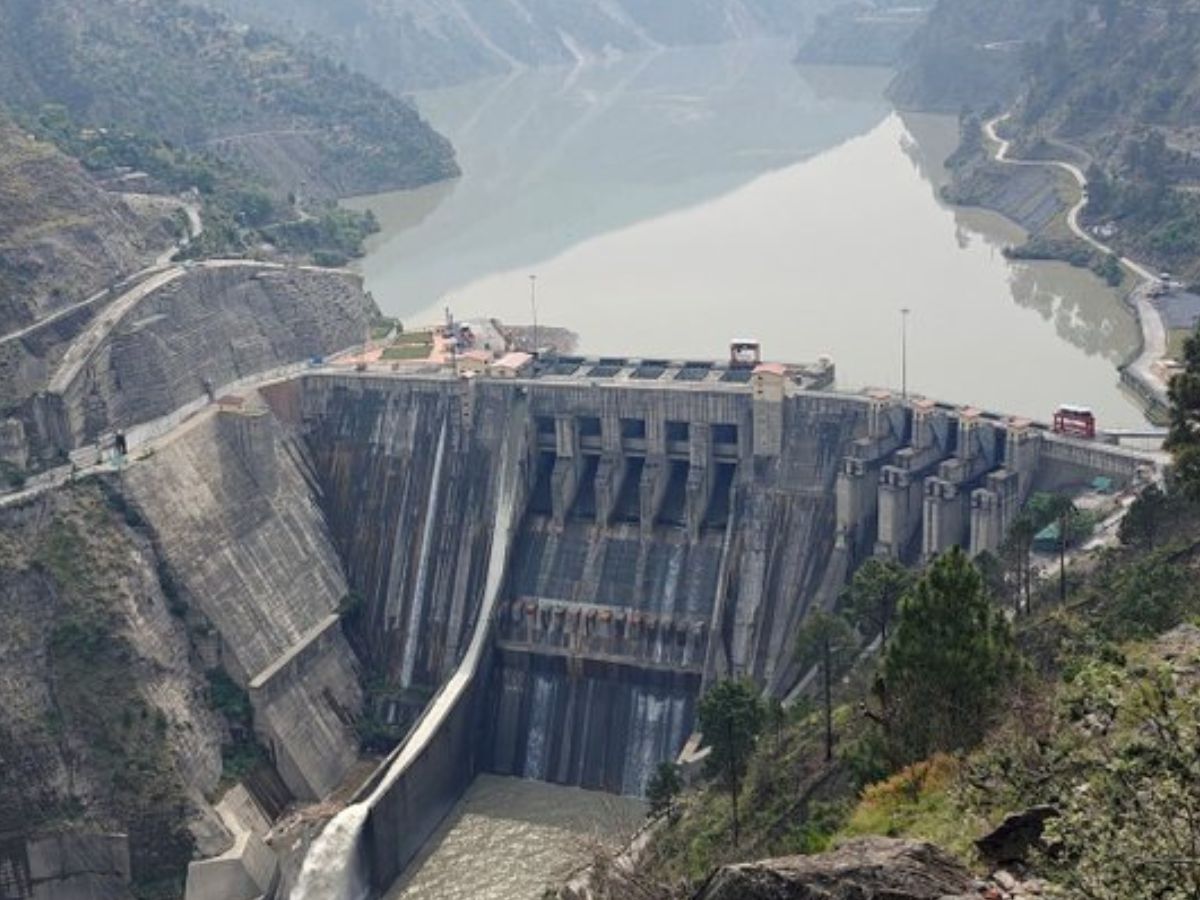
Sawalkote Hydroelectric Project: India has kicked off work on the ₹5,129 crore Sawalkote Hydroelectric Project on the Chenab River in Jammu and Kashmir, marking a major shift in India’s approach to water and power projects after the Indus Waters Treaty (IWT) was put on pause. The project is the first large hydropower venture cleared after the treaty was effectively suspended, under the Narendra Modi government.
What Is the Sawalkote Hydroelectric Project on Chenab?
The Sawalkote project is a run-of-the-river hydropower plant planned on the Chenab River in the Udhampur and Ramban districts of Jammu and Kashmir. The National Hydroelectric Power Corporation (NHPC) invited bids on February 5 to begin construction.
The project will be developed in two stages:
-
Stage One: 1,406 MW
-
Stage Two: 450 MW
Together, the project will have a total capacity of 1,856 MW. It is located between the Baglihar project upstream and the Salal project downstream, making it part of a continuous chain of hydropower installations on the Chenab.
Why the Modi Government Moved Quickly on Sawalkote?
The project received clearance from an expert committee of the Environment Ministry in October, soon after India halted participation in IWT processes. The documents show a clear push for speed, stating, “Construction methodology and selection of equipment have been planned with the aim to commission the project as early as possible.”
NHPC plans to allow year-round construction, with full work during non-monsoon months and reduced activity during the monsoon. The papers note, “Available working season in a year in the project area shall be 12 months for all underground works & for surface works with full progress rate during non-monsoon period and with 50% progress rate in monsoon period.”
The full project is expected to take around nine years to complete.
How the Indus Treaty Pause Changed the Game?
The Sawalkote project comes at a time when India has stepped away from all Indus Waters Treaty proceedings, following the Pahalgam attack. This has given the Centre greater freedom to approve and fast-track projects on western rivers, especially those flowing into Pakistan.
Under the treaty, India’s ability to build and operate projects on rivers like the Chenab had long been a point of dispute. The pause has removed procedural delays, allowing New Delhi to push forward with projects it considers strategic and critical.
Four major Chenab Basin Projects Are To Be Planned
Sawalkote is not a standalone move. The Centre has recently ordered faster timelines for four major Chenab basin projects:
-
Pakal Dul (1,000 MW): India’s largest Chenab project and its first storage dam on a western river, to be commissioned by December 2026
-
Kiru Project: A 135-metre run-of-the-river dam, also targeted for December 2026
-
Kwar Project: A 109-metre dam, with commissioning set for March 2028
-
Ratle Project (850 MW): A long-contested project now being fast-tracked, expected by 2028
Together, these projects allow India to generate power and better manage water flows along the Chenab.
Why the Sawalkote Project Worries Pakistan
The Chenab is part of the Indus basin, which is vital to Pakistan’s survival. Nearly 75% of Pakistan’s water supply comes from rivers flowing from India. Over 90% of its agriculture depends on this system, and most of its dams and canals are built around it. In effect, nine out of ten Pakistanis depend on water that first flows through Indian territory. Projects like Sawalkote strengthen India’s upstream control, which Pakistan has consistently opposed under the Indus framework.
What Sawalkote Signals Going Forward
The launch of the ₹5,129 crore Sawalkote Hydroelectric Project signals a new phase in India’s water diplomacy and infrastructure strategy. With the Indus Waters Treaty no longer guiding project approvals, the Modi government appears focused on speed, scale, and strategic control in Jammu and Kashmir.
Sawalkote is not just a power project—it is a clear statement of intent on how India plans to use its rivers in the post-Indus Treaty era.




