
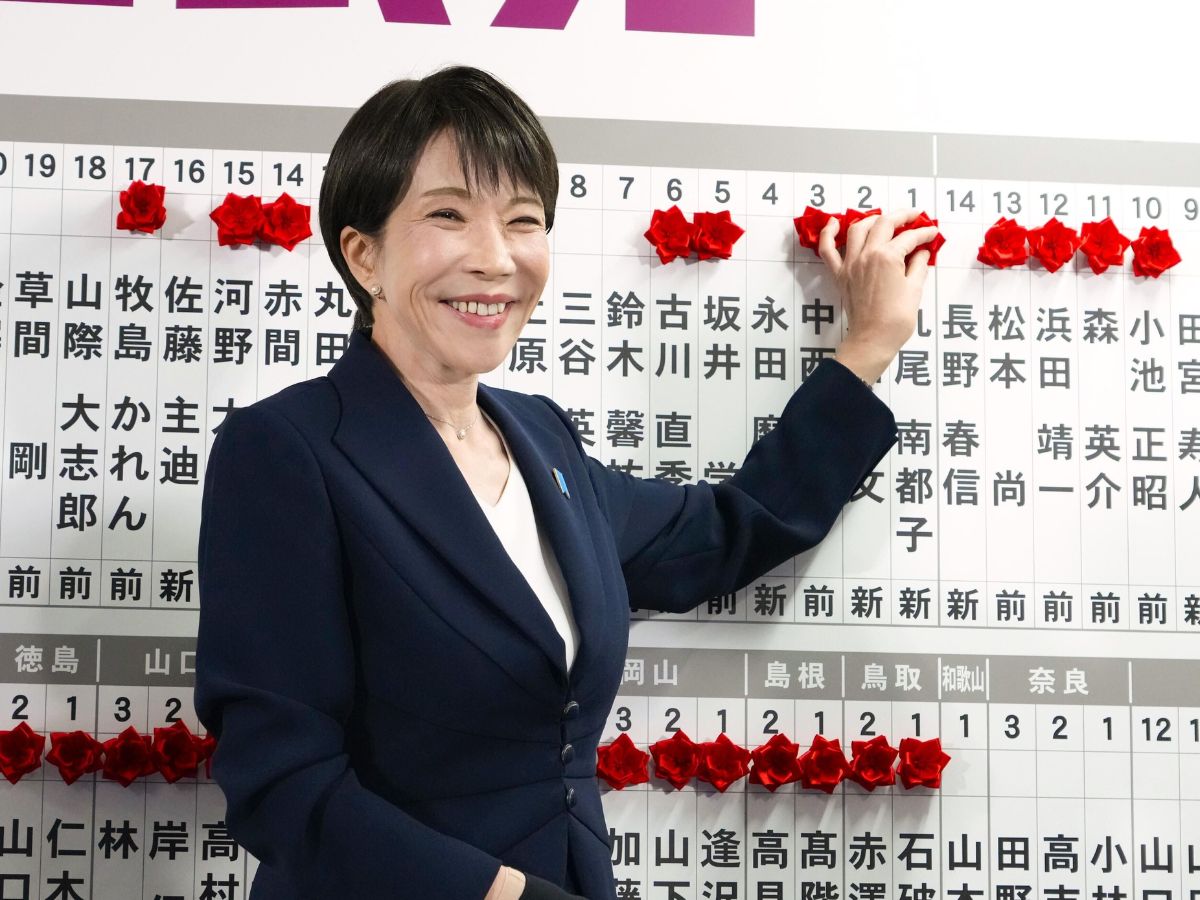
Japan’s snap parliamentary elections have delivered a sweeping mandate for Prime Minister Sanae Takaichi, triggering celebrations at the Liberal Democratic Party (LDP) headquarters and drawing swift praise from the United States. As vote counting progressed, a symbolic “board of roses” at the party office filled steadily, visually marking the scale of the ruling coalition’s triumph.
The landslide victory not only strengthens Takaichi’s grip on power but also grants her government the authority to push through major economic and security reforms, reshaping Japan’s political and strategic direction at home and abroad.
What is the ‘Board of Roses’ Seen at LDP Headquarters?
As election results rolled in, attention turned to a large whiteboard inside the LDP headquarters in Tokyo. In Japanese political tradition, every winning candidate receives a red paper rose placed next to their name on the board once their victory is officially confirmed.
As the night progressed, rows of red roses rapidly multiplied, offering a striking visual of the LDP’s dominance. The near-complete board became a powerful symbol of the ruling party’s electoral strength and the scale of public support behind Takaichi’s leadership.
Who is Japan’s New PM?
Japan’s Prime Minister is Sanae Takaichi, the leader of the ruling Liberal Democratic Party (LDP). She took office after winning the party leadership and then called a snap general election to seek a direct public mandate. Following the latest election results, her position has been firmly secured as her party and coalition crossed the majority and supermajority marks in parliament.
As prime minister, Takaichi heads the government, sets national policy priorities, and represents Japan on the global stage, particularly on economic and security matters.
Japan Elections: What is an Exit Poll?
An exit poll is a survey conducted immediately after voters cast their ballots on election day. Pollsters ask voters who they voted for as they exit polling stations. Media organisations use this data to project likely results before official vote counting is completed.
In Japan’s elections, exit polls by national broadcasters help estimate how many seats each party is expected to win and whether a government is likely to secure a majority or supermajority. While not final, exit polls often provide a reliable early picture of the outcome.
Who is Sanae Takaichi?
Sanae Takaichi is Japan’s first female prime minister and one of the most influential conservative leaders in the country’s modern political history. She leads the long-dominant Liberal Democratic Party, which has governed Japan for most of the post-war era.
Known for her strong views on national security, fiscal reform, and Japan’s global role, Takaichi has built a reputation as a decisive and outspoken leader. Her leadership style, clear messaging, and emphasis on economic discipline and defence have earned her strong support among voters, particularly younger demographics.
Her recent election victory has further cemented her authority, giving her government the numbers needed to push through major legislation without relying heavily on opposition support.
What Did PM Takaichi Say on Her Electoral Performance?
Speaking during a televised interview as results became clear, Takaichi framed the election as a public endorsement of major policy shifts. “This election involved major policy shifts — particularly a major shift in economic and fiscal policy, as well as strengthening security policy,” she said.
She acknowledged resistance to her agenda but argued that the outcome demanded action. “These are policies that have drawn a great deal of opposition … If we have received the public’s support, then we truly must tackle these issues with all our strength,” she added. Her remarks underscored her intent to move forward decisively rather than soften her approach.
Japan Elections: Ruling Coalition Officially Wins Supermajority
Japan’s national vote count confirmed that the LDP crossed the crucial two-thirds threshold in the 465-seat lower house, delivering a supermajority to Takaichi’s ruling coalition.
This milestone carries major political weight. With more than 310 seats, the government can override the upper house, where it lacks control, removing one of the biggest obstacles to passing legislation. Political observers describe the result as one of the strongest mandates enjoyed by a Japanese prime minister in years.
Japan Elections: Why the Supermajority Changes Everything?
The supermajority gives Takaichi unmatched legislative leverage. Her government can now advance controversial bills related to defence expansion, fiscal restructuring, and long-term security planning without relying on opposition support.
This level of control accelerates decision-making and reduces parliamentary gridlock, allowing the prime minister to implement policies at a faster pace during her term.
Japan Elections US Reaction: ‘Great Ally, Great Relationship’
Washington reacted quickly to the results. US Treasury Secretary Scott Bessent praised Takaichi following her coalition’s decisive win, highlighting her close ties with the US leadership.
“She is a great ally, great relationship with the president,” Bessent said in an interview on Fox News’ “Sunday Morning Futures” program.
The statement followed President Donald Trump’s earlier endorsement of Takaichi, signalling strong continuity in US-Japan relations amid rising regional tensions.
Why the US is Closely Watching Japan’s Election?
Takaichi’s victory matters beyond Japan’s borders. She has taken a firm stance on regional security, particularly on issues involving China and Taiwan, and has openly discussed expanding Japan’s defence role.
A strong electoral mandate strengthens her hand in defence cooperation with allies and reinforces Japan’s strategic alignment with the United States in the Indo-Pacific region.
How the Opposition Fared in the Election?
While smaller parties made limited gains, opposition forces failed to significantly challenge the ruling coalition. The LDP alone crossed the majority mark within hours of polls closing, leaving rival parties with reduced influence in parliament.
The result weakens opposition leverage and consolidates power within the ruling bloc for the foreseeable future.
What Comes Next for Takaichi’s Government?
With the election settled, attention now turns to governance. Takaichi has signalled continuity in leadership and policy, focusing on fiscal discipline, defence strengthening, and long-term national strategy. The overwhelming electoral mandate gives her political momentum — and little room for hesitation.
As red paper roses filled the LDP board row by row, the visual told a clear story: voters delivered a decisive verdict. Backed by a supermajority and strong international support, Sanae Takaichi now enters the next phase of her leadership with unparalleled authority — and global attention firmly fixed on Tokyo.




