
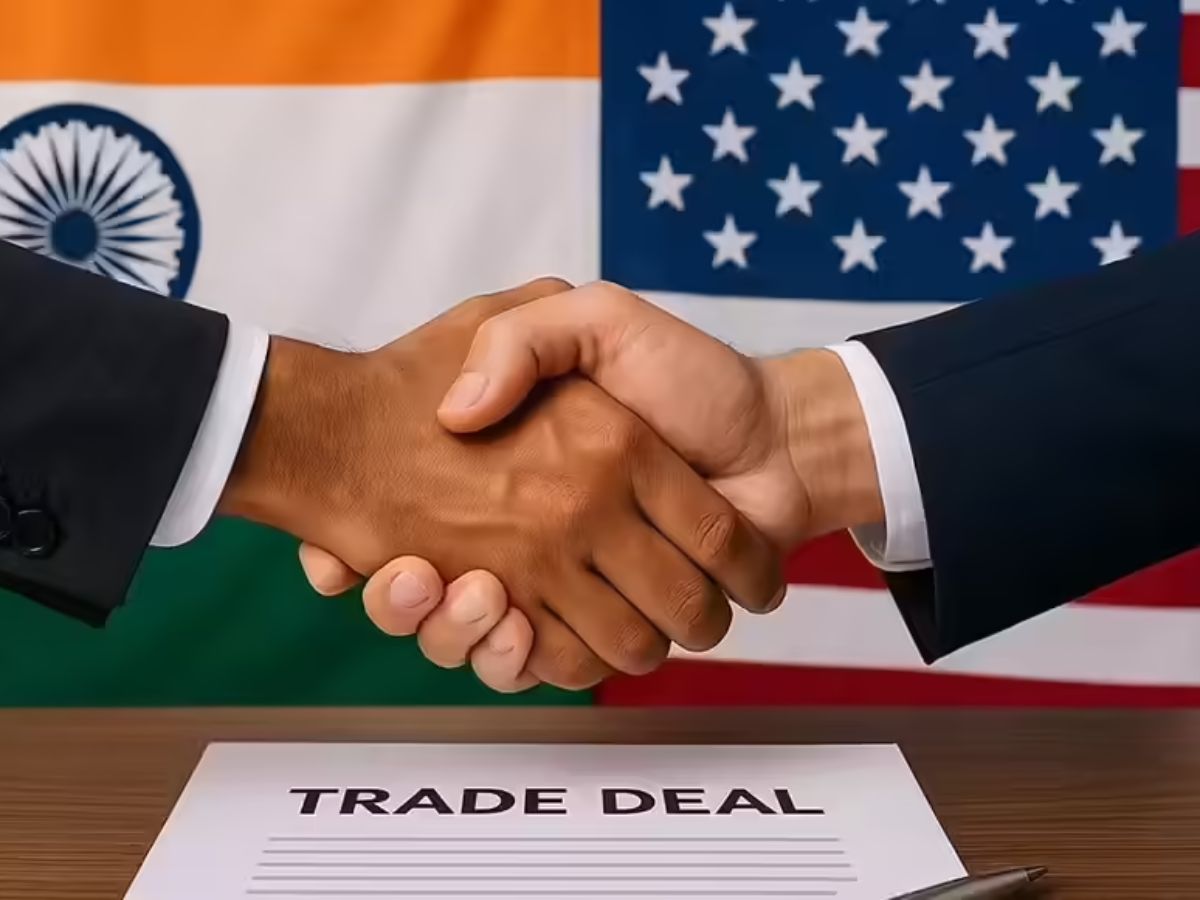
India’s newly announced trade agreement with the United States places agriculture, forestry-linked goods and livelihood crops at the centre of its export strategy, the Commerce Ministry said on Tuesday. Releasing a detailed factsheet, the government said the deal expands market access for Indian farmers and food producers while protecting sensitive domestic sectors.
The factsheet came shortly after the White House described the agreement as a “historic” trade deal, saying India had agreed to “eliminate or reduce tariffs” on all US industrial goods and a wide range of American food and agricultural products. While the announcement has triggered political debate at home, the government insists the agreement strengthens India’s export base without undermining farmers’ interests.
India-US Trade Deal: What Are the 3 Pillars?
According to the Commerce Ministry, the agreement rests on three major pillars:
- Farmers and agricultural exports
- Forestry and forest-linked products
- Livelihood crops and food processing sectors
The government said these sectors stand to gain the most from improved access to the US market, especially in value-added and processed goods.
India-US Trade Deal: How Tariff Cuts Change the Trade Equation
One of the most significant outcomes of the agreement is a sharp reduction in tariffs. The factsheet highlighted that reciprocal tariffs were brought down from 50 per cent to 18 per cent, including the removal of a 25 per cent penalty imposed earlier due to India’s purchase of Russian oil.
For several products, tariffs have dropped to zero, opening new opportunities for Indian exporters to compete more aggressively in the US market.
India-US Trade Deal: What is Zero-Duty Access & Why It Matters
India has secured “zero-duty access” to a US import market estimated at US$46 billion, the ministry said. This includes exports worth around US$1.4 billion in products such as spices, processed foods, fruits, tea, coffee, and essential oils.
In addition, India has obtained “preferential access… indicating substantial near-term export potential” to a much larger US import market valued at US$160 billion. Officials believe this could significantly boost farm incomes and rural employment.
India-US Trade Deal: Why the Marine Sector Emerges as a Big Winner
The factsheet identified the marine and seafood sector as one of the biggest beneficiaries of the deal. The sector now has access to a US import market segment worth US$25 billion, offering major expansion opportunities for Indian exporters.
Government officials said this could strengthen India’s position as a global seafood supplier while supporting coastal livelihoods and export-oriented processing units.
India-US Trade Deal: Will Indian Farmers Be Protected Under the Deal?
The trade pact has sparked political debate, with opposition parties questioning its impact on Indian farmers. The government, however, maintains that it has safeguarded domestic interests.
“Trade is positioned as complementary to domestic priorities, not disruptive,” the Commerce Ministry said, adding that price-sensitive agricultural and dairy markets remain protected. Officials stressed that sectors employing crores of people will continue to receive policy support and insulation from import shocks.
India-US Trade Deal: What the US Gets Under the Agreement
The White House said India agreed to “eliminate or reduce tariffs” on several US agricultural products, including “dried distillers’ grains (DDGs), red sorghum, tree nuts, fresh and processed fruit, certain pulses, soybean oil, and wines.”
It also said India is committed to purchasing over US$500 billion worth of US energy, information and communication technology, agricultural coal, and other products over time.
India-US Trade Deal: How the Deal Affects India-US Agricultural Trade Balance
India currently enjoys a US$1.3 billion agricultural trade surplus with the United States, based on 2024 figures. The government said the new agreement will help maintain this surplus while expanding exports into higher-value categories.
Officials believe stronger access to the US market will also support India’s food processing industry, which plays a critical role in reducing farm wastage and improving value realisation for producers.
Why This Trade Deal Matters?
Announced earlier this month by US President Donald Trump and Prime Minister Narendra Modi, the tariff deal marks a major shift in India-US economic engagement. While critics warn of long-term risks, the government argues the agreement balances global trade opportunities with domestic protection.
As implementation begins, the real test will lie in whether farmers, processors and exporters see tangible gains on the ground.




