
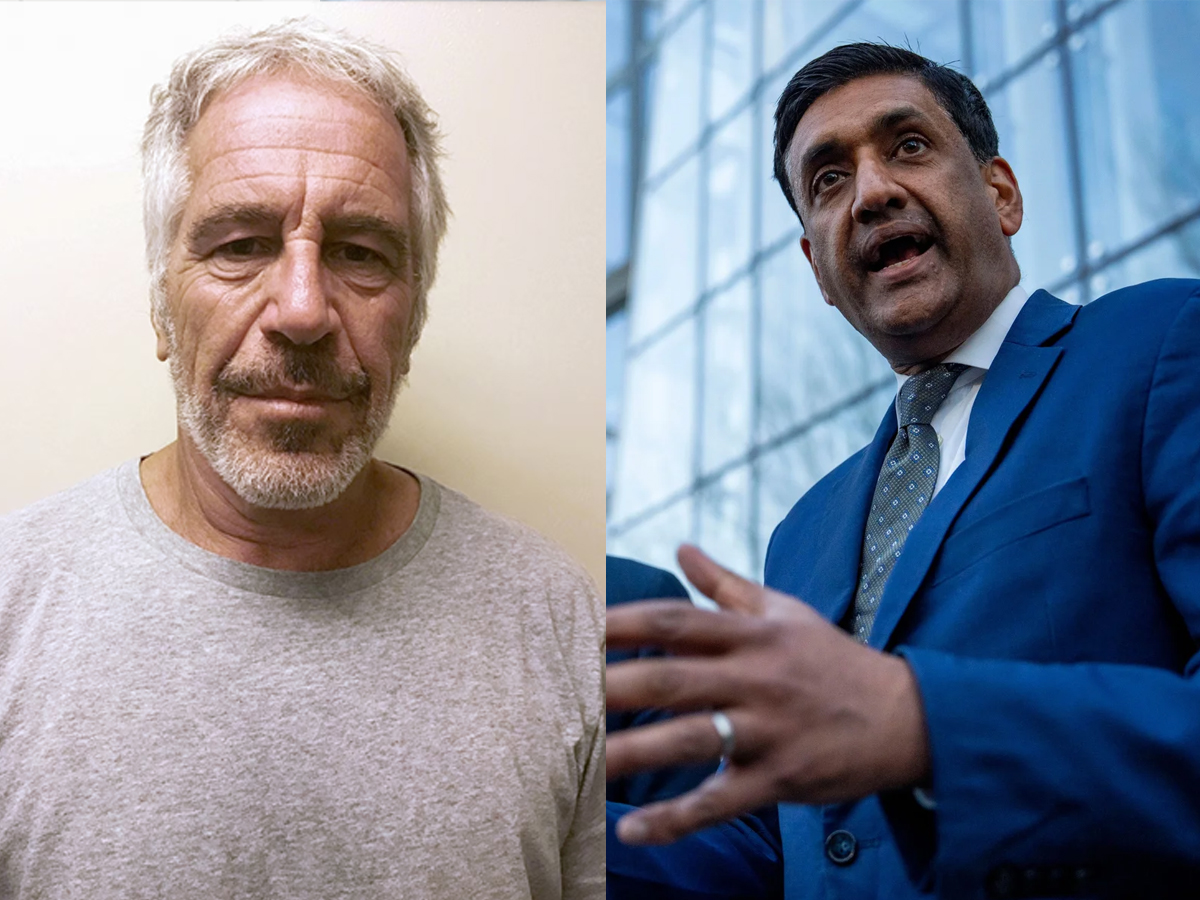
A fresh controversy has shaken Washington after US Representative Ro Khanna publicly disclosed the names of six influential men he said were hidden in recently released Jeffrey Epstein investigation documents. The announcement came after Khanna and Republican lawmaker Thomas Massie reviewed less-redacted records at the Department of Justice (DOJ) under the Epstein Files Transparency Act.
During a House floor speech, Khanna argued that lawmakers should not have to personally intervene to uncover names included in official records. He said the discovery raised serious concerns about transparency and how authorities handled millions of pages connected to Epstein’s criminal network.
“If we found six men who were hiding for two hours, imagine how many men they are covering up for in those 3 million files,” he said.
Who Are The Six Men Named In The Epstein Files Controversy?
Khanna identified the six individuals as Salvatore Nuara, Zurab Mikeladze, Leonic Leonov, Nicola Caputo, Sultan Ahmed Bin Sulayem, and billionaire businessman Leslie Wexner. Lawmakers described them as “wealthy” and “powerful” figures whose names appeared in Epstein-related records.
Both Khanna and Massie clarified that none of the individuals have been charged or formally accused of crimes solely because their names appear in the documents. Lawmakers also stressed that inclusion in investigative material does not automatically establish criminal liability or wrongdoing.
Lawmakers Accuse DOJ Of Improper Redactions In Epstein Documents
The controversy centers on claims that the DOJ applied excessive or blanket redactions while releasing more than three million pages of Epstein investigation materials. Massie argued that the Epstein Files Transparency Act allows only limited redactions, mainly to protect victims’ identities, not potential co-conspirators or influential figures.
Massie said the law does not permit authorities to hide the names of alleged associates and suggested that some redactions may have shielded prominent individuals from scrutiny. He also raised concerns that female names and other key details appeared to be unnecessarily blacked out in several documents.
What Is The Epstein Files Transparency Act And Why Does It Matter?
The Epstein Files Transparency Act aims to ensure public access to unclassified investigative records related to Jeffrey Epstein, while protecting victims and sensitive information. Lawmakers from both parties have pushed for broader disclosures, arguing that public trust depends on full accountability and openness.
The recent disclosures have reignited debate in Congress over whether additional unredacted documents remain hidden. Several lawmakers have called for further reviews and hearings to determine if earlier investigations failed to expose powerful individuals who had connections to Epstein.
DOJ Response And Ongoing Political Debate
DOJ officials have defended their handling of the files, stating they fulfilled legal obligations during the release process and denied protecting any specific person. The department also rejected accusations that it shielded high-profile figures from scrutiny.
However, Khanna and Massie’s actions have intensified calls for deeper investigations into Epstein’s network and how authorities managed the massive volume of records. Lawmakers say the issue goes beyond one case and reflects broader concerns about transparency, accountability, and public confidence in federal institutions.
As Congress continues to debate the future release of additional records, the Epstein files controversy remains one of the most politically sensitive and closely watched investigations in the United States.




