
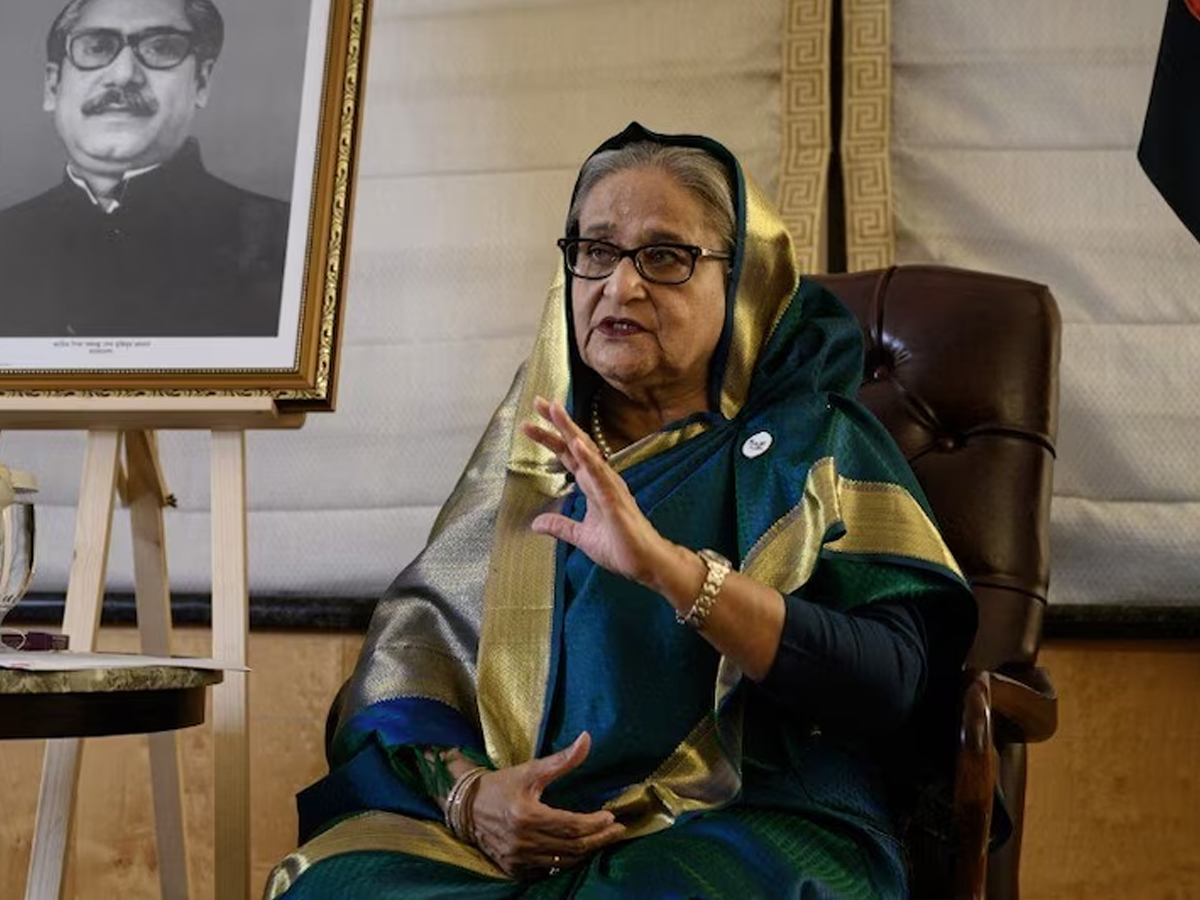
Bangladesh’s upcoming elections will take place without one of its most influential political forces, the Awami League. The party that once led the country’s independence struggle now faces a ban, suspended registration, and leadership in exile.
Political observers say the situation reflects a dramatic shift in Bangladesh’s power balance after the fall of Sheikh Hasina’s government in 2024.
Bangladesh Elections 2026: Why is the Awami League not contesting the 2026 Elections?
The interim administration headed by Muhammad Yunus prohibited all activities of the Awami League using the Anti-Terrorism Act, 2009. Authorities then suspended the party’s registration, which effectively stopped it from contesting elections.
In response, Awami League leaders living abroad declared they would boycott the polls and described the election process as a ‘sham’. This decision means Bangladesh will hold elections without the political party that dominated national politics for decades.
What led to Sheikh Hasina’s ouster in 2024?
Mass protests against the reinstatement of a 30% job quota for descendants of 1971 independence fighters sparked nationwide unrest in mid-2024. Students led demonstrations across major cities. Security crackdowns triggered widespread anger after more than 1,400 people reportedly died during the violence.
Hasina’s remarks comparing protesters to ‘Razakars’ intensified public outrage. As protests grew, the military refused to use lethal force against civilians, which forced Hasina to leave the country and brought an end to her long rule.
Bangladesh Elections 2026: Awami League’s historical role in Bangladesh’s formation
Founded in 1949 as the East Pakistan Awami Muslim League, the party fought for Bengali political and cultural rights. It later adopted a secular identity and became the leading force behind the independence movement. In 1970, under Sheikh Mujibur Rahman, the party won a landslide victory in East Pakistan. Political tensions and demands for autonomy eventually triggered the 1971 Liberation War.
During the conflict, Awami leaders formed the ‘Mujibnagar Government’ in exile in India and organized the ‘Mukti Bahini’, which fought Pakistani forces. After independence, Sheikh Mujib led the first government and oversaw the drafting of Bangladesh’s constitution.
Bangladesh Elections 2026: How Sheikh Hasina rebuilt the Awami League
Following Mujib’s assassination in 1975, political instability weakened the party. Military rule and the rise of rival groups pushed the Awami League to the margins. In 1981, Sheikh Hasina returned from exile and gradually rebuilt the organization.
She later worked with political rival Khaleda Zia during the 1990 ‘Mass Uprising’ that ended the military dictatorship. Bangladesh then entered a democratic phase where power shifted between Hasina and Zia until the Awami League secured a decisive victory in 2008.
What happened during Hasina’s rule from 2009–2024?
Hasina governed Bangladesh for over a decade, focusing on economic growth, infrastructure projects, and global partnerships. However, critics accused her administration of suppressing dissent, curbing opposition activities, and overseeing controversial elections in 2014, 2018, and 2024. Human rights groups also raised concerns about enforced disappearances and limits on press freedom.
Her rivalry with Khaleda Zia intensified during this period. Zia received a 17-year prison sentence in corruption cases in 2018 and was later moved to house arrest for medical reasons. Authorities also sentenced her son, Tarique Rahman, in absentia for alleged involvement in the 2004 grenade attack.
Bangladesh Elections 2026: What does the Awami League’s absence mean for Bangladesh politics?
The party’s exclusion has reshaped the electoral landscape and raised questions about the country’s democratic process. Analysts believe the absence of a major political player could affect voter turnout, public trust, and international perception of the election’s credibility.
With Awami League leaders abroad and political tensions still high, Bangladesh now faces one of the most uncertain election cycles in its modern history.




