
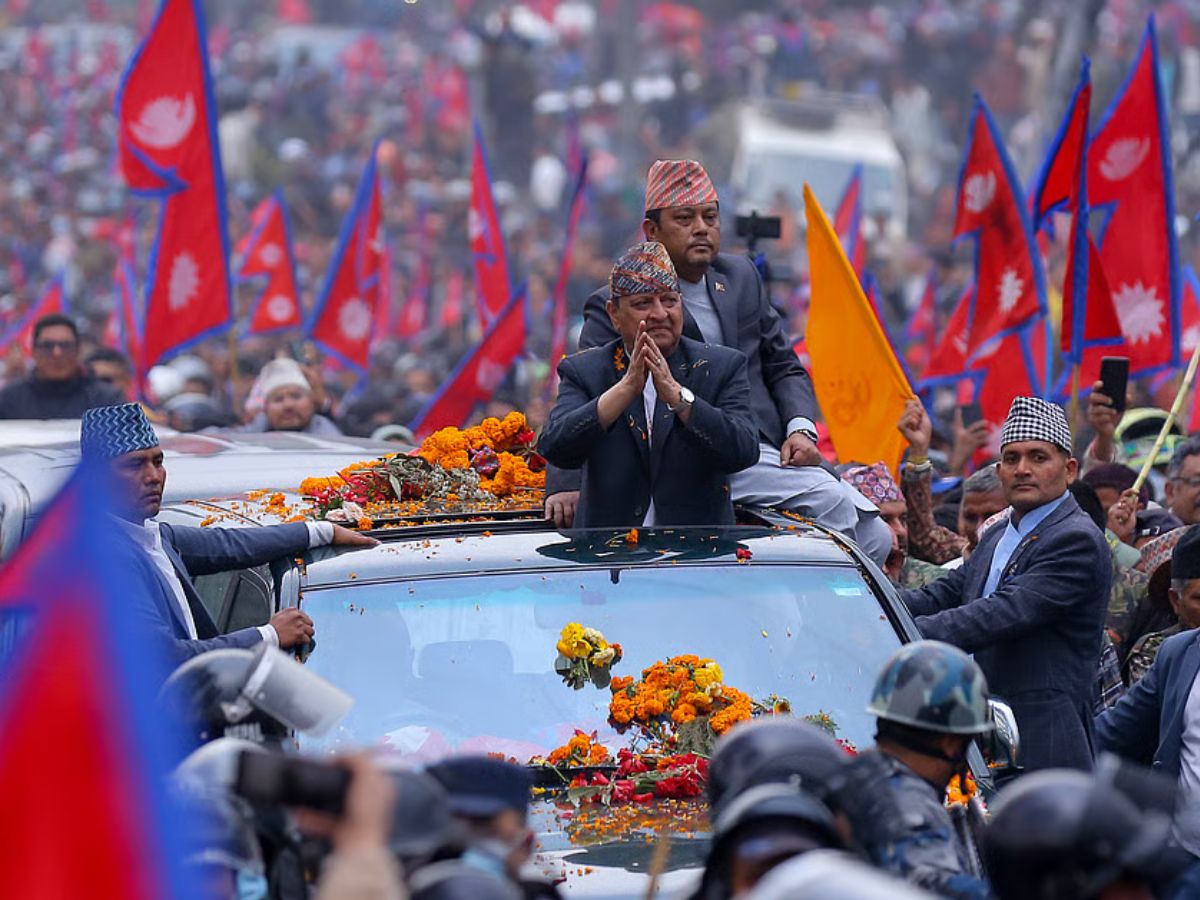
Nepal is witnessing a renewed push for the return of the monarchy just weeks before its scheduled general elections on March 5, 2026. Thousands of supporters gathered in Kathmandu to welcome former king Gyanendra Shah, demanding the restoration of a Hindu monarchy and calling for sweeping political change.
The demonstration, held near Tribhuvan International Airport, highlights growing dissatisfaction among sections of the population over economic distress and political instability. The rally has injected fresh momentum into the debate over Nepal’s political future.
Why Are Nepalese Demanding Restoration of the Monarchy?
Supporters of the former king believe that Nepal has struggled since it abolished the monarchy in 2008. They argue that frequent government changes, coalition instability, and economic challenges have weakened governance.
As Gyanendra Shah arrived in Kathmandu, loyalists chanted, “We want King Gyanendra back to save our nation,” waving placards and national flags. The crowd gathered despite prohibitory orders issued by the district administration, which had restricted public gatherings around the airport area.
Many monarchists claim that a constitutional Hindu king could unify the country and provide stability. They also say that Nepal’s identity as a Hindu kingdom played an important role in maintaining national cohesion.
Who is Leading the Pro-Monarchy Movement in Nepal?
The pro-monarchy campaign has drawn support from the Rastriya Prajatantra Party and several other loyalist groups. Senior leader Kamal Thapa has openly backed calls for the restoration of the monarchy.
Other figures, including activist Navaraj Subedi and medical professional Durga Prasai, have also mobilised supporters. During a press interaction in Kathmandu, Prasai stated that the monarchy must be restored before the upcoming elections. He argued that holding polls without addressing their demand would not resolve Nepal’s political crisis.
The movement frames monarchy restoration as a solution to what they describe as governance failures under the republican system.
What Happened to Nepal’s Monarchy in 2008?
Nepal ended its 240-year-old monarchy after a wave of massive street protests in 2006 forced Gyanendra Shah to relinquish direct rule. Two years later, parliament formally abolished the monarchy, turning Nepal into a federal democratic republic.
Gyanendra left the royal palace and began living as a private citizen. Since then, Nepal has adopted a new constitution and held several elections under the republican framework.
However, periodic protests have resurfaced, particularly during times of economic slowdown and political unrest. Supporters of the monarchy believe the republican system has not delivered the stability and prosperity that people expected.
Nepal General Elections 2026: Why Timing Matters
The monarchy debate comes at a sensitive time. Nepal plans to hold early general elections on March 5, 2026. Authorities have described the upcoming vote as crucial for resolving ongoing political uncertainty.
Meanwhile, Prime Minister Sushila Karki has urged citizens to actively participate in the election process. During a visit to Taplejung district, she emphasised the importance of peaceful polls.
“It is important to ensure that the upcoming election is held peacefully as it gives a way out from the current political impasse,” she said. The government views the election as a milestone in Nepal’s democratic transition and has called for cooperation from all political forces.
Will Nepal Restore the Hindu Monarchy?
At present, there is no formal constitutional process underway to reinstate the monarchy. Any such move would require major political consensus and significant constitutional amendments.
However, the visible mobilisation of supporters signals that the monarchy question remains alive in public discourse. While many Nepalese continue to support the republican system, the growing street presence of monarchists shows that political dissatisfaction runs deep in certain sections of society.
As Nepal heads toward elections, the clash between republican ideals and royal nostalgia could shape campaign narratives and voter sentiment. For now, the country stands at a crossroads, balancing its republican framework with renewed calls to bring back a Hindu king.




