
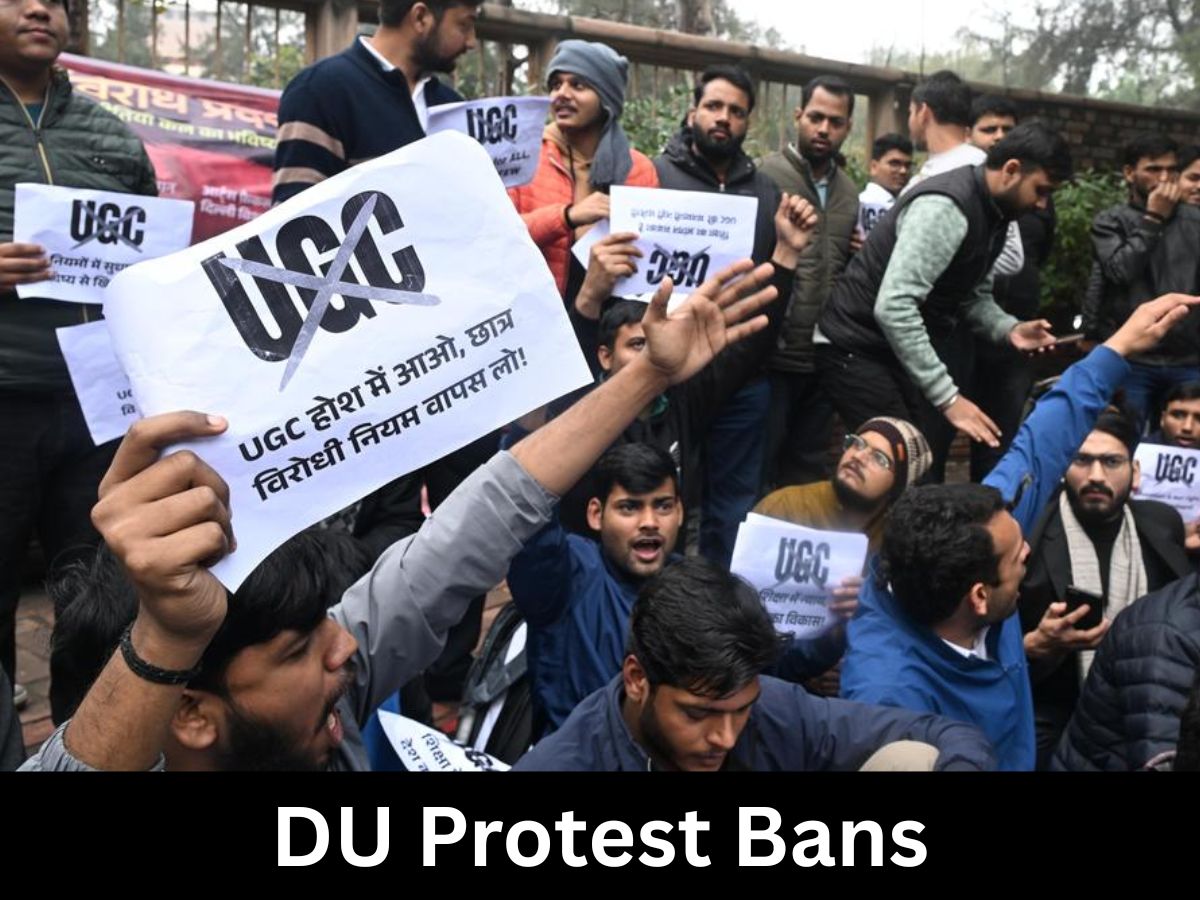
Rising tensions on campus have pushed Delhi University to take strict action. After days of clashes between student groups over the University Grants Commission (UGC) Equity Regulations 2026, the university administration has imposed a one-month ban on protests and public gatherings.
The order came into force on February 17 and will remain effective for one month unless the administration withdraws it earlier. Officials say they introduced the measure to prevent further unrest and ensure smooth academic functioning.
Delhi University Bans Protest: What the Official Notice Says?
Delhi University has banned any form of protest within the campus premises for one month. A notice issued on February 17 by the proctor has also prohibited any gathering of five or more persons. The administration released the directive through Proctor Rajni Abbi. The order clearly states that no protest activity will be allowed within university premises for one month.
Delhi University has banned any form of protest within the campus premises for one month. A notice issued by the proctor has also prohibited any gathering of five or more persons. The order comes into effect on Tuesday, February 17, Tuesday, for a period of one month, unless withdrawn earlier.
Under this order, the university has prohibited:
- Public meetings, rallies, dharnas, protests or agitations
- An assembly of five or more persons
- Carrying mashaals, torches, beacons or hazardous materials
- Raising slogans or delivering speeches
- Any activity that disturbs public peace or traffic flow
Officials clarified that academic and administrative work will continue as usual. However, they warned that authorities will strictly act against violations.
Delhi University Bans Protest: No Public Meetings, Slogans
The notice states:
“The order is issued in view of information received indicating that unrestricted public gatherings, processions or demonstrations on campus may lead to obstruction of traffic, threats to human life, and disturbance of public peace. In the past, organisers have failed to control such protests, which have escalated and spread widely, resulting in deterioration of law and order within the university campuses.”
The administration emphasized that previous protests spiralled out of control and created law-and-order concerns. Officials said they restricted to prevent further escalation.
Why Did Delhi University Ban Protest on Campus?
University authorities issued the order following reports of confrontations and disruptions linked to protests against the UGC Equity Guidelines 2026. The guidelines recently came under legal scrutiny, and the Supreme Court of India has stayed their implementation for now.
In recent days, clashes between student groups created tense situations on campus. In a separate incident, historian Irfan Habib faced an attack while delivering a speech at the Arts Faculty, further escalating concerns about campus safety. Vice-Chancellor Yogesh Singh urged students to maintain peace and harmony.
Delhi University Bans Protest: Legal Basis of the DU Protest Ban
The university issued the order through the Proctor’s Office under its administrative powers to maintain discipline and public order within campus premises. Authorities clarified that the restriction is internal and preventive in nature, and not equivalent to a citywide prohibitory order like Section 144.
Officials stated that they introduced the measure after receiving input that unrestricted gatherings could obstruct traffic, threaten safety, and disturb public peace.
Delhi University Protest Timeline: What Happened?
- Student protests erupted over the UGC Equity Regulations 2026
- Clashes reported between opposing student groups
- Incident involving historian Irfan Habib at the Arts Faculty
- The Supreme Court stayed the implementation of the regulations
- February 17: DU issued a one-month protest ban
UGC Equity Regulations 2026: What Triggered the Campus Unrest?
The controversy centres around the UGC Equity Regulations 2026, which sparked protests and counter-protests in several universities across the country.
At Banaras Hindu University, authorities issued show-cause notices to student leaders who joined a signature campaign. Meanwhile, at Lucknow University, police detained student protesters during demonstrations.
Student groups argue that the regulations raise concerns about representation and equity in higher education institutions. However, authorities maintain that discussions must remain peaceful and within legal limits.
Delhi University Protest Ban: Executive Council Member Demands Rollback of DU Protest Ban
The ban has not gone unchallenged. Executive Council member Mithuraaj Dhusiya openly opposed the order and demanded its withdrawal.
Dhusiya said, “Strongly disagree with this notice! Indeed, all protests and movements against wrong policies of the government, the university and its constituent colleges have to be totally peaceful, and it is the duty of the university to ensure this. However, clampdown on protests and movements in the guise of ‘obstruction of traffic’ etc in the University is not acceptable at all. Questions abound – does DU administration not want public meetings and movements against the massive number of Not Found Suitable (NFS) cases in appointments in university departments, or against the terrible failure of National Education Policy (NEP) or UGC Equity Bill or cases of suspension of teachers of DU?”
His statement reflects wider debate within the university community over balancing campus safety with democratic expression.
What Happens Next at Delhi University?
For now, the one-month restriction remains in effect. The administration insists that it aims to restore order and prevent further confrontations. Meanwhile, student groups and some faculty members continue to question the decision.
The coming weeks will determine whether dialogue and negotiation replace confrontation at one of India’s most prominent universities.




