
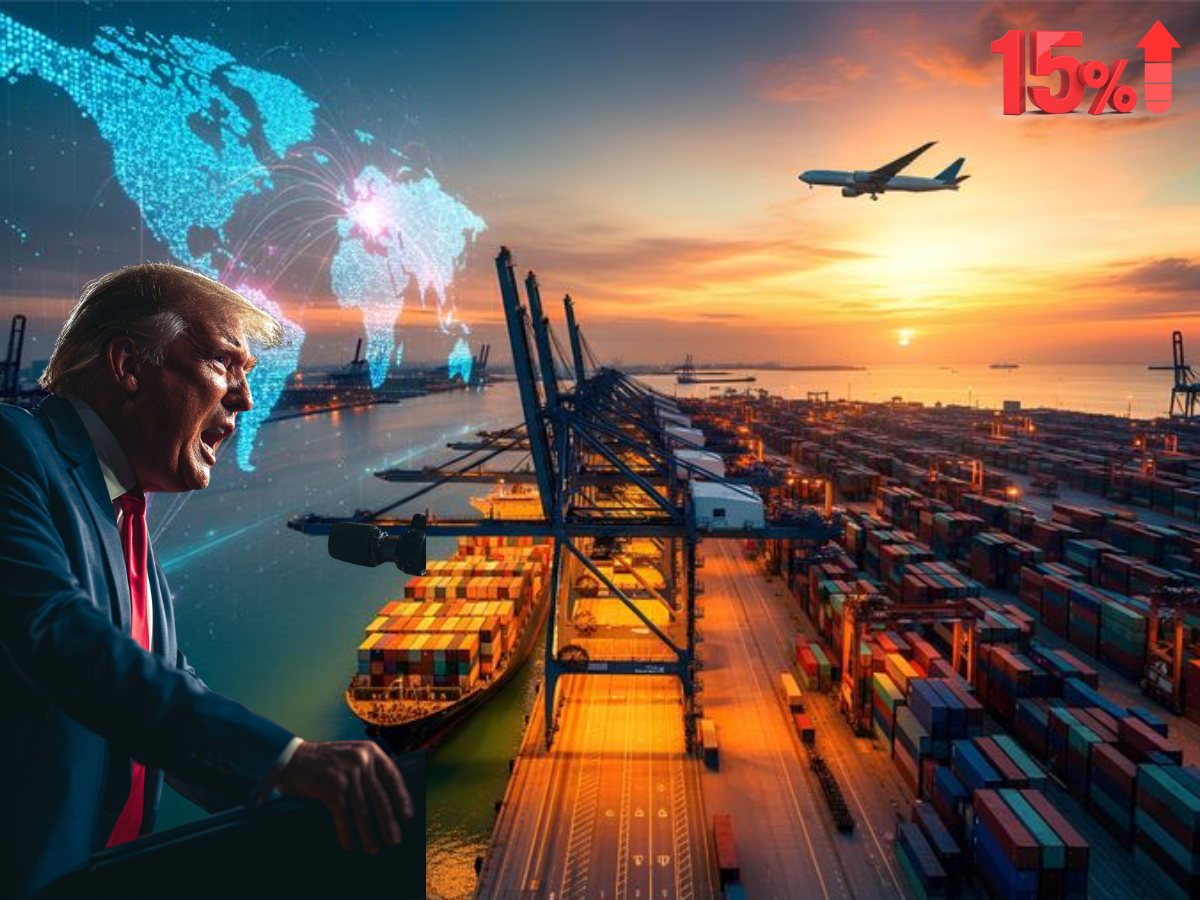
US Trade Tensions Rise: A day after the US Supreme Court scaled back his earlier tariff order, US President Donald Trump further escalated the trade war by increasing global reciprocal tariffs from 10% to 15% and this is yet another attempt at rebalancing trade, despite legal and political obstacles continuing to mount.
How Did the Supreme Court Block the Tariff Move?
The Supreme Court held that Trump’s previous tariff action, exercised through his emergency economic powers, overstepped what the president was legally allowed to do and this created uncertainty about the ability of sweeping import tariffs to circumvent Congress. The decision marked a significant check on presidential power regarding trade policy and introduced a new level of uncertainty into US trade policy.
Why Trump Raise Tariffs to 15% Now?
Hours after condemning the court decision, Trump launched a new tariff schedule under Section 122 of the Trade Act of 1974, which allows for a temporary measure of no more than 150 days to facilitate balance of payments problems, Trump introduced a universal tariff of 15% on all imports and this is a 5% point increase from the earlier 10% threshold that had been set for most countries.
What Are the Economic Stakes Behind the Tariff Hike?
Imports in the U.S. exceeded $3 trillion in the last year according to trade data and even a slight adjustment to tariffs can move billions of dollars in costs for businesses and consumers. Analysts warn that a 15% uniform tariff could lead to higher prices in sectors such as technology, autos and home furnishings. The markets reacted cautiously as investors weighed inflationary pressures against the potential positive impact on local production.
How are the Political & Legal Implications
Trump framed the move as correcting what he terms decades of unfair trade practices. Opponents argue that the ever-shifting tariff landscape creates uncertainty and makes it more difficult to plan for the future with regard to supply chains. Congress holds the ability to intervene within the 150-day timeframe established by Section 122, which could lead to another confrontation between the administration and Congress.
Will the 15% Tariff Hike Trigger Higher Prices & Global Trade Tensions?
Raising global tariffs from 10% to 15% could increase import costs, pushing up prices for consumer goods, electronics and automobiles. Businesses that rely on foreign supply chains may face tighter margins. Financial markets could see volatility, while trading partners may consider retaliatory measures, raising the risk of broader trade tensions.
What Comes Next in the Trade Standoff?
As the talks go on and the world waits with bated breath in Washington, how well this policy holds up remains to be seen. Countries that already have trade agreements in place may get a temporary reprieve before the new rates are set in stone whether the tariff hike will prove to be a blessing in disguise for America’s influence or just add to the trade tensions remains to be seen.
FAQ’s
1. Why did Trump raise global tariffs to 15%?
He increased tariffs after the Supreme Court blocked his earlier order, framing the move as a response to what he calls unfair trade practices.
2. What did the Supreme Court rule?
The court found that the previous tariff action exceeded presidential authority under emergency economic powers.
3. How could the 15% tariff affect consumers?
Higher import duties may raise prices on goods like electronics, vehicles and household items.
4. Can Congress stop the new tariffs?
Under Section 122 of the Trade Act, tariffs expire after 150 days unless Congress extends them.
5. Could other countries retaliate?
Trading partners may respond with counter-tariffs and potentially escalating global trade tensions.




