
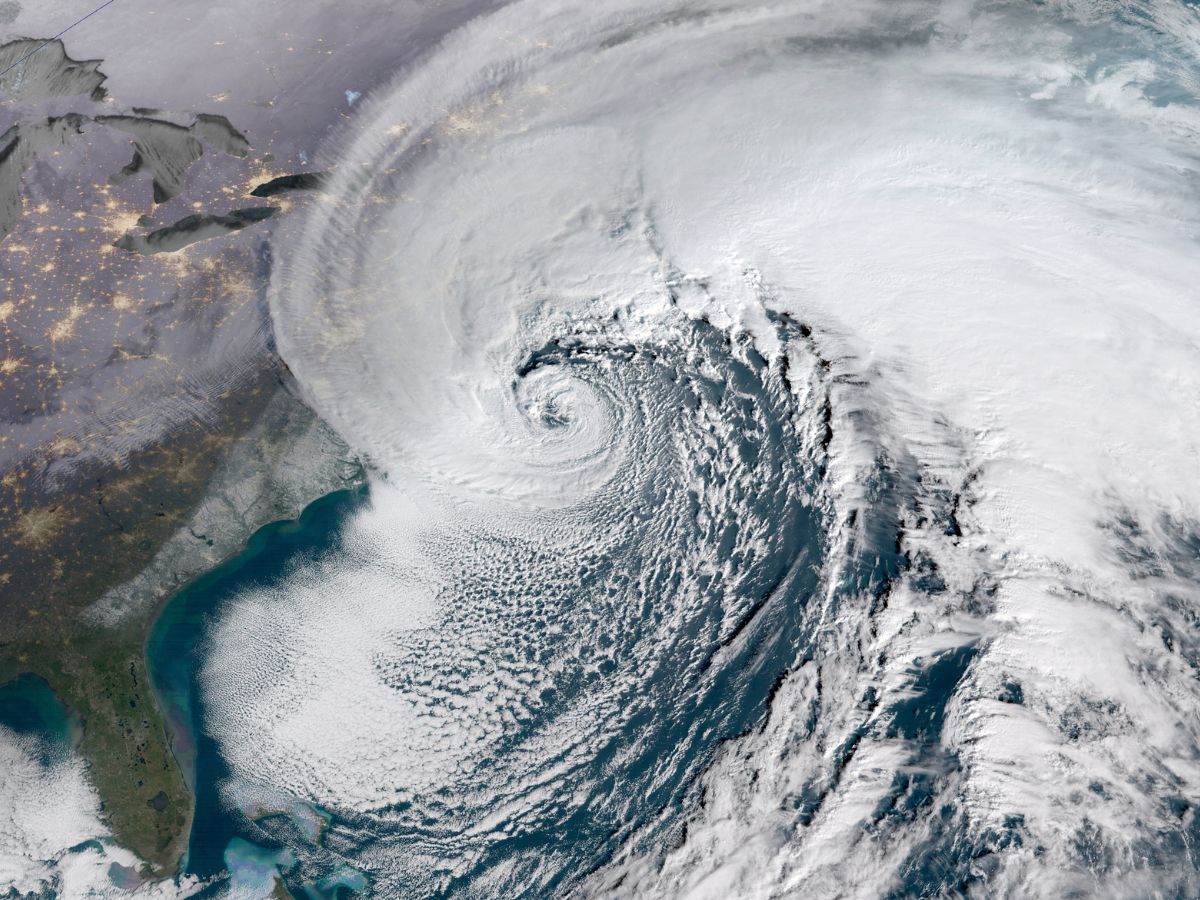
NYC Snow Storm: The snowstorm that recently struck New York City was far from an ordinary winter event, as it was driven by an unusual and powerful combination of atmospheric conditions. Millions of city residents in the New York area and the Northeast are under mandatory road travel restrictions as a strong blizzard moves through the area.
In the New York City area, a travel ban has been issued for all non-emergency travel until noon Monday, while similar bans have been issued in Rhode Island and New Jersey. Emergency alerts were issued to cell phones warning of dangerous blizzard conditions, while Mayor Zohran Mamdani has declared Monday a serious snow day, canceling all public school classes.
The Science Behind NYC’s Severe Snow Storm
The recent snowstorm that hit New York City was not a typical winter storm but rather the result of a rare and strong atmospheric change. According to weather experts, it was a historic nor’easter that caused heavy snowfall, strong winds, power failures, and a complete shutdown of travel in the entire Northeast region. The storm developed rapidly and affected millions of people, thus illustrating how various weather factors can interact to produce extreme winter weather.
What Is a Nor’easter and Why NYC Is Vulnerable
A nor’easter is a type of severe storm system that develops along the East Coast of the US and is named after the northeasterly winds that blow inland from the Atlantic Ocean. Nor’easters typically occur between late fall and early spring and are recognized for their heavy snowfall, coastal flooding, and strong winds. New York City is particularly susceptible to nor’easters since it is located at the intersection of the cold continental air mass and the warm, moist Atlantic air mass.
Role of Arctic Air in Fueling Heavy Snowfall
One of the factors that made this storm turn severe was the presence of a strong surge of Arctic air that originated in Canada and moved south into the northeastern part of the United States. This mass of cold air moved into the region well before the arrival of the storm, causing temperatures to plummet to well below freezing levels. This meant that all the precipitation that fell from the storm turned into snow instead of rain, and it also caused the roads to ice over early.
How Atlantic Winds Strengthened the Storm System
However, a low-pressure system also began to form over the warm waters of the Atlantic Ocean. The warm waters of the Atlantic Ocean released a lot of moisture into the atmosphere, which contributed to the intensification of the storm. As the system proceeded to move northwards, the strong Atlantic winds began to push the moist air towards the East Coast. As the warm and moist air interacted with the cold Arctic air, it resulted in a rapid rise, which in turn caused a high rate of snowfall of up to two to three inches per hour.
The Perfect Weather Collision That Made the Storm Historic
What made this nor’easter so historic was the combination of the Arctic air and the Atlantic moisture. Neither of these systems weakened the other. Rather, the nor’easter made landfall and stalled, pulling in moisture with the cold air in place. As reported by the National Weather Service, areas within the New York City metropolitan area received 18 to 24 inches of snow, making it one of the most significant winter storms in nearly a decade.
Why Strong Winds and Coastal Flooding Added to the Damage
The storm also produced very strong winds, which reached speeds of 65 to 70 miles per hour in coastal regions. The strong winds resulted in the falling of trees and power lines, leading to power outages. The strong winds also forced seawater into inland areas, resulting in flooding in coastal regions. The fact that New York City is bordered by water on several sides made it prone to flooding during the peak hours of the storm.
Why New York City Issued a Rare Blizzard Warning
For the first time in nine years, the blizzard warning was issued for the entire city of New York. A blizzard is created when heavy snowfall is accompanied by strong winds, making it impossible to see for several hours. In this case, all the necessary conditions were met, and as a result, a complete travel ban was issued, along with the closure of public transportation and schools.
Is Climate Change Making Nor’easters More Intense?
Although experts warn that individual storms cannot be specifically attributed to climate change, scientists have observed that warmer ocean temperatures can lead to more intense storms as a result of increased moisture. When this increased moisture interacts with cold air, snowfall can become heavier and more hazardous. This particular storm demonstrated how warmer Atlantic waters and intense Arctic air outbreaks can combine to create more extreme winter weather events.
New York City’s intense snowstorm was the result of a unique combination of weather factors, including heavy Arctic cold, strong Atlantic winds, and a slow-moving nor’easter that fed on ocean moisture. Taken together, these factors made it one of the most serious winter storms to hit New York City in years.




