
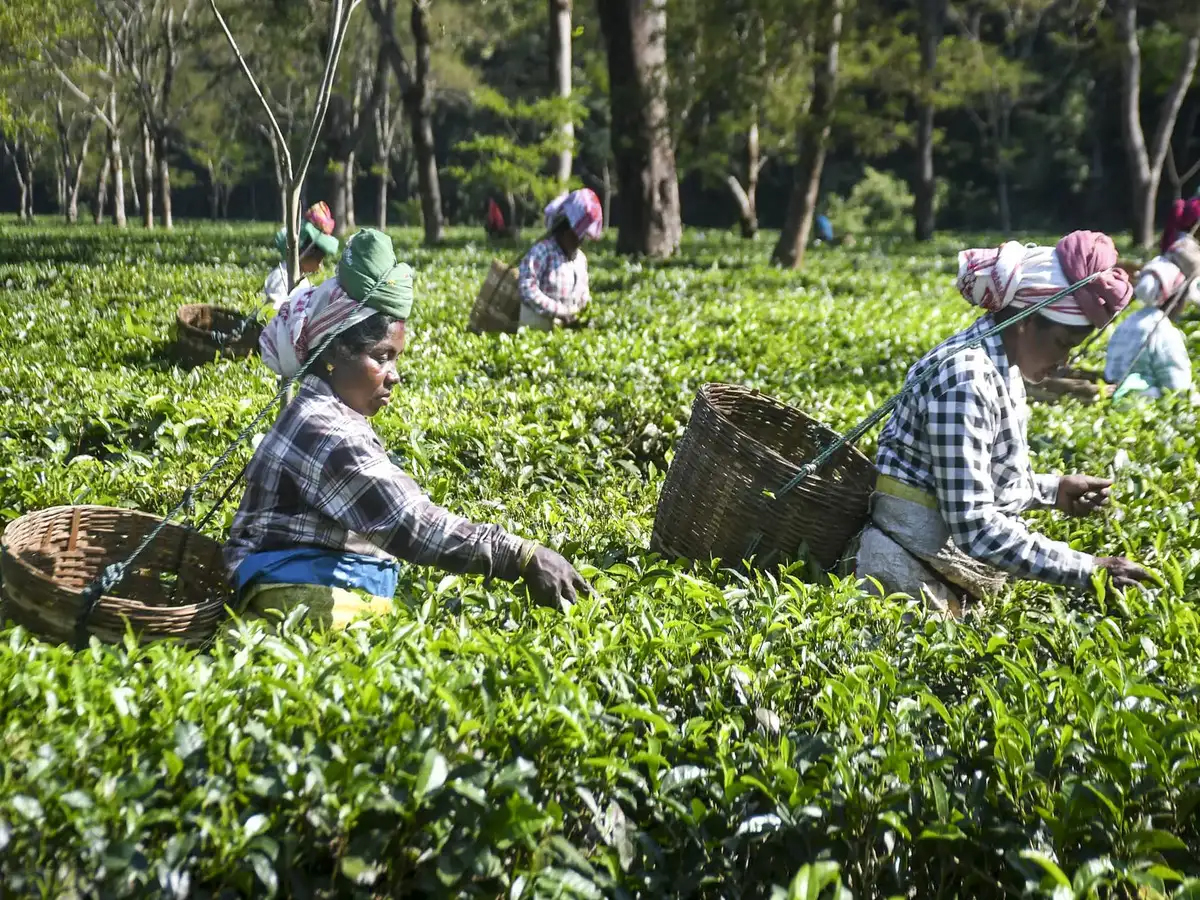
In the tea gardens of Upper Assam, politics is heating up ahead of the 2026 Assembly elections. On February 19, BJP National President Nitin Nabin visited a tea estate in Dibrugarh along with Union Minister Sarbananda Sonowal and state BJP chief Dilip Saikia. They met tea workers, shared tea with them and praised their hard work saying it has helped Assam tea earn global recognition.
The visit was clearly political. Assam produces over 50% of India’s tea and the industry employs lakhs of workers. The tea tribes community makes up around 20% of the state’s 3.12 crore population. Their votes influence nearly 40 out of 126 Assembly seats, especially in Upper Assam.
For many years, tea tribes supported Congress. But since 2016, many have shifted towards the BJP mainly because of welfare schemes and promises. In 2026, their support could once again play a key role, whether the BJP gets a third term or Congress led by Gaurav Gogoi makes a comeback.
The community has long-standing demands. They want Scheduled Tribe (ST) status, higher daily wages from the current Rs 250, land ownership rights and job reservations. Groups like the Assam Tea Tribes Students’ Association (ATTSA) have warned that if these issues are not addressed, it will affect voting decisions.
The BJP government under Chief Minister Himanta Biswa Sarma has announced several steps. The government has given land rights to 3.5 lakh tea families across 800 gardens. It has provided Rs 5,000 financial assistance to 6 lakh workers and approved a 3% job quota in Class I and II government posts for tea tribes. Sarma has called this “historic social justice.” However, Congress says many promises, including ST status are still pending. It has also raised questions about tea garden acquisitions linked to Sarma’s family. Regional party Raijor Dal has promised diversification in the tea sector and ST status in its 2026 verbal manifesto.
Tribal issues are not limited to tea gardens. The BJP has promised ST status for six communities: Tai Ahom, Moran, Motok, Chutia, Koch-Rajbongshi and tea tribes. The party is focusing strongly on indigenous identity politics raising concerns about demographic changes due to so-called “Miya-Muslims” of Bangladeshi origin. Measures like eviction drives and scrutiny of inter-faith land transfers are being projected as steps to protect tribal land.
Congress has countered this by promising Sixth Schedule protections and accusing the BJP of weakening tribal rights in areas like Dima Hasao. The Jharkhand Mukti Morcha led by Hemant Soren has also entered the scene appealing to Adivasi voters and supporting ST status demands.
Alongside identity politics, rural and farming issues are also important. Raijor Dal has promised year-round farming and MSP for 20 crops. The BJP highlights infrastructure growth and a Rs 5,000-crore startup fund. Congress points to flood mismanagement and unemployment as major concerns.
As 2026 election approaches, tea tribes and tribal voters remain central to Assam’s political future. Their final choice could decide who forms the next government.




