
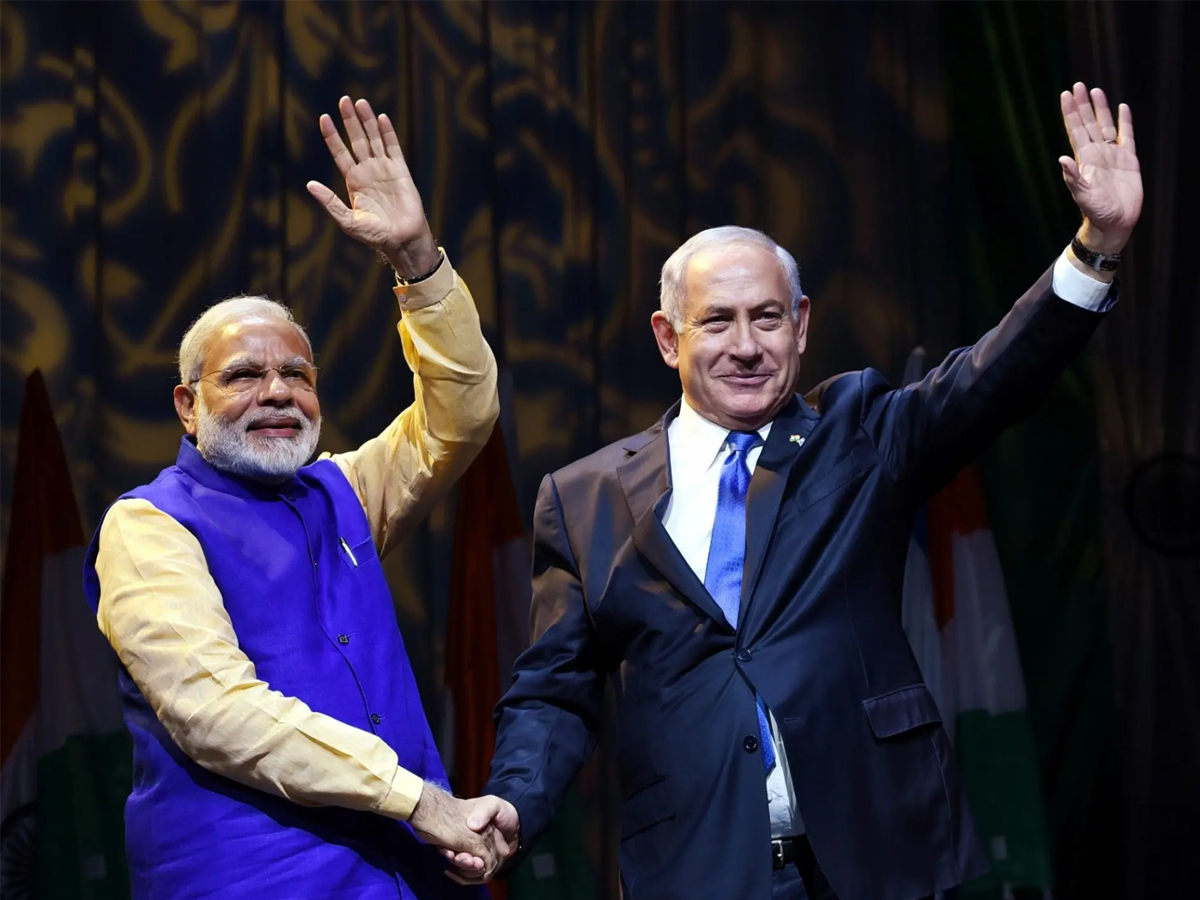
Prime Minister Narendra Modi on Wednesday started a significant two-day state visit to Israel, marking his second trip to the country since 2017. The visit comes as both nations aim to expand cooperation across defence, science and technology, trade, agriculture, water management, and people-to-people ties, with a special focus on strengthening strategic and security linkages in an increasingly complex global environment.
During his stay, Modi is set to deliver a rare address to the Israeli Parliament, the Knesset, hold talks with Israeli Prime Minister Benjamin Netanyahu, and meet President Isaac Herzog.
Why Modi’s Israel Visit Matters – Boost to Strategic Partnership
India and Israel have steadily deepened their relationship since establishing full diplomatic ties in 1992. The 2026 visit is seen as a step to elevate cooperation further, building on the foundation of the strategic partnership established during Modi’s first visit in 2017, the first ever by an Indian prime minister.
The Indian Ministry of External Affairs said the discussions would cover defence and security, science and technology, innovation, agriculture, water management, trade and economy, and people-to-people exchanges, highlighting a diversified agenda beyond traditional defence cooperation.
Modi to Address Knesset — A Symbolic Diplomatic Moment
One of the key highlights of the visit is Modi’s address to the Knesset, an honour extended to a select group of world leaders. This speech symbolizes the close ties between New Delhi and Tel Aviv and underscores mutual respect between the two democracies.
Modi is also scheduled to participate in a technology exhibition showcasing Israeli innovation and interact with members of the Indian Jewish community in Israel.
Defence and Security Cooperation at the Core of Talks
Defence remains at the heart of India-Israel collaboration. Both leaders are expected to review and update existing security agreements, with a focus on sharing cutting-edge military technologies and expanding joint development initiatives.
Israel is a key defence partner for India, supplying a range of advanced systems. Recent discussions have also touched on air defence collaboration, potentially including joint work on ballistic and laser defence systems.
In November 2025, both nations signed a crucial MoU to deepen military ties, paving the way for enhanced cooperation in defence industrial production, R&D, and cybersecurity.
Technology, Trade, and Innovation on the Agenda
Beyond security, the visit places strong emphasis on collaboration in emerging technologies such as artificial intelligence, quantum computing, and cybersecurity. Talks are also expected to advance cooperation on trade, investment, and innovative partnerships in sectors like agriculture and water technologies.
The two countries also continue discussions on a Free Trade Agreement (FTA) and investment frameworks that could significantly expand economic ties.
Regional and Global Context of the Visit
The visit takes place amid heightened geopolitical dynamics in the Middle East and global security challenges. Both India and Israel have reiterated shared interests in stability, counter-terrorism, and technological empowerment.
Netanyahu has described India and Israel as part of an “axis of nations committed to stability and progress,” reinforcing their alignment on broader regional challenges.
Modi in Israel: People-to-People Ties and Cultural Diplomacy
Modi’s itinerary also includes a visit to Yad Vashem, Israel’s Holocaust memorial, where he will pay homage to victims of the Holocaust, reflecting shared values of remembrance and historical consciousness.
This personal and symbolic gesture comes alongside interaction with Indian diaspora communities, further cementing cultural and people-to-people bonds that complement the broader strategic partnership.




