
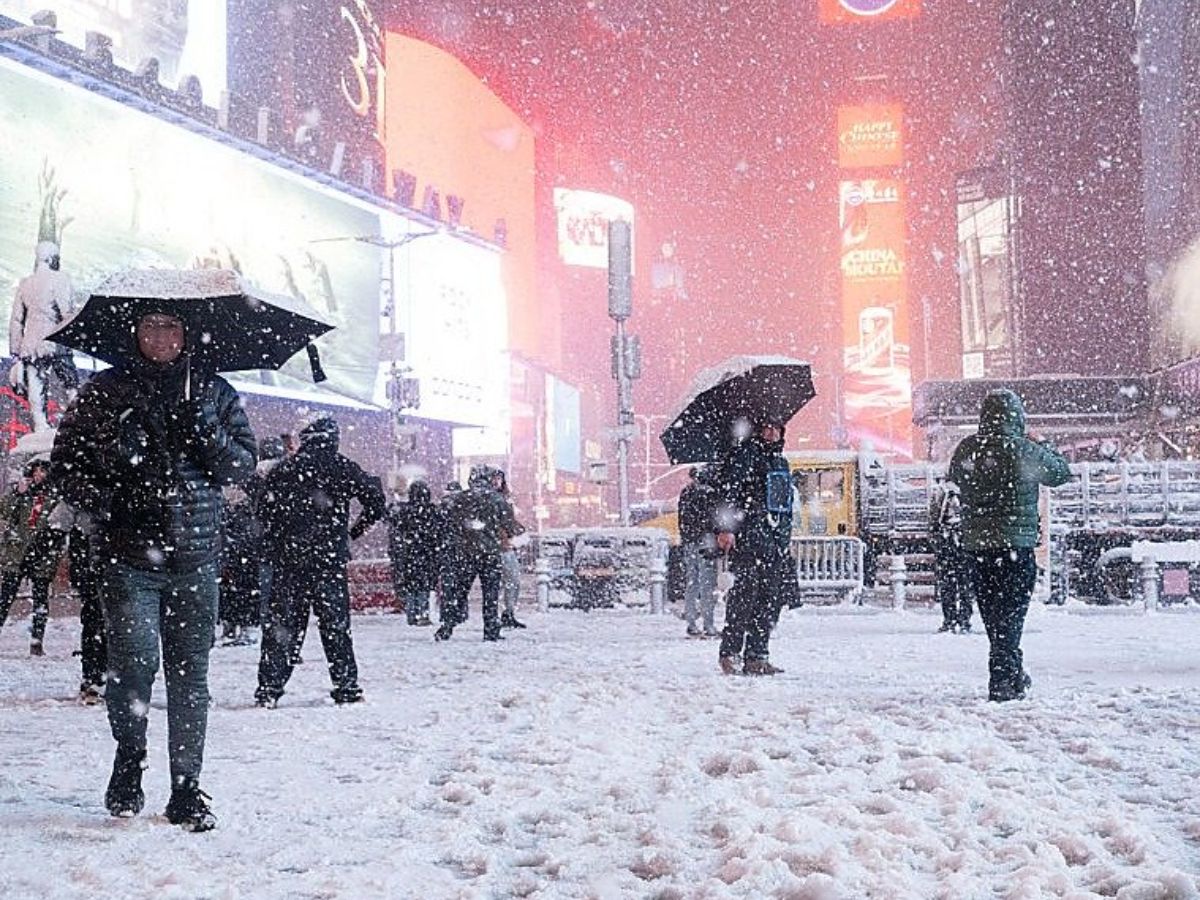
A powerful winter storm has brought large parts of the US Northeast to a standstill, dumping record snowfall and triggering widespread disruption. Airlines have grounded more than 11,000 flights, leaving thousands of passengers stranded at major airports. At the same time, over 500,000 homes and businesses remain without power as heavy snow and strong winds damage power lines.
Several states imposed travel bans after whiteout conditions made roads dangerous and left vehicles abandoned. Officials say cleanup efforts could take days as crews work nonstop to restore electricity and clear highways. Even as the snow begins to taper off, the region continues to grapple with the storm’s lasting impact.
NYC Snowstorm: Historic Snowfall Breaks Records Across Northeast
The storm delivered more than a foot of snow in at least eight states, with some areas receiving much higher totals. Manhattan’s Central Park recorded around 20 inches of snow between Sunday and Monday. Long Island’s Islip area saw more than 22 inches, while Providence, Rhode Island, broke its all-time single-storm snowfall record with 32.8 inches.
The previous record in Providence stood at 28.6 inches during the historic Blizzard of 1978, but this latest storm surpassed it decisively. Meteorologists described the system as one of the most intense late-winter snowstorms in recent years.
US Snowstorm Travel Chaos: Over 11,000 Flights Grounded Nationwide
Air travel faced severe disruption as airlines cancelled or grounded more than 11,000 US flights scheduled between Sunday and Tuesday. Major airports across New York, Boston, and other northeastern cities reported widespread delays and cancellations.
Strong wind gusts added to the problem. Winds reached 47 miles per hour at John F. Kennedy International Airport and climbed as high as 70 mph on the Massachusetts islands of Nantucket and Martha’s Vineyard.
Amtrak suspended train services between New York and Boston through Monday night, further complicating travel plans. Thousands of travellers were forced to reschedule or cancel trips as airlines worked to manage the backlog.
US Snowstorm: Over 500,000 Homes Without Power Amid Heavy Snow
The storm’s heavy, wet snow snapped tree branches and damaged power lines across multiple states. At the height of the storm, 519,232 homes and businesses were without electricity from Virginia to Massachusetts.
Massachusetts reported the highest number of outages, with more than 282,000 customers in the dark. New Jersey followed with over 93,000 outages. Utility companies deployed repair crews, but officials warned that full restoration could take several days due to continued risks from falling branches and unstable lines.
US Snowstorm: Road Closures & Emergency Travel Bans Issued
Authorities in several states ordered drivers to stay off the roads as whiteout conditions made driving extremely dangerous. In parts of Massachusetts, officials reported abandoned and stuck vehicles blocking key routes. Snowplow crews struggled to clear highways while tow trucks faced difficulty reaching stranded cars.
“We have reports of abandoned and stuck cars on the roads, and tow trucks are having difficulty getting to them,” Massachusetts Gov. Maura Healey said, urging drivers to stay put “for the safety of plow drivers and emergency officials who are trying to do their jobs.”
By Monday afternoon, snowfall began easing in some areas, and conditions slowly improved in New York. “The worst is over for New York,” said Jim Connolly, a National Weather Service meteorologist.
US Snowman: Schools & Businesses Gradually Reopen
After initial closures, New York City officials lifted restrictions on streets, highways, and bridges. Schools in the city announced they would reopen for in-person instruction on Tuesday as road conditions improved. However, many businesses across the region continued operating with limited staff due to transportation disruptions and ongoing power outages.
US Snowman: Energy Markets React to the Storm
The extreme cold and increased heating demand initially pushed US natural gas futures up by nearly 7% in early trading. However, prices later retreated after widespread power outages reduced actual consumption.
Wholesale electricity prices on East Coast grids remained relatively stable compared to previous storms. Lower-than-expected demand, partly due to school and business closures, prevented sharp price spikes.
What’s Next? More Snow Possible This Week
Forecasters warned that another weather system could bring additional snowfall to parts of the Mid-Atlantic and Northeast later in the week. While predictions remain uncertain, some models suggest rain in major East Coast cities, while others indicate the possibility of more snow.
Meteorologists said it is still too early to determine the strength and exact path of the next system, but residents have been advised to stay alert and prepare for potential further disruptions.




