
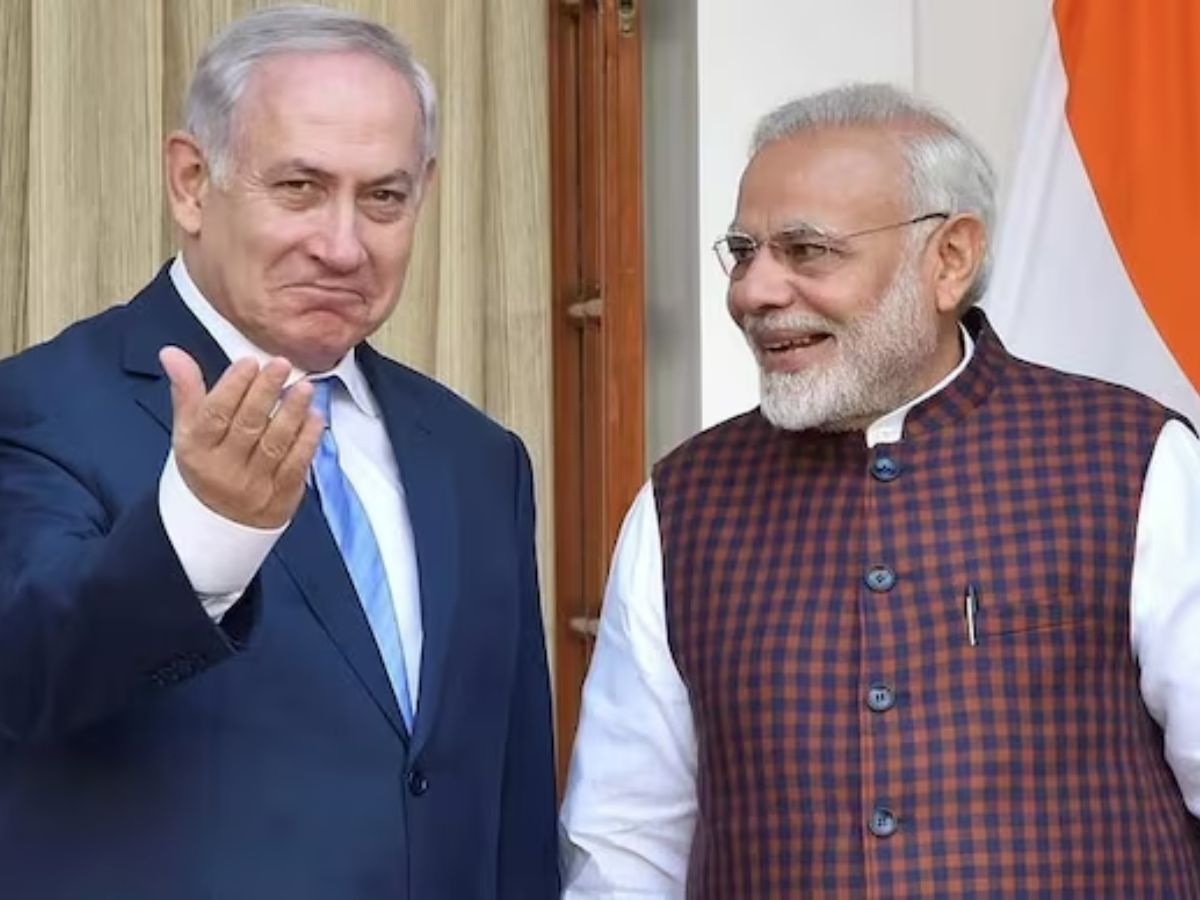
Israeli Prime Minister Benjamin Netanyahu has captured global attention by using his speech in the Knesset to outline an ambitious new geopolitical vision involving India. In a powerful address, Netanyahu spoke of building an “Iron Alliance” of like‑minded countries ready to stand against extremist Islam and promote human dignity, mutual respect and progress.
According to him, this alliance would unite nations that reject terror and barbarism and work together to defend shared democratic values. His remarks also came alongside proposals for a broader “Hexagon of alliances” aimed at connecting countries across Asia, Africa and the Mediterranean with India at the centre.
What is ‘Iron Alliance’?
The “Iron Alliance” is a term coined by Netanyahu to describe a potential group of nations united against ideological and extremist threats. Netanyahu explained in the Knesset that this alliance would consist of countries that “believe in moderation, in progress, in human dignity, in mutual respect.
An alliance of nations that sanctify life and are ready to fight against those who sanctify death and seek to return us to the dark barbarism of the Middle Ages.” His framing was rooted in a vision of collective resistance against extremist forces and in building a cooperative platform of stable countries.
Netanyahu’s Vision for Strategic Cooperation
Netanyahu used his remarks to underscore the significant growth in India-Israel ties over recent years. He said that trade has doubled, cooperation has tripled, and understanding has “quadrupled” between the two nations.
He described the relationship as a “wondrous friendship” that spans personal ties and national interests. Through this lens, the Iron Alliance is not just symbolic but a strategic narrative to strengthen cooperation in areas such as intelligence sharing, defence technology, and diplomatic coordination.
What Does ‘Hexagon of Alliances’ Mean?
Alongside the Iron Alliance, Netanyahu also proposed a “Hexagon of alliances.” This concept expands the idea of grouping nations into a broader strategic multilateral structure beyond bilateral ties. In brief, the envisioned hexagon would include India, Israel, Greece, Cyprus, and other Arab, African and Asian countries that share concerns about extremist forces and regional instability.
PM Netanyahu said this grouping would unite countries that “see eye‑to‑eye on the reality, challenges, and goals against the radical axes,” including what he termed “radical Shia axis” and “emerging radical Sunni axis.” Though still largely conceptual, the plan signals a push for long‑term strategic alignment across regions.
Where India Fits in This Strategic Vision?
Netanyahu repeatedly praised India as a “global power” and PM Narendra Modi as a “personal friend.” He clearly positioned India at the heart of the hexagon proposal, giving India a pivotal role in any emerging alliance framework.
Analysts see this as reflective not only of India’s growing global influence but also of the deepening bilateral cooperation between the two countries in areas like defence, technology, trade and innovation.
However, the detailed shape of India’s role is still undefined, and India traditionally prefers to maintain strategic autonomy without formal alignments against specific countries.
Why This ‘Iron Alliance’ Matters Now?
The announcement comes at a sensitive geopolitical moment when tensions remain high in the Middle East following conflicts, proxy rivalries and shifting power blocs. The backdrop includes a Strategic Mutual Defence Agreement between Pakistan and Saudi Arabia, often referred to as an “Islamic NATO,” and broader shifting alliances.
Netanyahu’s pitch for a structured group of cooperative nations can be viewed as an attempt to shape a narrative that counters threats he identifies in the region while bolstering Israel’s diplomatic outreach. Placing India in this vision underlines deeper security and diplomatic connections, even if formal treaties are not yet in place.
Reactions Around the World
Netanyahu’s calls have generated mixed international reactions. Some nations and analysts remain cautious, pointing out that formalising such alliances could heighten regional polarisation or strain diplomatic balance. Pakistan’s Senate even denounced the idea, reflecting its view that such frameworks could be destabilising.
Meanwhile, other regional actors have not formally committed to the hexagon plan, suggesting that it is currently more visionary than operational. Still, the conversation has opened a new debate on future geopolitical alignments involving India and Israel.
What Does This Mean for India‑Israel Relations?
While a formal Iron Alliance or Hexagon alliance has no official legal treaty status yet, Netanyahu’s proposals underscore the increasing strategic depth between India and Israel. Beyond shared political statements, both countries have deepened cooperation in defence, technology, agriculture and innovation over the years.
This evolving partnership highlights India’s role as a significant global actor and Israel’s efforts to expand diplomatic support beyond traditional allies, especially amidst complex regional dynamics.




