
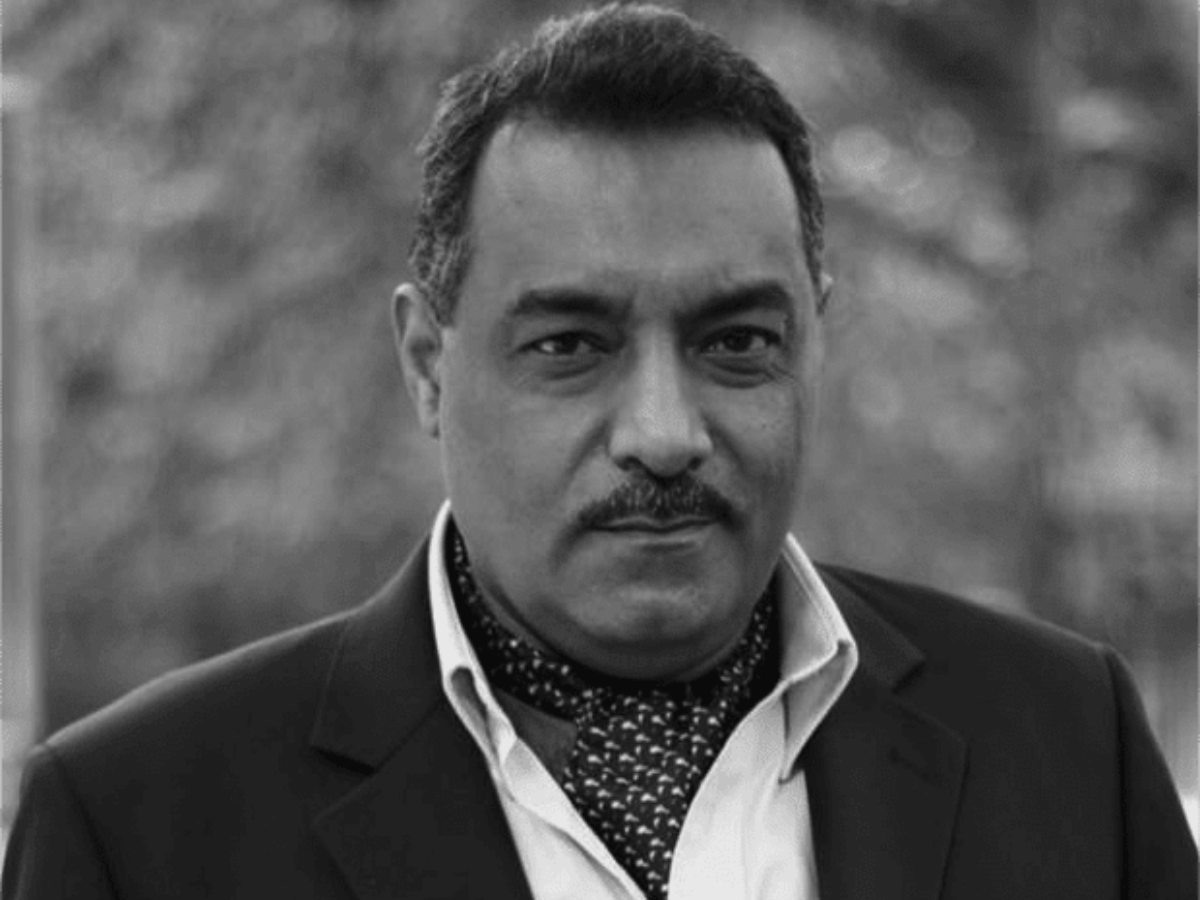
The famous defence analyst and former Indian Army officer, Maroof Raza, died on 26 February 2026 at the age of 66 in Gurugram due to a cancer battle. Being regarded as a profound expert in the field of national security, counter insurgency and India-Pakistan relations, Raza made a significant contribution to the concept of strategic journalism in India that will remain memorable in history of journalism in the country.
Who was Maroof Raza
Maroof Raza was born in 1959 and served in the Indian Army between 1980 and 1994 in the Grenadiers then the Mechanised Infantry. His experience on the ground on counter insurgency operations gave him the basis of his authoritative information on the topic of terrorism, border tensions and security in the region. A self-disciplined and impartial thinker, Raza was respected by the military and the civilian community alike because of his disciplined style and intellectual interest.
Maroof Raza Education
The academic life of Raza was indicative of his levels of commitment to deep understanding. He left St. Stephen’s College and got an M.A in War Studies at King’s College London and got an M. Phil in international relations at Cambridge University. In 1994, he also won a times of India Fellowship and had a visiting fellowship at centre of Policy Research, Henry L. Stimson and King College London.
Maroof Raza Career
Raza left active service in the military, and in 2011 became a household name, after working on Times Now as both a strategic affairs consultant and series presenter including the Line of Duty, which won a military documentary award at the 2005 Rome film festival and entered the Limca Book of Records. He has also presented Latitude and India Risk Report, was Editor at Large in Fauji India and a strategic risk and geopolitics advisor with IIRIS Consulting. His reputation as a scholar-practitioner was upheld by his lectures at Middlesex University and other world conferences.
Maroof Raza Passes Away After Battling Illness
Maroof Raza was killed in Gurugram on 26 February 2026 after a long struggle with cancer. His death signals the end of one of the most revered defence analysts in India whose composed manner, research work and well-contained commentary had an impact on policy makers and the masses in general. Media houses, academicians and even military veterans came up with tributes about his contribution to strategic discourse.
What Themes Did Maroof Raza Focus in His Books?
The writings of Raza were centered on the conflict in the Kashmir region, the relationship between India and Pakistan, and the border dispute involving India and China. He did not just work in headlines, but in historical, geopolitical and strategic aspects of security issues. He challenged the readers to think critically on complex issues, not to sensationalise facts but to have an informed discussion on issues affecting regions and the world at large.
How Did Maroof Raza’s Approach to Journalism Differ from Others?
Contrary to most commentators, Raza assumed that audiences were intelligent. He was able to combine both first hand military experience and analytical rigor, providing subtle and factual commentary. He did not engage in speculation and kept a rational, authoritative approach, using a responsible language in a media world where sensationalism is usually the order of the day. His talent of making the complex simple without being simplistic made him become a very respected person.
FAQ’s: Maroof Raza: Ex-Army officer
1. When did Maroof Raza serve in the Indian Army?
From 1980 to 1994, in Grenadiers and Mechanised Infantry units.
2. What was his educational background?
St. Stephen’s College (Delhi), King’s College London (MA War Studies), Cambridge University (M.Phil in International Relations).
3. Which TV series was he best known for?
Line of Duty on Times Now, awarded at the Rome Film Festival.
4. What topics did he focus on in his writing?
Kashmir conflict, India-Pakistan relations, India-China border disputes and national security.
5. How did his approach stand out in media?
He combined field experience with analytical rigor, presenting informed, calm and nuanced insights.




