
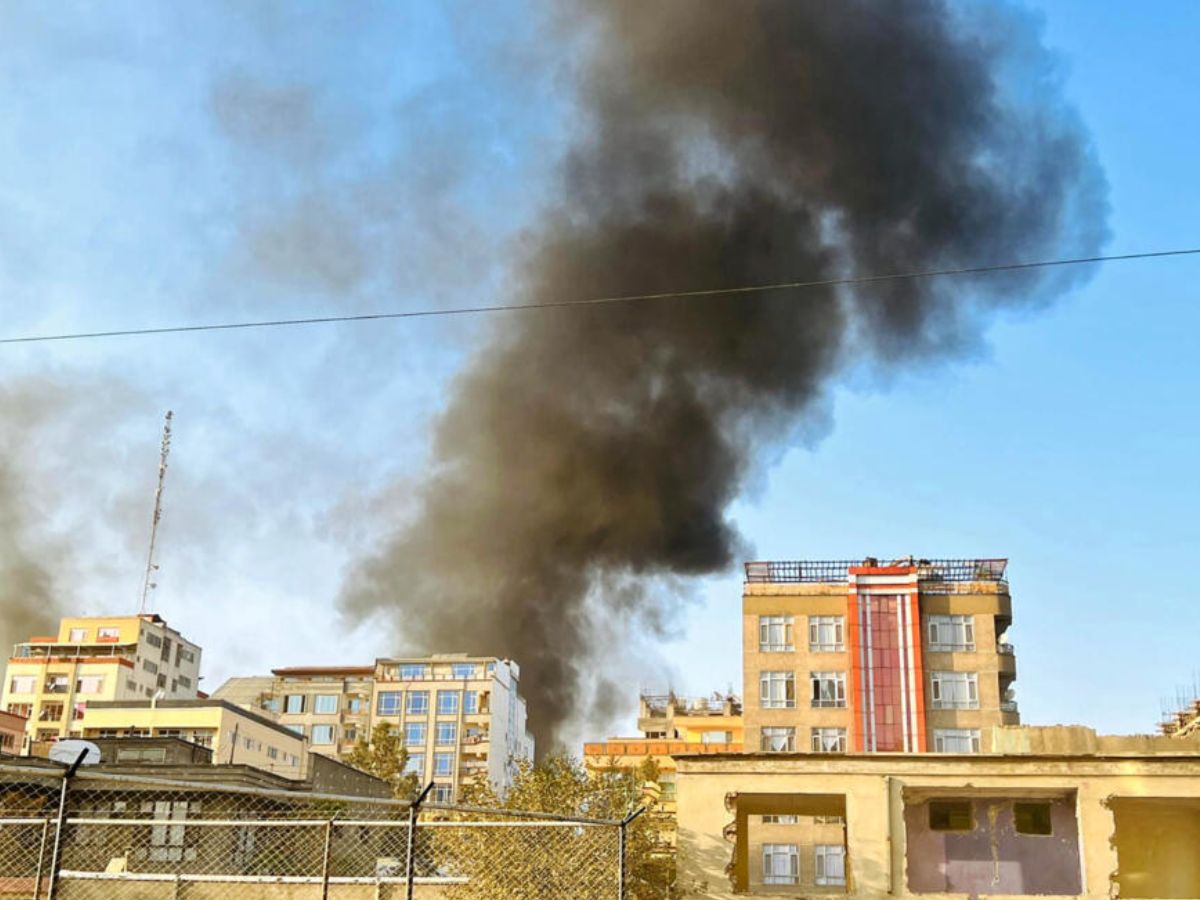
Violence between Pakistan and Afghanistan surged dramatically this week, with explosive strikes reported in Kabul and other Afghan cities shortly after armed clashes along the contested Durand Line.
Pakistani warplanes bombed multiple targets inside Afghanistan, reigniting deep-seated tensions that had flared repeatedly in recent months. Residents in Kabul heard loud detonations early Friday, while governments on both sides traded accusations and reported heavy blows against each other’s forces.
Pakistan-Afghanistan War: What Triggered the Latest Cross-Border Attacks?
Officials said the escalation began when Afghan forces launched attacks on Pakistani military positions along the border late Thursday, claiming gains and damage to Pakistan’s defence posts. Pakistan rejected Kabul’s account, calling the assaults unprovoked and a violation of its territorial integrity. Within hours, Pakistan carried out extensive airstrikes against targets in Kabul, Kandahar and the southeastern province of Paktia.
Pakistan’s Information Minister CONFIRMS STRIKES ON KABUL
‘Destroyed military installations belonging to Afghan Taliban regime’ https://t.co/PmwHCI6oJ8 pic.twitter.com/nyNKuNGnGz
— RT (@RT_com) February 26, 2026
This marked one of the most intense military confrontations between the two neighbours since a fragile ceasefire was mediated by Qatar last year. Reports describe the blows as part of Operation Ghazab lil-Haq, Pakistan’s codename for its recent offensive against Taliban infrastructure after repeated cross-border strikes.
Pakistan-Afghanistan War: Kabul Under Fire with Explosions & Smoke in Afghan Cities
In the early hours of Friday, multiple explosions echoed across Kabul. Videos circulating on social media showed plumes of smoke and fire rising in distant sections of the Afghan capital, apparently from Pakistani air strikes. Pakistani jets and drones also struck positions in Kandahar and Paktia, according to Afghan government statements.
Taliban spokesperson Zabihullah Mujahid responded sharply on social media, accusing Islamabad of hitting “certain areas of Kabul, Kandahar, and Paktia” but claiming “fortunately, there have been no reported casualties.”
Pakistan-Afghanistan War: Pakistan Responds With ‘Open War’ Declaration
In a forceful message on social media, Pakistan’s Defence Minister Khawaja Asif described the situation as moving into “open war,” saying, “Our patience has reached its limit. Now it is open war between you and us.” His remarks came after Islamabad asserted that airstrikes targeted militant hideouts and Taliban military positions threatening Pakistan’s security.
PAKISTAN RELEASES AERIAL FOOTAGE OF KABUL STRIKES https://t.co/IA7Z2RBNg8 pic.twitter.com/CcKzrMp1yL
— RT (@RT_com) February 26, 2026
The Pakistani Information Minister said Pakistan’s counterattacks were designed to eliminate insurgents. According to Pakistan’s statements cited on social platforms, “A total of 72 Afghan Taliban combatants have been terminated, and more than 120 insurgents have been injured,” with multiple enemy posts destroyed.
Pakistan-Afghanistan War: Conflicting Claims & Unverified Casualties
As usual in such confrontations, each side offered divergent accounts of casualties and battlefield success. Afghanistan’s authorities claimed their offensive led to the capture of Pakistani military posts and inflicted heavy losses on Islamabad’s forces. One Afghan statement said scores of Pakistani soldiers were killed and positions overrun during border engagements.
🚨🚨This war is not a patriotic or defensible one; rather, it is a battle between a terrorist group and a government in our neighboring country, the heavy price of which is being paid by the people of Afghanistan. I hope Pakistan targets only the terrorists and the military sites… pic.twitter.com/Ues38rZscN
— روحانی🦅 (@RohullR) February 26, 2026
Pakistan, however, dismissed Kabul’s figure, stating fewer of its soldiers were killed and denying claims of troop captures. Because independent verification of casualty numbers and territorial changes remains unavailable, the true human cost and gains for each side remain unclear.
Pakistan-Afghanistan War: How This Escalation Affects the Region?
The renewed confrontation has alarmed diplomats and foreign observers, given the fragile stability of South Asia and the long-contested status of the Durand Line. Periodic border clashes, militant infiltration, and mutual mistrust have long plagued relations between Pakistan and Afghanistan, especially after the Taliban takeover in Kabul in 2021.
The current spike in violence could deepen humanitarian suffering in border regions, disrupt trade and movement, and undermine previous attempts at dialogue and ceasefire agreements. International organisations have urged both nations to step back from further escalation and protect civilian lives.




