
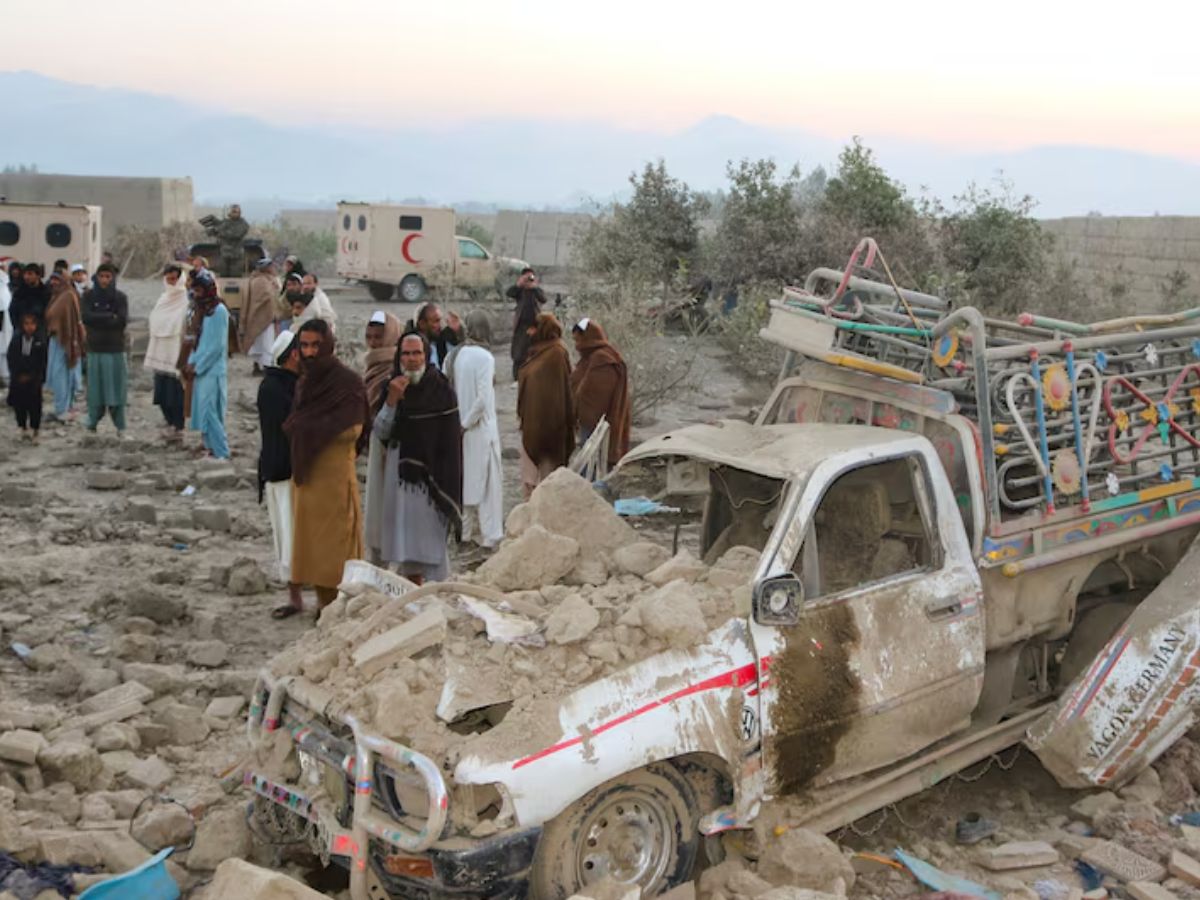
Fresh airstrikes, cross-border raids and direct war-like warnings have pushed Pakistan and Afghanistan into their most serious confrontation in years. Fighter jets struck major Afghan cities, including Kabul and Kandahar, after Taliban forces launched attacks along the Durand Line.
Leaders from both countries now openly describe the situation as an “open war.” The fighting follows months of rising tensions, failed ceasefires and growing militant violence.
Pakistan-Afghanistan War: Why Is It Happening?
The crisis centres on security accusations and militant violence along the disputed Durand Line border. Pakistan accuses Afghanistan’s Taliban government of allowing the Tehreek-e-Taliban Pakistan (TTP) to operate from Afghan soil. Islamabad says TTP fighters plan and launch attacks inside Pakistan from safe havens across the border.
Afghanistan denies the allegations. Taliban officials insist they do not allow any group to use their territory to attack another country. Kabul also accuses Pakistan of violating Afghan sovereignty through repeated air and artillery strikes. Tensions have steadily increased since 2022, with border closures, trade disruptions and periodic firefights worsening relations.
Pakistan-Afghanistan War: What Sparked the Latest Clashes?
The latest escalation began after Pakistan claimed it had “irrefutable evidence” linking militants in Afghanistan to recent deadly attacks inside Pakistan. One of the attacks targeted security forces and caused multiple casualties. Pakistan responded with airstrikes on what it described as militant hideouts in the Afghan border regions.
Afghanistan said those strikes killed civilians, including women and children. In response, Taliban forces launched cross-border attacks on Pakistani military posts.
Afghanistan’s spokesperson Zabihullah Mujahid said, “In response to the repeated rebellions and insurrections of the Pakistani military, large-scale offensive operations were launched against Pakistani military bases and military installations along the Durand Line.”
Pakistan then launched “Operation Ghazab Lil Haq,” striking military targets in Kabul, Kandahar and Paktia. Pakistan’s Defence Minister Khawaja Asif declared, “Our patience has reached its limit. Now it is open war between us and you.”
Pakistan-Afghanistan War: Who are the Pakistani Taliban?
The Tehreek-e-Taliban Pakistan (TTP), also known as the Pakistani Taliban, was formed in 2007. The group operates separately from Afghanistan’s Taliban but shares ideological and historical ties. The TTP has carried out attacks on markets, mosques, schools, military bases and police stations in Pakistan. It gained global attention after attacking Malala Yousafzai in 2012.
Pakistan considers the TTP its most serious internal security threat. Since 2022, attacks have increased significantly, according to conflict monitoring groups. Pakistan says Afghanistan must dismantle TTP networks. Afghanistan says it does not shelter militants and rejects responsibility.
Pakistan-Afghanistan War Latest Updates
Pakistan’s air force struck multiple Afghan cities overnight. State media reported the destruction of brigade headquarters, ammunition depots and command centres. Interior Minister Mohsin Naqvi wrote, “The cowardly enemy struck in the darkness of night. The Afghan Taliban made a despicable attempt to target innocent civilians.
“The nation stands shoulder to shoulder with the armed forces. The Afghan Taliban made a terrible mistake by attacking. They will have to face serious consequences. We will not allow our security to be compromised.”
Afghanistan confirmed the strikes but disputed Pakistan’s claims about casualties and damage. Diplomatic channels remain tense, and no new ceasefire has been announced.
Pakistan-Afghanistan War Death Toll
Both sides reported significant casualties, but figures vary widely. Afghanistan claimed dozens of Pakistani soldiers were killed and several posts destroyed. Pakistan denied those numbers and said only a few of its personnel died.
Pakistan claimed over 100 Taliban fighters were killed in its air operations. Afghan authorities rejected that figure. Independent verification remains difficult due to limited access to the conflict zones.
Pakistan-Afghanistan War: Military Comparison
Pakistan holds overwhelming conventional military superiority. Pakistan has over 600,000 active personnel, more than 400 combat aircraft and thousands of armoured vehicles. It is also a nuclear-armed state.
The Taliban controls around 172,000 fighters. They possess a limited number of aircraft and helicopters but lack a modern air force. While Pakistan dominates in air power, Afghanistan can use guerrilla-style tactics and difficult mountainous terrain to prolong the conflict.
Pakistan-Afghanistan War: Who are the Allies?
No country has formally joined the conflict. Pakistan maintains strong ties with China and defence links with Gulf nations. Afghanistan’s Taliban government has limited international recognition but engages diplomatically with regional players like Qatar.
Regional powers are closely monitoring developments due to fears of instability spreading across South Asia.
Pakistan-Afghanistan War: What Happens Next?
Analysts expect Pakistan to continue targeted air operations if militant attacks persist. Afghanistan may respond with further cross-border raids.
President Asif Ali Zardari warned, “Our armed forces’ response is comprehensive and decisive. Those who mistake our peace for weakness will face a strong response — and no one will be beyond reach.”
PM Shehbaz Sharif said the military is “fully capable of thwarting any aggressive intentions” and added, “There will be no compromise on the defence of the beloved homeland and every aggression will be met with a befitting reply.”
Unless diplomatic talks resume quickly, the conflict could turn into a sustained border war. The coming days will determine whether both sides choose escalation or negotiation.




