
New Delhi: A set of colonial-era documents spanning 1917 to 1920 offers a detailed glimpse into how the British administration mobilised financial and ceremonial support in small-town India during the First World War, while also intersecting with a modern claim by the descendants of a Sehore trader.
The records relate to Seth Jummalal Ruthia, a prominent businessman in Sehore during the war years.
In 1917 and the surrounding war period, the British government in India was actively mobilising monetary assistance from princely states, nawabs, zamindars and influential landholders, in addition to commercial elites, to finance its World War I campaign. War Loan schemes were floated across the subcontinent as part of a broader imperial effort to raise funds for the war effort.
A 1917 certificate, previously reported by several media organisations, shows that Ruthia paid Rs 35,000 under the Indian War Loan scheme floated by the British government during World War I.
In addition to that certificate, two other documents accessed exclusively by this publication provide further context about his role in the colonial administrative structure.
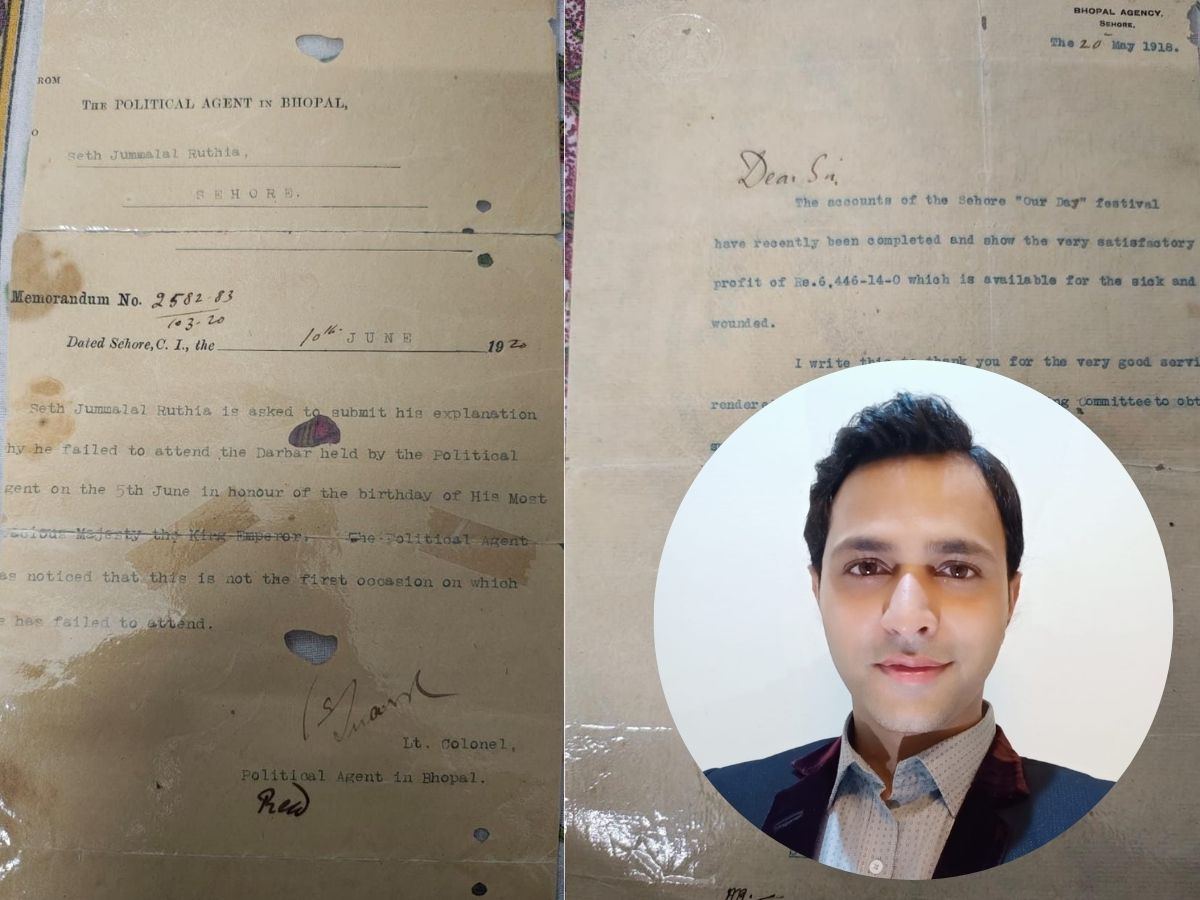
The first is a letter dated 20 May 1918 from the Political Agent in Bhopal. It records that the accounts of the Sehore “Our Day” festival had been completed and showed a profit of Rs 6,446-14-0, described as being “available for the sick and wounded.” The Political Agent thanked Ruthia for the “very good service rendered” as a member of the managing committee and for helping to obtain “such an excellent result in this small place.”
“Our Day” events were organised across British India as part of empire-wide wartime fundraising efforts, typically aimed at supporting soldiers who were wounded or otherwise affected by the conflict. The letter indicates that even smaller administrative centres such as Sehore were integrated into formal reporting and accounting structures linked to the war effort.
A second document, issued as Memorandum No. 2582-83 on 10 June 1920, asked Ruthia to submit an explanation for failing to attend a darbar held on 5 June in honour of the birthday of the King-Emperor. The memorandum noted that this was “not the first occasion” on which he had failed to attend.
Darbar gatherings functioned as ceremonial affirmations of loyalty to the Crown, and attendance by leading citizens carried symbolic significance. The written reminder underscores the expectation that locally influential figures would participate in imperial ritual life.
Taken together, the 1917 loan certificate and the 1918 and 1920 correspondence illustrate the dual expectations placed upon commercial elites in provincial India during the war period. They were mobilised to contribute financially to imperial initiatives and were simultaneously expected to maintain visible participation in ceremonial expressions of allegiance.
Kapil Agarwal, the great-grandson of Seth Jummalal Ruthia, while speaking to this newspaper, said the family recently revisited the set of documents while reviewing ancestral papers. He said the records collectively demonstrate the extent of his ancestor’s engagement with the colonial administration during the war years.
Agarwal added that the family has initiated steps to pursue legal recourse in relation to the 1917 war loan and plans to approach the British government through the Government of India, seeking repayment of the Rs 35,000 they say was advanced at the time.
The 1918 and 1920 correspondence does not refer to the specific war loan amount. It does, however, independently document Ruthia’s recognised civic and administrative role during the same period, offering a structured account of how the British Raj relied on local intermediaries in smaller towns during the global conflict.




