
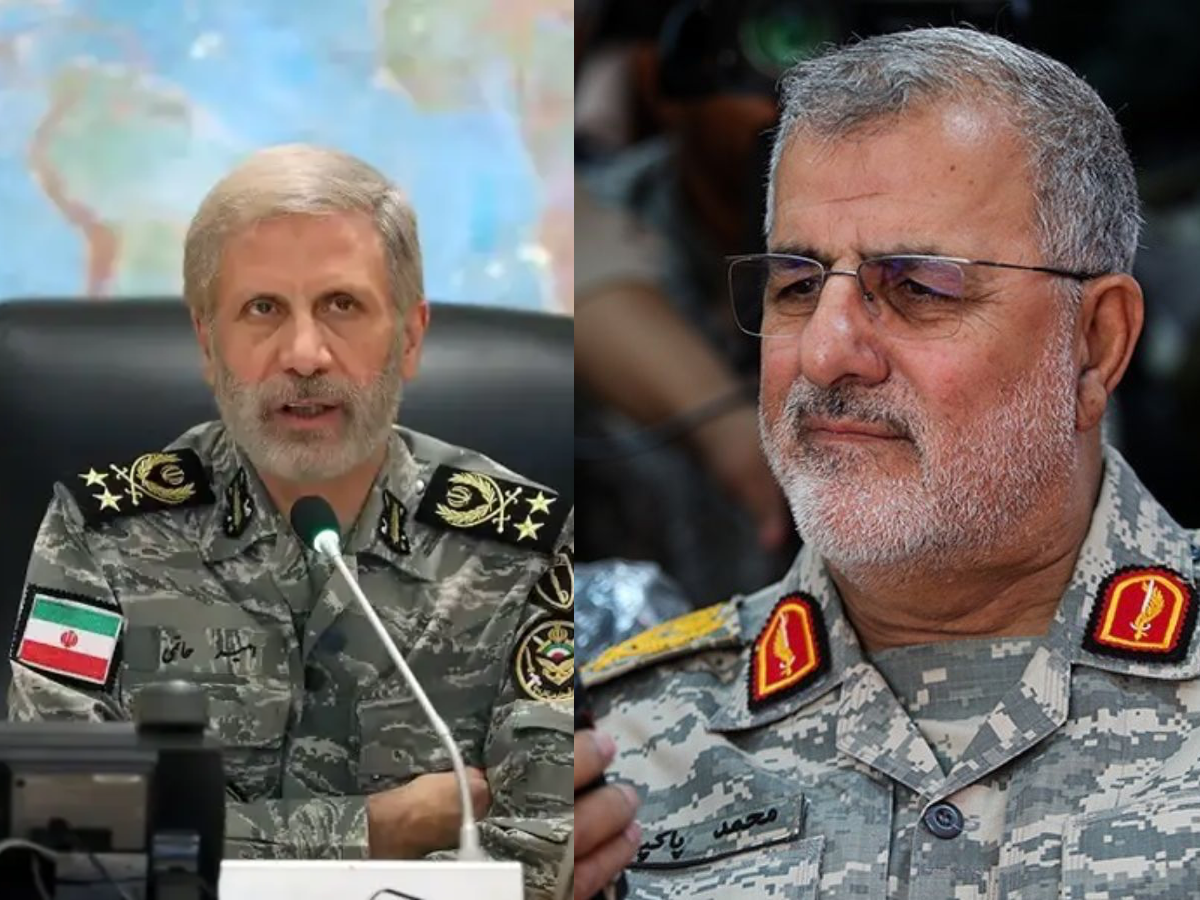
Israel-Iran Tension: According to fresh reports by regional intelligence, the confrontation between Israel and Iran has gone dramatic. Two of the most senior military officials based in Tehran might have been assassinated by recent airstrikes, according to various reports. Iranian officials have not officially established the allegations, yet the reports in and of themselves indicate the extent of the conflict escalation. The so-called assassinations are part of organised strikes against strategic Iranian facilities with explosions being reported in Tehran and other high-end cities. The incursion may redefine the leadership in the Iranian security system and increase instability in the region.
Israel-Iran Tension: Did Israeli Strikes Kill Amir Hatami & Mohammad Pakpour?
International media sources close to military working revealed that among those who were killed was Defence Minister Amir Hatami and Islamic Revolutionary Guard Corps commander Mohammad Pakpour. According to Israeli officials, it was aimed at high-level military leadership although there is no official confirmation of the same by Israeli military.
In case confirmed, the deaths would provide one of the most important strikes to the chain of command in Iran in several years. The IRGC, which supervises tens of thousands of people and manages missile and regional proxy strikes, is at the center of the Tehran defensive positioning.
Iran Warned of Sustained Retaliation Before Joint US-Israel Strikes
Prior to the mentioned strikes, senior Iranian officials had prepared a warning to the extent that any joint attack of Israel and the United States would lead to permanent retaliation. Defence leaders referred to the U.S. bases in the Gulf as legitimate targets in case they are attacked. Military statements made by Iran stressed on the issue of endurance, indicating that retaliation would not be symbolic but long-term. These kinds of rhetoric represent a deterrence doctrine of escalation.
Who is Defence Minister Amir Hatami
Amir Hatami is an Iranian top military official who has worked in some of the major defense posts. He is an army officer who once served as the head of ground troops and later as the defence minister that governed the policy of the armed forces of Iran, their purchasing policy and military coordination in the region when the tension in the Middle East had reached a new peak.
Who is Mohammad Pakpour?
After 20 years of service in the IRGC, Mohammad Pakpour became a leader thereof. He enlisted in the force in 1979 when Iran was going through the Iranian Revolution, and eventually fought in the Iran-Iraq War. He had a doctorate in political geography and was regarded as a functional commander as well as being a strategist.
In 2025, his predecessor passed on and he took over as the leader of the IRGC. His administration was characterised by attention to missiles and regional coalitions.
What the Reports Claim
There are unconfirmed reports that the strikes were also directed on other senior figures including the intelligence officials. The heavy attacks have been recognized by the Iranian media but it has not gone ahead to claim the leadership. Concurrently, the IRGC said that it would keep responding, and asserted the launching of missiles to the U.S. installations in Bahrain, Qatar, Kuwait and the United Arab Emirates. There is a lack of independent confirmation of the number of casualties on both sides.
FAQ’s: Israel-Iran War
1. Have the deaths been confirmed?
No official confirmation has been issued by Iran or Israel.
2. Why are these figures significant?
They hold top roles in Iran’s defense and IRGC command structure.
3. Has Iran responded militarily?
Yes, Iranian forces claim to have targeted regional U.S. bases.
4. Could this widen the conflict?
Leadership losses may intensify retaliation and draw in more actors.
5. Are diplomatic efforts ongoing?
Backchannel talks are reported, but active strikes complicate progress.




