
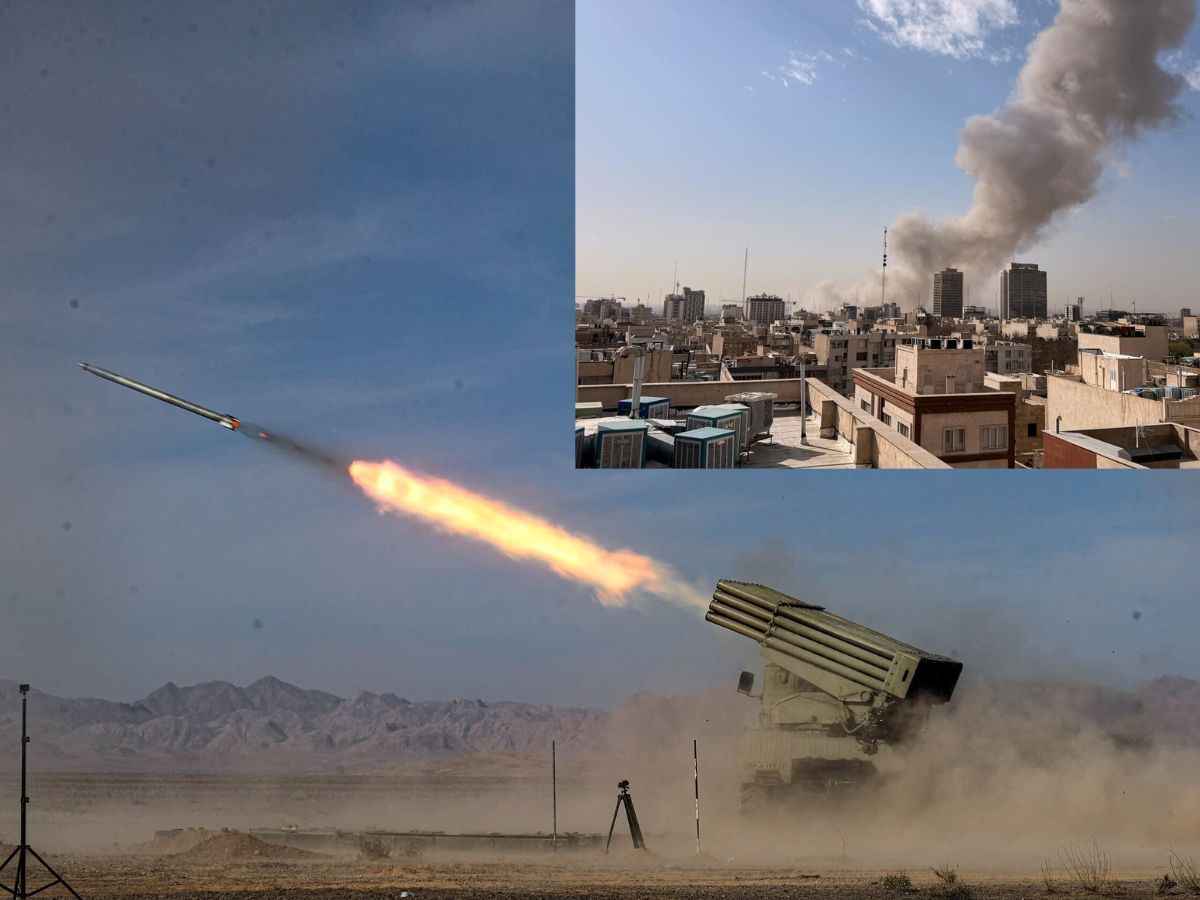
The Iran-Israel conflict has entered a dangerous new phase, with both sides deploying some of the most advanced weapons in modern warfare. The United States joined Israel in launching precision strikes on Iranian military and nuclear-linked sites, while Tehran responded with ballistic missiles and drone attacks across the region.
The confrontation has now spread beyond the two countries, with US military facilities in the Gulf also facing retaliation. The scale and technology of the weapons used show how serious and far-reaching this crisis has become.
US Israel Iran Live: Latest Updates
Israel launched Operation Roaring Lion, while the United States carried out Operation Epic Fury, targeting key Iranian sites in Tehran, Isfahan and Shiraz. US President Donald Trump ordered one of the largest American military deployments to the Middle East in recent years ahead of the strikes.
Iran quickly retaliated. It launched ballistic missiles toward Israel and targeted US military facilities in Bahrain, Kuwait and Qatar. Reports also indicated missile launches toward Gulf countries hosting American forces. This wave of attacks marked a sharp escalation and signalled that the conflict could expand further if diplomacy fails.
US, Israel Attacks Iran: Weapons Used by the US
The United States relied heavily on long-range strike systems and precision weapons.
Tomahawk Cruise Missiles played a central role in the opening phase of the operation. These subsonic, all-weather missiles can travel over 1,600 km and fly at low altitudes to avoid radar detection. US warships and submarines launched them to strike Iranian targets with high accuracy.
The US also used Joint Direct Attack Munition (JDAM) kits, which convert conventional bombs into GPS-guided precision weapons. These allow aircraft to hit targets accurately even in poor weather conditions.
Another key weapon was the GBU-28 bunker-buster bomb, a 5,000-pound laser-guided penetrator designed to destroy underground bunkers and reinforced nuclear facilities. Its hardened casing allows it to break through concrete before detonating.
US, Israel Attacks Iran: Weapons Fired by Iran
Iran responded with a mix of ballistic missiles and drones drawn from its large and diverse missile arsenal in West Asia. According to widely reported missile data, Iran fields several medium- and long-range ballistic missiles:
- Shahab-1 – 300 km range
- Raad – 500 km range
- Ya-Ali – 700 km range
- Qiam-1 – 800 km range
- Shahab-3 – 1,300 km range
- Soumar / Hoveyzeh cruise missiles – 1,350+ km range
- Emad – 1,700 km range
- Khorramshahr – 2,000 km range
- Sejjil – 2,000 km range
The Shahab-3 and Emad missiles form the backbone of Iran’s ability to strike Israel. The Khorramshahr and Sejjil, with ranges up to 2,000 km, allow Iran to target much of the Middle East. Iran also deployed long-range drones to strike regional targets, aiming to overwhelm air defence systems.
US, Israel Attacks Iran: Long-Range Cruise Missiles & Precision Bombs Used
Israel used its advanced air power to support US strikes. The F-35I “Adir” stealth fighters penetrated Iranian airspace using their low-visibility design and advanced sensors. These jets can gather intelligence and deliver precision strikes while avoiding radar detection.
The F-15I “Ra’am” strike fighters carried heavy bomb loads over long distances. Israel also used stand-off missiles such as Delilah and Rampage, which allow aircraft to fire from outside enemy air defence range.
Precision-guided bomb systems like SPICE kits converted standard bombs into smart munitions. These bombs can strike targets accurately even in GPS-jammed environments, making them effective against hardened or well-defended sites.
US, Israel Attacks Iran: How Cruise Missiles & Stealth Fighters Shape the Conflict?
Cruise missiles and stealth jets have changed the nature of modern warfare. Tomahawks allow the US Navy to strike from hundreds of kilometres away without putting pilots at risk. Stealth fighters like the F-35I reduce detection and improve strike success rates against advanced air defence systems.
This combination of stand-off weapons and precision bombs enables rapid, deep strikes. It also increases the speed of escalation, as countries can hit strategic targets quickly and with high accuracy.
Iran’s ballistic missiles, on the other hand, rely on range and payload strength. Missiles like the Sejjil and Khorramshahr can travel long distances at high speed, making interception more difficult.
Iran’s Ballistic Missile Arsenal
Iran has invested heavily in developing one of the region’s largest missile programs. Its arsenal includes short-range, medium-range and long-range systems capable of reaching Israel and US bases in the Gulf.
The Shahab series marked Iran’s first long-range strike capability. Later systems, like Emad, improved accuracy with terminal guidance technology. Solid-fuel missiles such as the Sejjil offer quicker launch readiness and improved mobility.
Cruise missiles like Soumar and Hoveyzeh add another layer to Iran’s deterrence by flying low and avoiding radar, similar to Western cruise missile systems.
What This Means for the Iran-Israel Conflict?
The heavy use of cruise missiles, stealth fighters, bunker-busters and long-range ballistic missiles shows that this conflict has moved beyond limited retaliation. Both sides are using high-technology weapons designed for strategic impact.
As Iran targets US bases and Israel continues deep strikes inside Iranian territory, the risk of a wider regional war increases. Gulf nations hosting American forces now find themselves directly affected.
Military analysts warn that if both sides continue to escalate, the conflict could reshape security dynamics across West Asia. Diplomatic efforts may determine whether this confrontation expands further or moves toward de-escalation.




