
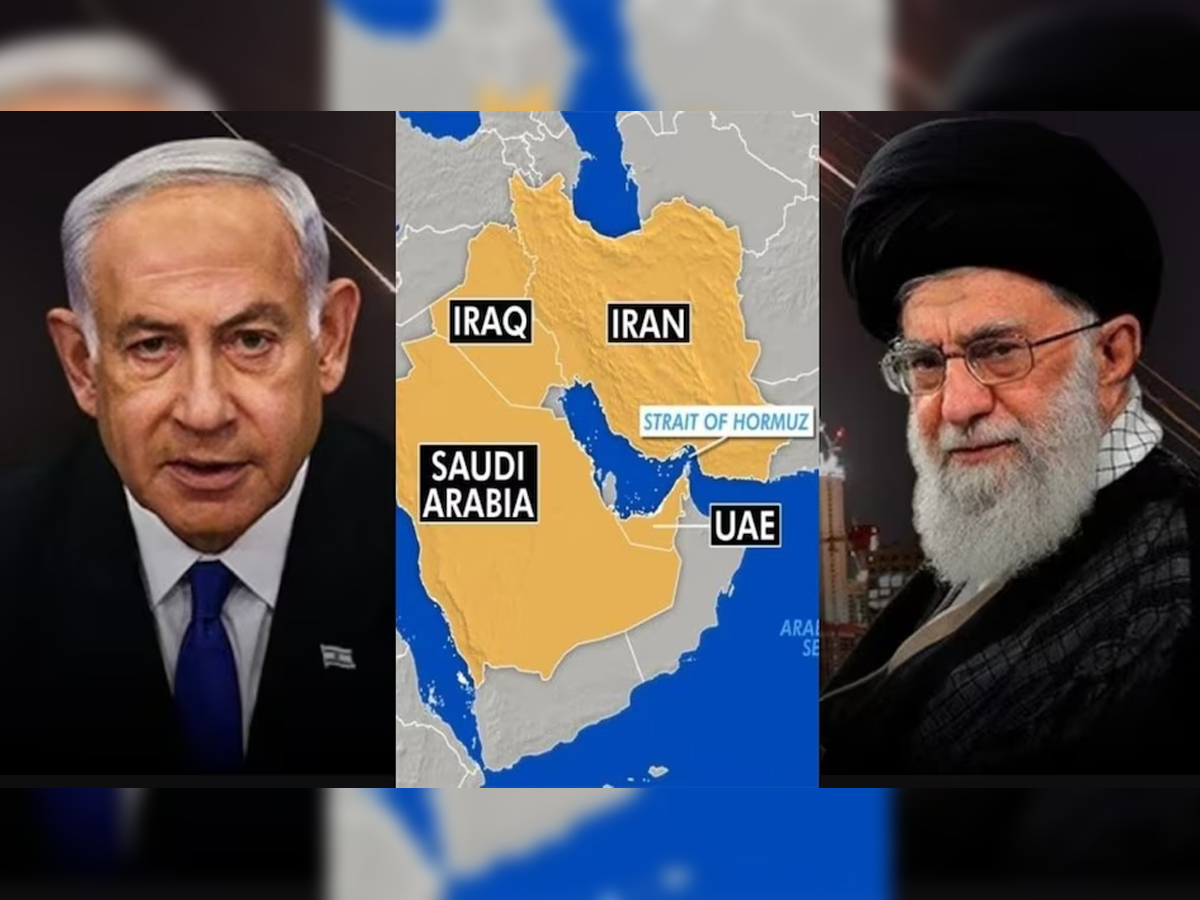
As military tensions rise following joint US-Israel strikes on Iran, global attention has shifted from the battlefield to a narrow stretch of water that powers the world’s economy, the Strait of Hormuz. Any instability here could ripple far beyond the Middle East, affecting fuel prices, trade routes, and economic stability worldwide.
Iran just announced the closure of the Strait of Hormuz. An official from the European Union’s naval mission Aspides said on Saturday that vessels in the area have been receiving VHF radio warnings from Iran’s Revolutionary Guards, stating that “no ship is permitted to transit the Strait of Hormuz.”
The narrow waterway is considered the world’s most vital oil shipping corridor, connecting major Gulf energy exporters, Saudi Arabia, Iran, Iraq, and the United Arab Emirates, to the Gulf of Oman and the Arabian Sea.
Why the Strait of Hormuz Is Strategically Crucial?
The Strait of Hormuz links the oil-rich Persian Gulf to the Indian Ocean. Sitting between Iran and Oman’s Musandam exclave, the passage narrows to about 50 kilometres at its widest point. Its shallow depth and tight shipping lanes make it particularly vulnerable during military crises.
Several islands under Iranian control, Hormuz, Qeshm, and Larak, lie along this route. Also located here are the disputed Greater Tunb, Lesser Tunb, and Abu Musa islands, held by Tehran since 1971. Together, these positions give Iran strong oversight of vessels moving through the waterway.
Strait of Hormuz Closed: World’s Most Important Energy Chokepoint
Energy analysts often describe the Strait of Hormuz as the world’s most critical oil chokepoint. Around 20 million barrels of oil pass through it every day, accounting for nearly one-fifth of global consumption. Roughly the same share of the world’s liquefied natural gas trade also travels through this route, much of it from Qatar.
More than 80% of this energy supply flows to Asian markets. China alone buys over 90% of Iran’s oil exports. Although Saudi Arabia and the United Arab Emirates operate limited pipelines that bypass the strait, these alternatives cover only a fraction of the daily traffic.
Can Iran Close the Strait of Hormuz?
Iran has repeatedly signaled that it could use the Strait of Hormuz as leverage during conflicts. Senior commanders of the Islamic Revolutionary Guard Corps have warned that Tehran may shut the waterway if attacked.
Despite such threats, Iran has never fully closed the strait. Instead, it has relied on naval drills, ship inspections, seizures, and harassment tactics to assert pressure while avoiding all-out confrontation.
Past Strait of Hormuz Incidents That Shook Markets
The waterway has a long history of tension:
- 1973: Arab oil embargo highlighted the Gulf’s global importance.
- 1980–1988: The Iran-Iraq “Tanker War” damaged or destroyed hundreds of vessels.
- 1988: A US warship incident killed 290 civilians, escalating regional anger.
- 2012 onward: Sanctions and nuclear disputes renewed Iranian threats.
- 2019–2024: Vessel attacks and seizures raised fears of wider conflict.
Each episode sent energy markets into uncertainty.
Why the Strait of Hormuz Matters Now?
With US-Israel strikes targeting Iranian military assets and Tehran warning of retaliation, fears of disruption have returned. Even partial interference could sharply raise oil and gas prices, disrupt global supply chains, and hit energy-importing economies, especially in Asia.
In times of conflict, the Strait of Hormuz is more than a regional flashpoint. It is a fragile artery of global energy security, where even brief instability can reshape markets worldwide.




