
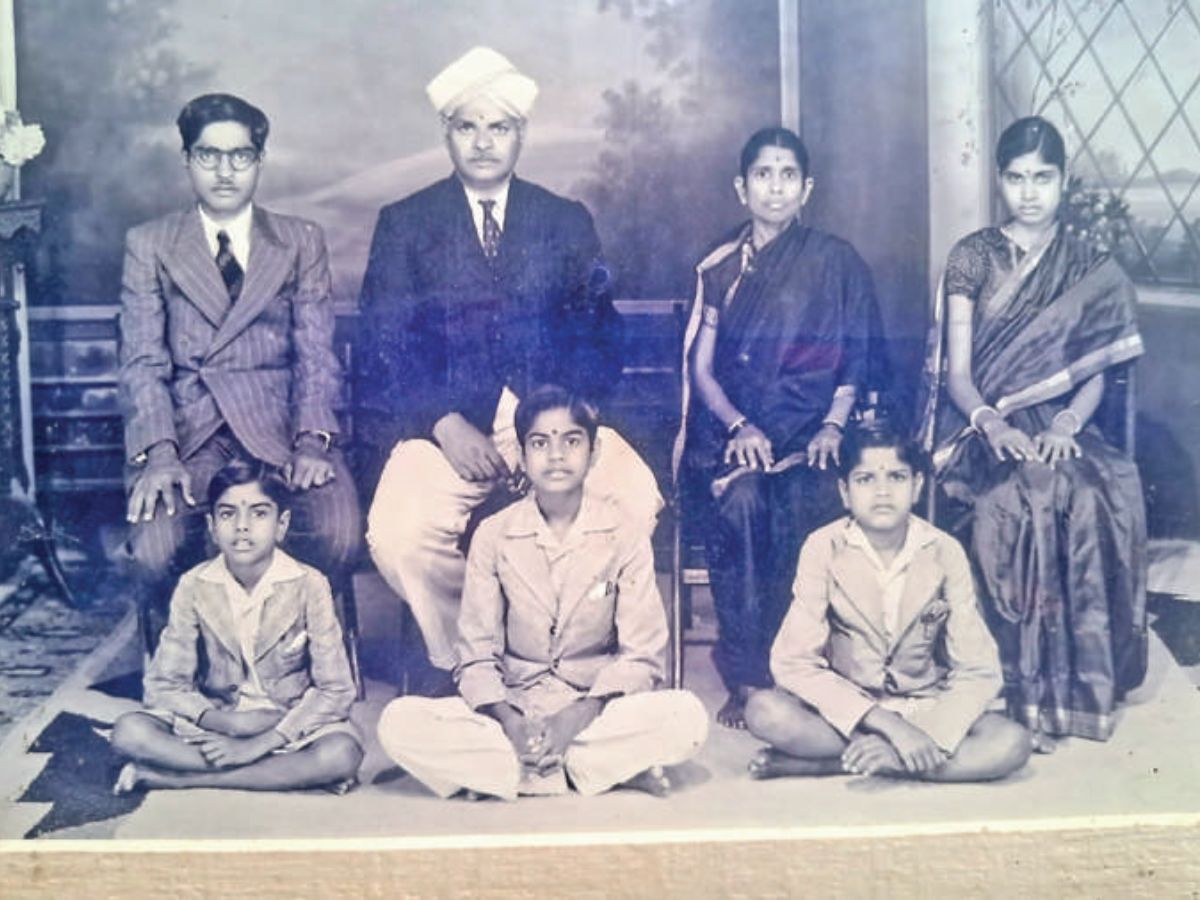
My grand aunt is a hundred years old. Her grandson told me that she remembers the names of everyone in the extended family. And until a recent fall injured her shoulder, she could write beautifully without an error.
If they had educated her, she would have surpassed her brothers, who all became engineers, and even the most brilliant older brother, who became an award-winning scientist, he said. But she was married off at barely 12, though she completed her 10th standard. Her eldest sister, my maternal grandmother, had only been allowed to study till the 4th grade. We remember them as wise and practical; it never occurred to any of us to discount their intelligence.
They educated their daughters and supported their careers. And raised their sons to respect their working spouses.
Stepping into March, I look at all the women who have lifted us and held us up—our grandmothers, mothers, and aunts—with marvel and gratitude. This legacy of resilience makes me ponder why, despite all the doors pushed open, the path to fulfilment for many women still feels impossibly hard. It’s a good time to look beyond the mandatory slew of events for International Women’s Day and ask ourselves how we can get beyond tokenism. Beyond the advocacy for gender diversity, what’s really happening out there?
On the one hand, women have blasted glass ceilings in corporate corner offices and on playing fields. On the other hand, there’s the rise of the ‘trad’ wives. This isn’t just a trend in the First World; while preceding generations of women pushed open doors, we are confronted with a new generation that wants to reverse the trend. Rich husbands, sizeable pocket money, and plenty of vacations are their asks. And if the marriage falls apart, they console themselves with settlements that can run into crores.
Are the young women who have seen their mothers work hard to prove themselves simply put off by the very struggle? This is a conversation worth having. Let’s first distinguish between a genuine choice and the temptation to take an easier road.
It is a woman’s choice to choose domesticity; there’s no judging it. But how many make this choice out of exhaustion, in the absence of adequate childcare, equal pay, and workplaces that still subtly sideline women? Women juggle careers and households, often with inadequate support, frequently burning out, and rarely receiving equal recognition or pay for doing both. Something genuinely is broken.
But the fix some of them are reaching for — opting out entirely, choosing financial dependence on a wealthy partner, the trad wife ideal — is a cop-out. The solution isn’t to stop working. It’s to change the conditions. How about instead of exiting, they use their intelligence, education, and privilege to make a collective effort to repair it? And isn’t there a crucial element of self-identity or pride in being self-reliant?
It’s far easier now than before. Gig work offers several opportunities for independence, and there are many funding avenues for women who want to start a business and be their own boss.
There’s also a class dimension: the trad wife option is only available to women who can find, and attract, a partner wealthy enough to support it. For the vast majority of women, opting out simply isn’t on the table. They need to earn a living. And we must look beyond the boardroom and examine the infrastructure that either supports or crushes women’s needs and ambitions.
Despite all the gender equality measures, I can’t help feeling that most of it works only in large corporations and is perhaps played up for optics. A younger friend who’s trying to grow his side hustle into a business confessed to me, “No offence to you, but honestly, tell me how I can afford all the maternity benefits for a woman who just joined the company and then took off to have a child? We aren’t going to be hiring any more women.” There are no easy fixes, and the challenges are daunting. Just like the laudable schemes that support women entrepreneurs, how about a scheme to help small businesses support women employees?
Women’s Day rhetoric celebrates the breakthroughs while glossing over the lack of infrastructure. There’s a scaffolding of support and privilege that allows some women to break through, while others never get near the glass ceiling. let alone crack it. You have to be in the building first. And before that, someone has to believe you belong in it — a teacher, a parent, or a leader who gives you a chance.
Let’s acknowledge that real change isn’t one woman making it to the corner office or a viral moment of girl-boss triumph. It’s in mentoring the woman two rungs below, advocating for policies that make the climb easier for all women, and refusing to let the system pit women against each other. And let’s also acknowledge the women who provide the supportive network of nannies, maids, and cooks. The women who support their employers’ career growth, yet remain far removed from both the glass ceiling and the benefits of the achievements they help secure.
That’s where this starts — in the remembering, the recognising, and the lifting. And look out for a Women’s Day episode of my podcast in the ‘Decoding Leadership’ series featuring the amazing Geetha Panda, who’s doing all this and more.
-
Sandhya Mendonca, author, biographer, podcaster, and publisher at Raintree Media, offers a distinct female gaze of the world in this column.




