
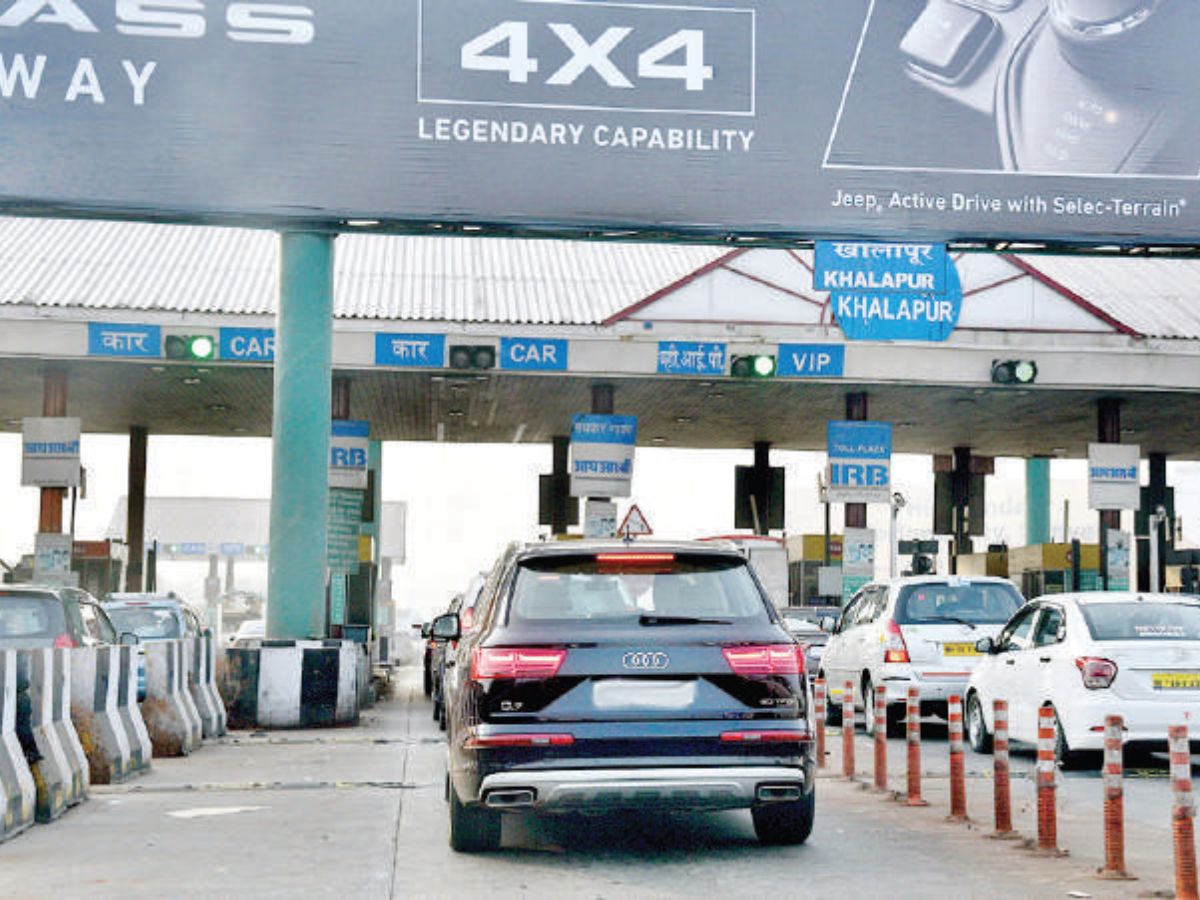
A highway toll booth is not, by any measure, a place where history tends to announce itself. Yet the recent confrontation between an Army officer and a toll operator—the officer presenting his Defence Services Identity Card, the operator citing internal instructions that exemption applies only when personnel are “on duty”—is precisely the kind of moment that puts something much older into sharp relief. This was not a skirmish over privilege. It was, at its core, a question about whether a law passed by Parliament in 1901 is being applied as it was written.
LAW THAT PEOPLE DON’T KNOW EXISTS
The Indian Tolls (Army and Air Force) Act of 1901 came into force on the first of April that year. It consolidated earlier toll provisions and granted exemptions to military personnel across roads, bridges, ferries, and landing places throughout India. It was amended in 1942 to bring the Air Force within its fold and administratively extended to the Navy; it remains in full force as central legislation. It remains central legislation to this day—active, valid and binding.
The first thing to understand about this Act is its override clause. The law states that its provisions operate “notwithstanding” any other Act, regulation, order, or direction issued by any authority. In plain language, this means that no state notification, no National Highways Authority of India (NHAI) circular, no concession agreement, and no private operating manual can displace it. When a toll contractor’s internal instructions conflict with this Act, those instructions have no legal standing.
The heart of the matter is Section 3, which lays out who is exempt from paying toll. Section 3(a)(i) states that all officers, soldiers, and airmen of the Regular Forces are exempt. There is no mention of being “on duty.” There is no requirement that the individual must be in uniform and no stipulation about a duty slip or a government vehicle. The exemption attaches to the person’s status as a member of the Regular Forces—nothing more, nothing less.
What makes this even harder to argue around is the structure of the Act itself. In Section 3(b), which covers members of the Territorial Army and the National Cadet Corps (NCC), Parliament explicitly inserted the phrase “when on duty or when proceeding to or returning from duty.” In Section 3(c), dealing with members of the Indian Reserve Forces, similar movement-related conditions appear. In other words, wherever Parliament intended to limit an exemption by circumstance, it said so—directly and clearly. The absence of that language in Clause (a)(i) is not an oversight. It is a deliberate legislative choice. Parliament understood precisely how to impose a duty-based restriction. It chose not to impose one on Regular Forces personnel.
There is one more provision that rarely enters public conversation: Section 5 of the Act makes wrongful toll collection from an exempt person a punishable offence. The exemption is not symbolic. It is a statutory right with a penalty clause behind it.
THE QUESTION
For a time, the administrative record was consistent with the law. In 2003, following disputes involving private toll operators, the matter was referred to the Ministry of Law and Justice. The Ministry of Road Transport and Highways (MoRTH) then clarified formally—in writing, to states and to NHAI—that the 1901 Act is a Special Act overriding general legislation such as the National Highways Act of 1956, and that personal vehicles of Regular Forces personnel are exempt regardless of duty status. NHAI issued a circular directing compliance. For roughly a decade, this was the settled position.
Then, in 2014, MoRTH issued a memo—framed as a reply to a Right to Information (RTI) query—stating that the exemption applies only to personnel “on duty,” and that private vehicles are not covered unless used for official purposes. This was a direct contradiction of the same ministry’s own 2003 clarification.
The memo was challenged before the Armed Forces Tribunal (AFT) in 2015, which promptly granted an interim stay. But the Tribunal’s final ruling in 2016 dismissed the case—not on merits but on jurisdiction. It held that the dispute did not qualify as a “service matter” under the Armed Forces Tribunal Act, and therefore it could not hear it. Critically, the Tribunal never ruled on whether the 2014 memo was legally valid. That question remains unanswered in any forum competent to decide it.
THE COURTS
In 2006, the Punjab and Haryana High Court dismissed a constitutional challenge to the 1901 Act itself, finding no reason to interfere. The Supreme Court of India dismissed the subsequent appeal later that year. The Act’s constitutional validity stands affirmed at the highest judicial level—and that affirmation binds every authority in the country.
The most concrete ruling on the actual exemption question came not from a superior court but from a District Consumer Disputes Redressal Forum in Sikar, Rajasthan, in 2018. A Flying Officer of the Indian Air Force, travelling on leave in his personal vehicle, had been compelled to pay toll despite showing his service identity card. The Forum ruled in his favour—holding that the Law Ministry’s 2003 clarification prevailed over the 2014 MoRTH memo, and that Regular Forces personnel are exempt regardless of duty status. The toll contractor was ordered to refund the toll, pay compensation, and bear costs. The entire dispute, at one level, had been about thirty-five rupees.
WHERE THINGS STAND TODAY
As recently as January 2026, NHAI publicly reiterated that exemption applies only to vehicles used for official purposes under the 2008 Rules, and that the 2014 memo remains its operative authority. A Parliamentary statute with an express override clause sits on one side of this dispute. An executive memo of unresolved legal validity sits on the other. Between them, at every toll booth across the country, serving officers continue to be stopped, questioned, and in many cases made to pay.
The 1901 Act is more than a century old. It has survived constitutional challenge. It explicitly differentiates between categories of personnel when it intends to impose duty-based conditions. It contains its own penalty provision for wrongful collection. And it has been formally clarified, by the Ministry of Law and Justice itself, to mean exactly what it says.
If a Regular Forces officer presents a valid Defence Services ID and invokes Section 3(a)(i), refusal, obstruction or wrongful toll collection may attract Section 186 IPC (obstructing a public servant) and penalties under Section 5 of the 1901 Act. NHAI cannot shift responsibility to private contractors; compliance with the 1901 Act is non-delegable and must be enforced through clear contractual clauses, training and accountability. Administrative tools like FASTag cannot be used to dilute or deny a statutory exemption granted by Parliament.
What happens at a toll booth in a matter of seconds—a barrier arm rising or refusing to rise—sits atop a legal framework that predates the highway, the NHAI, and every concessionaire agreement in existence. The argument made at that booth was not about entitlement. It was about whether a century-old Act of Parliament means what Parliament wrote, or what a 2014 administrative memo prefers it to mean. That is not a small question. And it deserves a better answer than a closed barrier.
Ashish Singh is an award-winning senior journalist with nearly two decades of experience in defence and strategic affairs.




