
The widening military confrontation between Iran, Israel and the United States entered a more dangerous phase on Saturday as both sides confirmed expanded missile and drone exchanges across multiple theatres, including Tehran, central Israel and several Gulf states hosting American forces. The coordinated US-Israeli assault, described by Washington as Operation Epic Fury and by Israel as Operation Lion’s Roar, involved long-range precision strikes on Iranian command facilities, missile production sites and air defence infrastructure. Explosions were reported in Tehran, Isfahan and Tabriz, with plumes of smoke visible over districts linked to military and administrative installations. Israeli officials said the primary objectives were to degrade Iran’s ballistic missile capacity, disrupt command-and-control nodes and target elements of the Islamic Revolutionary Guard Corps. Iranian state media reported damages in residential areas and confirmed civilian casualties, including fatalities in southern Iran following one of the strikes.
Within hours, Iran’s Islamic Revolutionary Guard Corps announced retaliatory action. Multiple waves of ballistic missiles were launched towards Israeli territory and towards US military installations across the Gulf. Air defence systems were activated in Israel, with interceptions reported over Jerusalem and central regions.
In Bahrain, missile impacts were reported near facilities associated with the United States Fifth Fleet. Qatar confirmed activation of Patriot defence batteries around Al Udeid Air Base, a key American operational hub. Interceptions were also reported in Kuwait and the United Arab Emirates as Gulf states temporarily closed sections of their airspace. Military analysts tracking launch signatures indicated that Iran employed a mix of medium-range ballistic missiles and armed unmanned aerial vehicles in saturation patterns designed to test layered air defence networks. Israeli authorities confirmed the deployment of multi-tier missile defence systems and the mobilisation of reservists amid nationwide emergency measures.
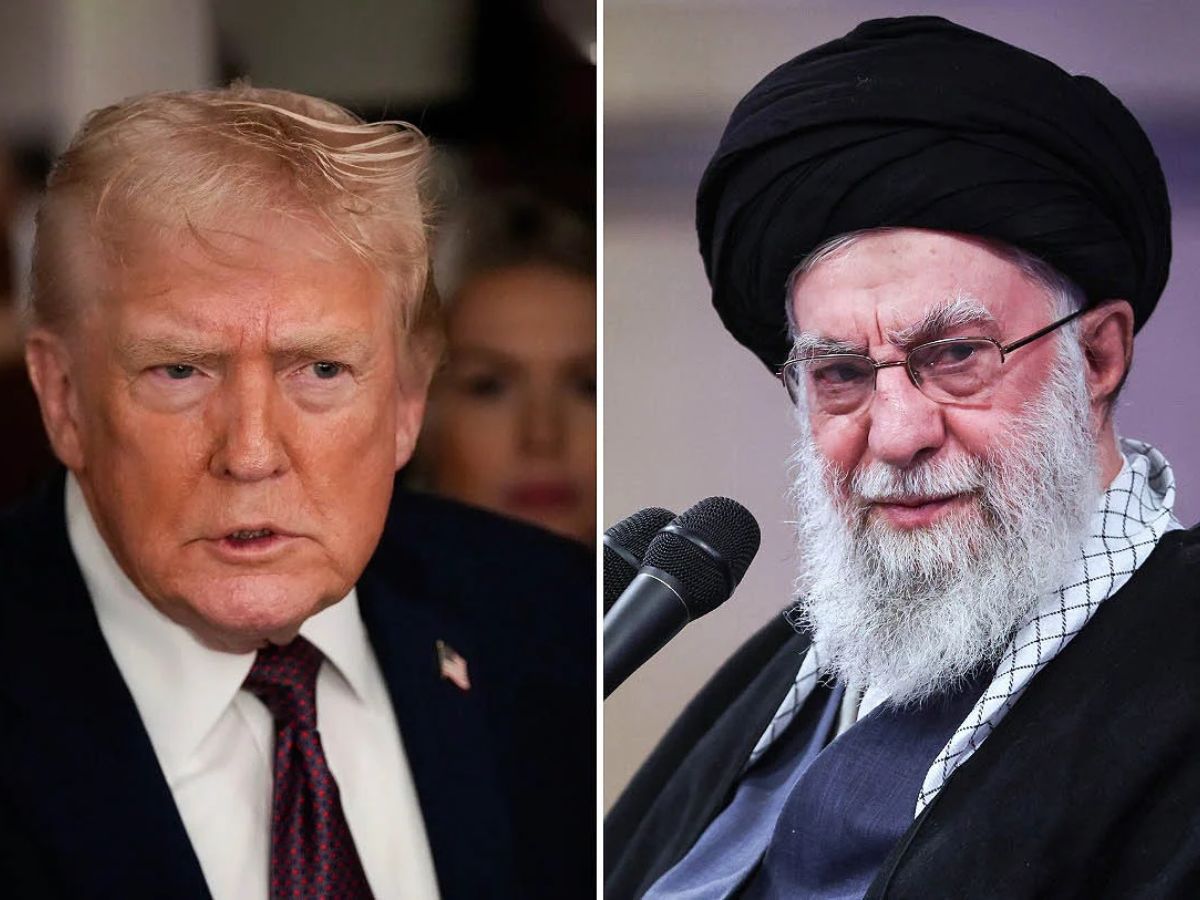
In Washington, President Donald Trump said the campaign was aimed at dismantling Iran’s nuclear and missile infrastructure and warned that further action would follow if Tehran continued retaliation. In Tehran, officials close to Supreme Leader Ayatollah Ali Khamenei described the strikes as an act of aggression and pledged sustained response. Hospitals in parts of Iran were placed on high alert, while Israel ordered school closures and restricted public gatherings. Long queues formed at fuel stations in some Iranian cities amid communication disruptions.
The escalation follows days of diplomatic signalling that nuclear discussions had shown limited progress. Those efforts collapsed abruptly as military preparations accelerated on both sides. In Tehran, explosions were reported in central districts, including areas near the offices of Supreme Leader Ayatollah Ali Khamenei and other government facilities. Smoke was visible rising over the capital and other major cities such as Isfahan and Tabriz. Israel and the US struck what they termed military, intelligence and leadership-linked sites across Iran, including command centres and missile production complexes.
The offensive involved air and missile strikes launched from multiple platforms, with long-range cruise missiles and aerial bombardments aimed at degrading Iran’s integrated air defence and strategic capabilities. Both nations closed civilian airspace in and around the theatre of combat as civil defence alerts were issued.
Iran’s Islamic Revolutionary Guard Corps (IRGC) responded within hours with a first wave of ballistic missiles and unmanned combat aerial vehicles (drones) directed at Israel and US military bases throughout the Middle East. Iranian missiles were reported heading towards Israeli territory and multiple Gulf states hosting American forces. These strikes have been confirmed near the US Fifth Fleet headquarters in Bahrain, and air defence systems in Qatar and Kuwait engaged incoming projectiles. Explosions were heard in the United Arab Emirates, including Abu Dhabi and Dubai.
Iran’s retaliation is understood to consist of ballistic missiles with regional range and a substantial deployment of armed drones intended to saturate Israeli and allied air defence networks. Several waves of missiles have been reported, with interceptions reported by allied air defence systems and some impacts visible near strategic military installations. The conflict has already produced civilian casualties and infrastructure damage. Iranian state media reported deaths at a girls’ school in southern Iran from one of the initial airstrikes, and regional capitals have reported explosive events in urban areas as a result of retaliatory strikes or air defence interceptions.
Air travel has been widely disrupted with airlines suspending flights over the Middle East, including corridors over Iran, Iraq, Kuwait, Israel and Bahrain, triggering global route cancellations and closures of national airspace.




