
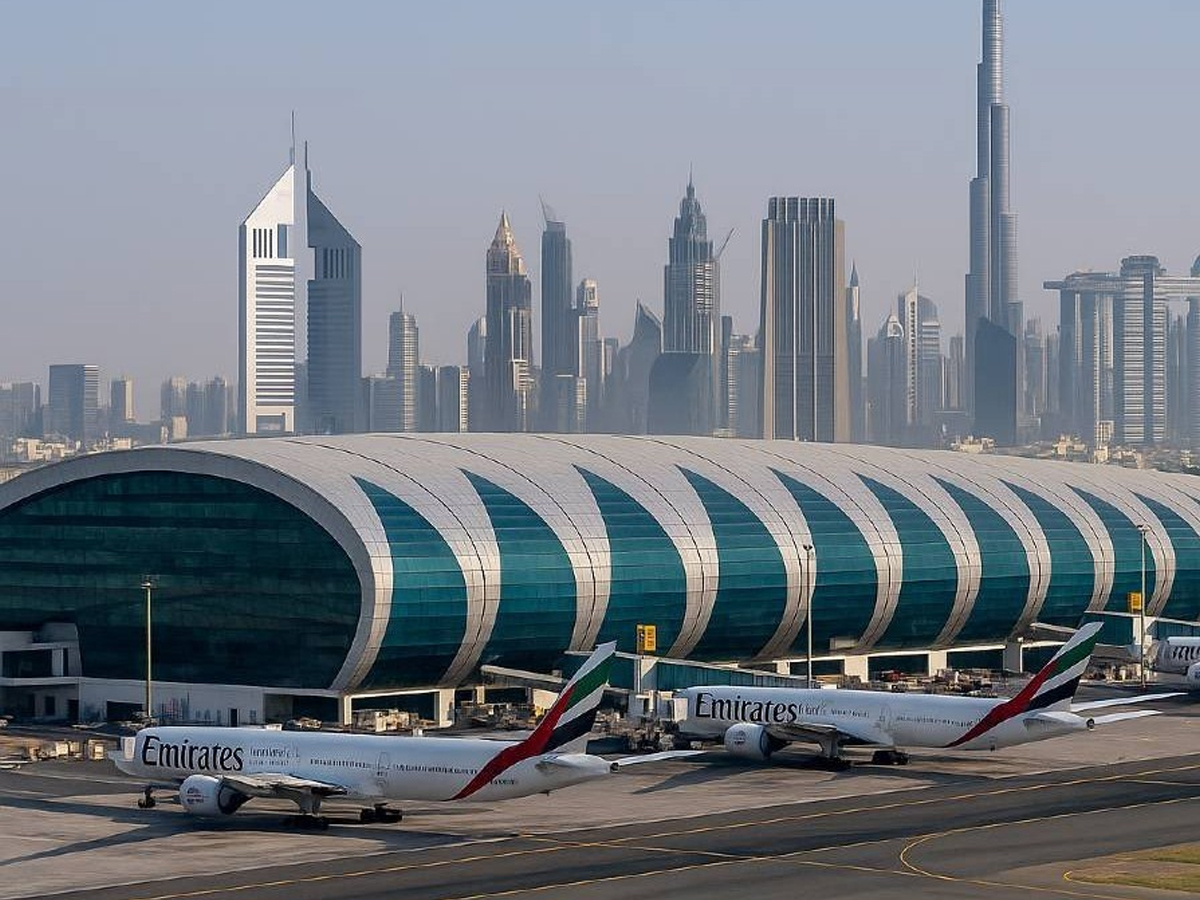
As the conflict between the United States, Israel, and Iran escalates, all commercial flight operations at Dubai’s major airports remain halted “until further notice,” leaving thousands of passengers stranded across the world’s busiest air travel hub and beyond.
Dubai International Airport (DXB) and Dubai World Central–Al Maktoum International (DWC) have completely suspended arrivals and departures, as the UAE and several neighbouring countries shut their airspace in response to ongoing military strikes and regional threats.
Is Dubai Airport Open Right Now?
No. Dubai’s airports are not open for regular flights. Both DXB and DWC have stopped operating “until further notice” due to airspace closures linked to retaliatory strikes from Iran after joint US–Israel attacks on Iranian targets. Authorities are telling travellers not to travel to the airport and to stay in touch with their airlines for updates.
The closures come as airspace across the Gulf, including in the UAE, Qatar, Bahrain, Kuwait, and Iraq, remains restricted to ensure safety amid heightened military activity.
Dubai Airport Attacked: Why Are Flights Suspended? Airspace Closure Amid Conflict
The disruption stems from a dramatic escalation after the US and Israel launched strikes on Iranian military sites, prompting Iran to retaliate with missile and drone attacks in the region. Major hubs such as Dubai and Doha are now caught in the fallout.
Regional civil aviation authorities, including the UAE’s, have temporarily closed airspace or imposed restrictions over safety concerns. This has forced major carriers to cancel flights, reroute aircraft to avoid risk zones, and suspend operations indefinitely until the situation stabilises.
Dubai Airport Attacked: Which Airlines Are Affected?
Major UAE carriers have either halted or significantly disrupted services:
- Emirates has suspended all flights to and from Dubai because of the airspace closure and safety concerns.
- flydubai and Air Arabia have also put flights on hold while monitoring developments.
- Etihad Airways, based in nearby Abu Dhabi, extended cancellations and advised passengers to check with airlines directly.
Across the region, carriers such as Qatar Airways and others have paused flights as their home airspace remains closed.
Strike at Dubai Airport: Passengers Left Stranded, Flights Cancelled
The closures have created global travel chaos. Airports across the Middle East — including Dubai, Doha, and Abu Dhabi — serve as transit hubs connecting east-west air travel. Their shutdowns have stranded hundreds of thousands of travellers and led to widespread flight cancellations and rerouting in Europe, Asia, and beyond.
Departure boards at major hubs have shown waves of red “Cancelled” signs, and passengers are scrambling for updates and alternative routes.
How Long Will Dubai Airport Stay Closed?
There is no confirmed reopening date yet. Authorities have only said operations are suspended “until further notice.”
Aviation experts warn that even after airspace reopens, it could take days or even longer to work through the backlog of delayed and cancelled flights because aircraft and crews are out of position and schedules have been disrupted.
Dubai Airport: What Should Travellers Do Now?
If your flight is affected:
- Check with your airline for real-time updates on delays, cancellations, refunds, or rebooking options.
- Avoid travelling to the airport until your airline confirms operations.
- Monitor official airline channels and airport updates for the latest information.
Is Dubai Airport Open: Global Impact Beyond Dubai
With the Gulf corridor effectively closed, airlines around the world have been forced to reroute flights, avoid Middle East airspace, or suspend routes entirely, affecting travel between Europe, Asia, and North America.
Aircraft that normally use Iranian or Gulf airspace have to take longer paths, increasing fuel costs and journey times — a situation that could persist until the conflict de-escalates.




