
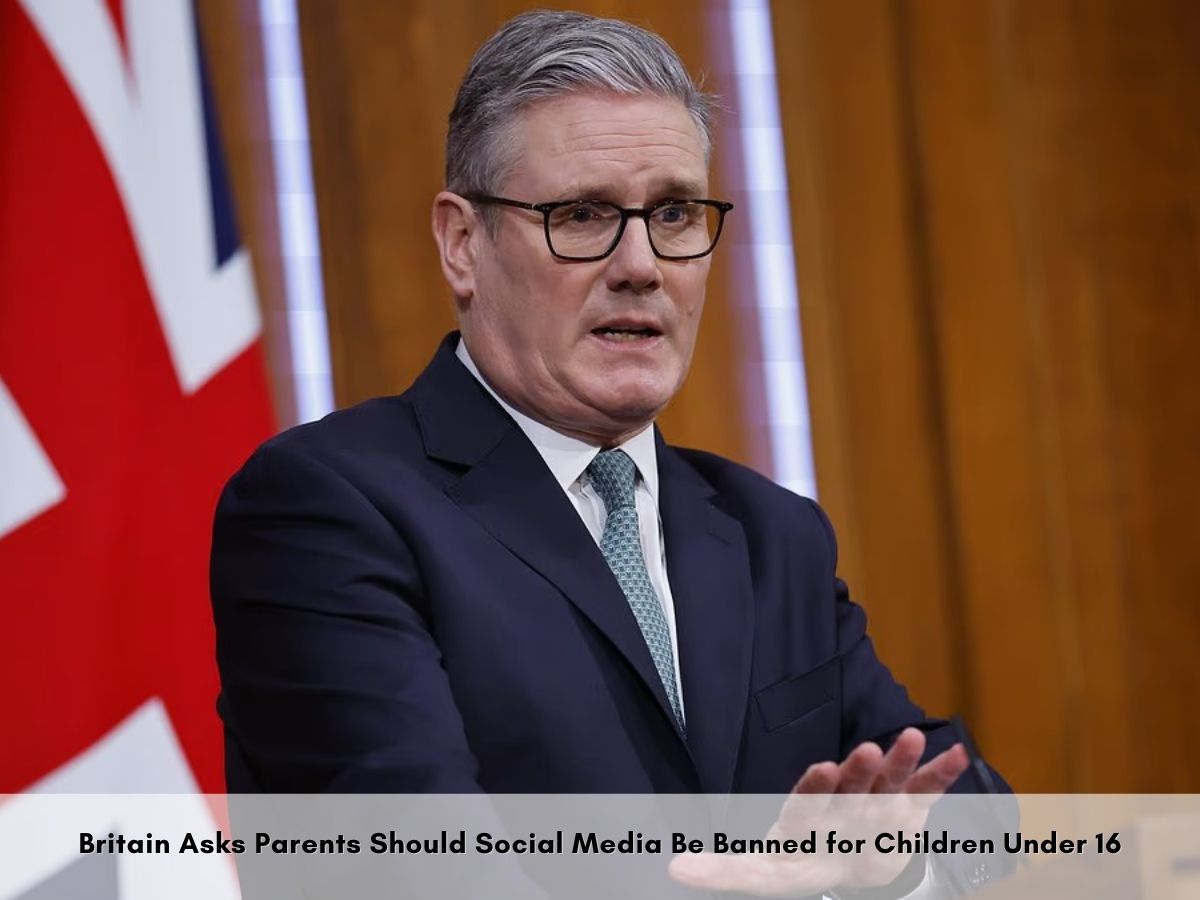
The British government launched a three-month national consultation on Monday to gather views from parents and children about whether to impose a complete ban on social media access for those under 16 years old. Officials also seek input on restrictions for gaming platforms and artificial intelligence chatbots as part of a broader effort to protect young people from harmful online content.
Why Does Britain Want Parents’ Input on a Social Media Ban?
Parents across the United Kingdom face daily battles over their children’s screen time. Technology Minister Liz Kendall acknowledged this struggle in a statement. She said parents everywhere grapple with questions about when to give children phones and what content they encounter online. Governments worldwide recognize the toll on children’s mental health and sleep patterns. Social media platforms design algorithms to maximize user engagement, often at the expense of young users’ well-being. Prime Minister Keir Starmer wants stronger powers beyond the Online Safety Act, which took effect just two-and-a-half years ago.
What Specific Restrictions Does the Consultation Consider?
The consultation examines a range of potential measures. These include establishing a minimum age for social media access, similar to recent laws elsewhere. Officials also consider banning addictive design features like infinite scroll and autoplay videos. Overnight curfews would prevent under-16s from accessing platforms during late hours. The assessment also covers the use of loot boxes and other addictive features on gaming platforms. Since AI chatbots frequently don’t have content limitations, regulators want to investigate limiting how kids can interact with them. In a separate but related move, Britain prepares rules requiring tech companies to remove non-consensual intimate images within 48 hours or face fines up to 10% of global revenue.
How Will Britain Test These Restrictions in Real Life?
The government plans practical pilots with families and teenagers to examine how restrictions function in daily life. These tests will measure impacts on sleep patterns, mental health, and family dynamics. Schools and community groups will participate to provide diverse perspectives. The consultation runs for three months starting Monday. Organizers expect thousands of responses through online forms, public meetings, and youth forums. Findings will inform new legislation expected later this year.
What Can Australia Teach Britain About Under-16 Bans?
In December 2025, Australia enacted a national social media prohibition for children under the age of sixteen. Platforms are not allowed by law to accept accounts from children. Enforcement relies on age verification technology and heavy fines for violations. Teenagers’ anxiety levels have reportedly decreased. Teenagers are reported to have lower anxiety levels. Britain closely examines this idea, although there are discussions about privacy issues with age verification. Others keep a tight eye on it. Canada is looking into teen nightly curfews, while France is thinking of daily restriction.
How Does the Online Safety Act Fit Into This Push?
The United Kingdom enacted the Online Safety Act in 2023 to curb harmful online content and increase platform accountability. Applying the law has proved difficult due to sophisticated algorithms. Starmer is seeking expanded powers to respond to new dangers, including AI chatbots. While platforms must remove illegal content, the act does not mandate strict age limits. This consultation is intended to fix those shortcomings through evidence-led regulations. Across the globe, pressure is growing on tech companies to safeguard children rather than focus solely on profits.
What Concerns Do Parents and Children Voice Most Often?
Mothers describe daughters facing body image pressure from filtered influencers, and fathers see sons disappearing into gaming marathons. Teenagers confess that constant scrolling is affecting schoolwork and sleep. Mental health referrals for young people have risen 70% in recent years, as shown by National Health Service data. Parents feel left behind by platforms designed to be addictive. Children want connection online but understand the risks. The consultation gives them a direct role in shaping solutions.
What Happens After the Consultation Ends?
Officials plan to analyze responses and pilot data by early summer. Legislation could follow by autumn. Age verification technology would likely become mandatory across platforms. Violations would be aggressively targeted by fines. The government stresses that with the right protections, kids may flourish in the age of technological revolution. While parents wait for tools to retake control, platforms get ready for compliance expenditures.
Key FAQs
Q: Should social media be banned for children under 16 in Britain?
A: The government launched a three-month consultation on March 1 to gather parent and child opinions on this question.
Q: What other platforms face restrictions in the UK consultation?
A: Gaming platforms and AI chatbots fall under review alongside social media.
Q: What did Technology Minister Liz Kendall say about screen time?
A: Parents everywhere grapple with screen time, phone access, and online content impacts, she stated.
Q: When did Australia ban social media for under-16s?
A: In order to set an example for other countries, Australia implemented the ban in December 2025.
Q: What are the penalties for non-consensual intimate images?
A: Tech companies must remove such images within 48 hours or face 10% global revenue fines.
Q: How will Britain test social media restrictions?
A: Pilots from families and teenagers will look at real-world effects on day-to-day living.
Q: What powers does Keir Starmer seek beyond the Online Safety Act?
A: Starmer wants authority for age minimums, curfews, and addictive feature bans.
Disclaimer: This information is based on inputs from news agency reports. TSG does not independently confirm the information provided by the relevant sources.




