
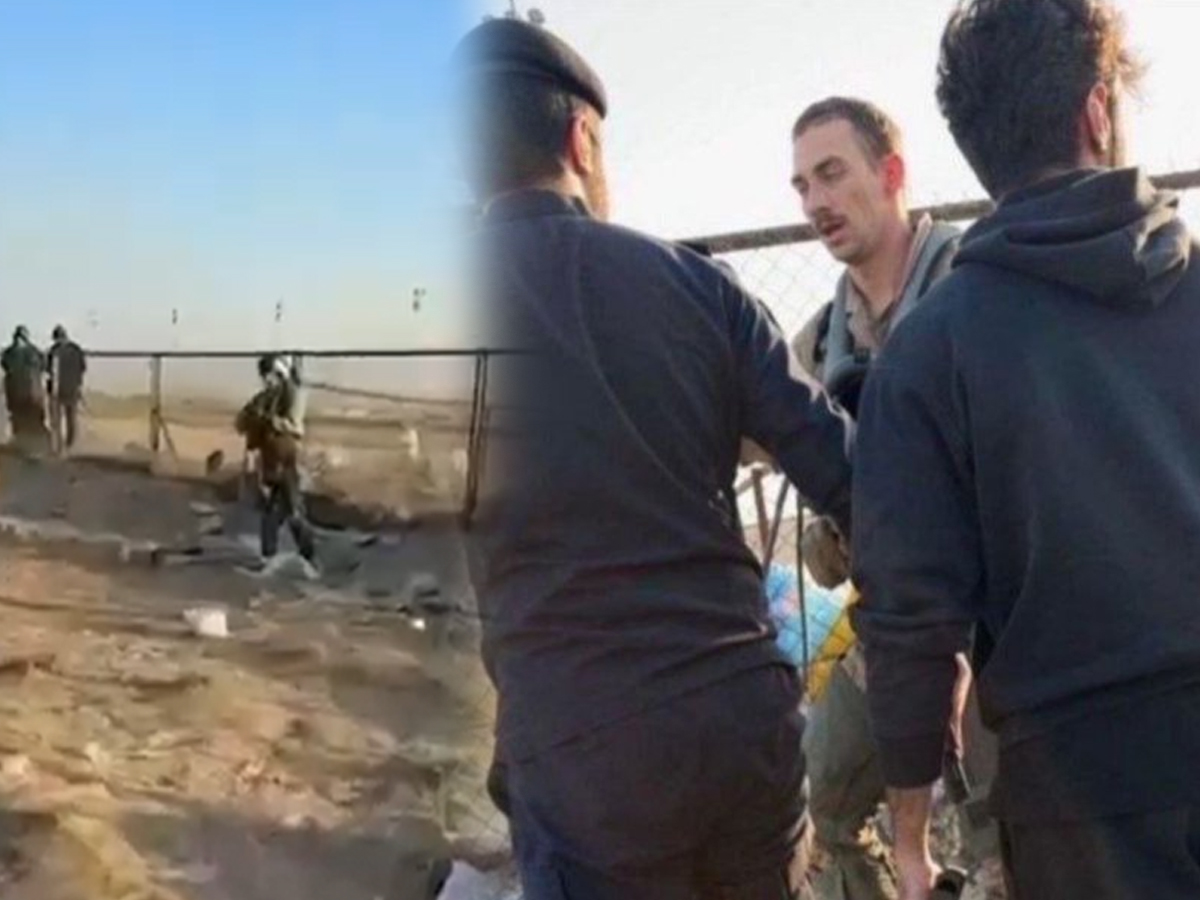
An American F-15E Strike Eagle fighter jet crashed over Kuwaiti airspace on Monday morning as fighting between the United States and Iran intensified across the Middle East. Early reports indicate that both crew members onboard, the pilot and the Weapons Systems Officer (WSO), survived the crash and were later found by locals and handed over to Kuwaiti authorities.
US F-15 Fighter Jet Crashes in Kuwait: Pilot and Weapons Systems Officer (WSO) Captured After Crash
Both the pilot and the Weapons Systems Officer (WSO) onboard the F-15E Strike Eagle were captured alive after ejecting from the aircraft following the crash over Kuwait. Residents located the two crew members shortly after they landed and provided immediate assistance before informing authorities.
Both the Pilot and Weapons Systems Officer (WSO) onboard the U.S. Air Force F-15E Strike Eagle that crashed this morning over Kuwait due to a “friendly fire” incident, appear to have survived, being found by locals and transferred to local authorities in Kuwait. pic.twitter.com/HyxpeI0QUL
— OSINTdefender (@sentdefender) March 2, 2026
Kuwaiti security forces later took custody of the pilot and the WSO and transferred them to official facilities for safety checks and medical evaluation. Officials said the handover was carried out smoothly and both airmen remained in stable condition, with no reports of serious injuries.
US F-15 Fighter Jet Crashes in Kuwait: What Happened to the US F-15 Fighter Jet in Kuwait?
The aircraft, operated by the United States Air Force, went down during active combat operations on Day 3 of the US-Iran war. Video footage circulating online shows the jet descending rapidly before impact, followed by clear visuals of crew members ejecting safely.
🚨 Another angle of the fighter jet shot down by “friendly fire” over Kuwait.
— Breaking911 (@Breaking911) March 2, 2026
Separate clips appear to show one of the airmen sitting inside a civilian vehicle after landing, suggesting locals provided immediate shelter before authorities arrived. Officials have confirmed that both the pilot and the WSO are alive and have been transferred into Kuwaiti custody for safety and medical evaluation.
US F-15 Crash in Kuwait: Was the Jet Hit by Friendly Fire?
Initial assessments point toward a friendly fire incident involving a Patriot missile system deployed in the region. While no official confirmation has been issued, early reports suggest the aircraft may have been mistakenly identified as a hostile target during heightened alert conditions.
The Patriot system relies on radar tracking and encrypted identification systems to distinguish between friendly and enemy aircraft. During intense combat, even advanced systems can misclassify targets, especially when multiple threats flood radar screens simultaneously.
US F-15 Crash in Kuwait: First US Casualties Confirmed in the Conflict
The crash came as Washington confirmed its first casualties of the campaign. Three American service members were killed at a US military base in Kuwait, marking a significant escalation in the conflict.
Iran’s Revolutionary Guards stated they targeted military bases and oil tankers across the Gulf region, triggering security alerts and shipping disruptions near the Strait of Hormuz, one of the world’s most critical oil transit routes.
Middle East Aviation and Oil Markets Hit Hard
The expanding conflict has severely disrupted civilian aviation. Several major Middle Eastern airports suspended operations, forcing airlines to reroute or cancel flights. Industry officials describe the situation as one of the most significant airspace disruptions in recent years.
At the same time, oil prices surged as investors reacted to fears of prolonged instability and potential supply interruptions from the Gulf.
US F-15 Crash in Kuwait: Why the F-15E Strike Eagle Matters
The F-15E Strike Eagle is a frontline, dual-role combat aircraft designed for deep-strike missions and air-to-air combat. Its loss underscores the intensity of current operations and the growing risks faced by forces operating in the region.
As fighting continues, military officials are expected to review air defence coordination procedures to prevent further incidents as the conflict shows no sign of slowing.




