
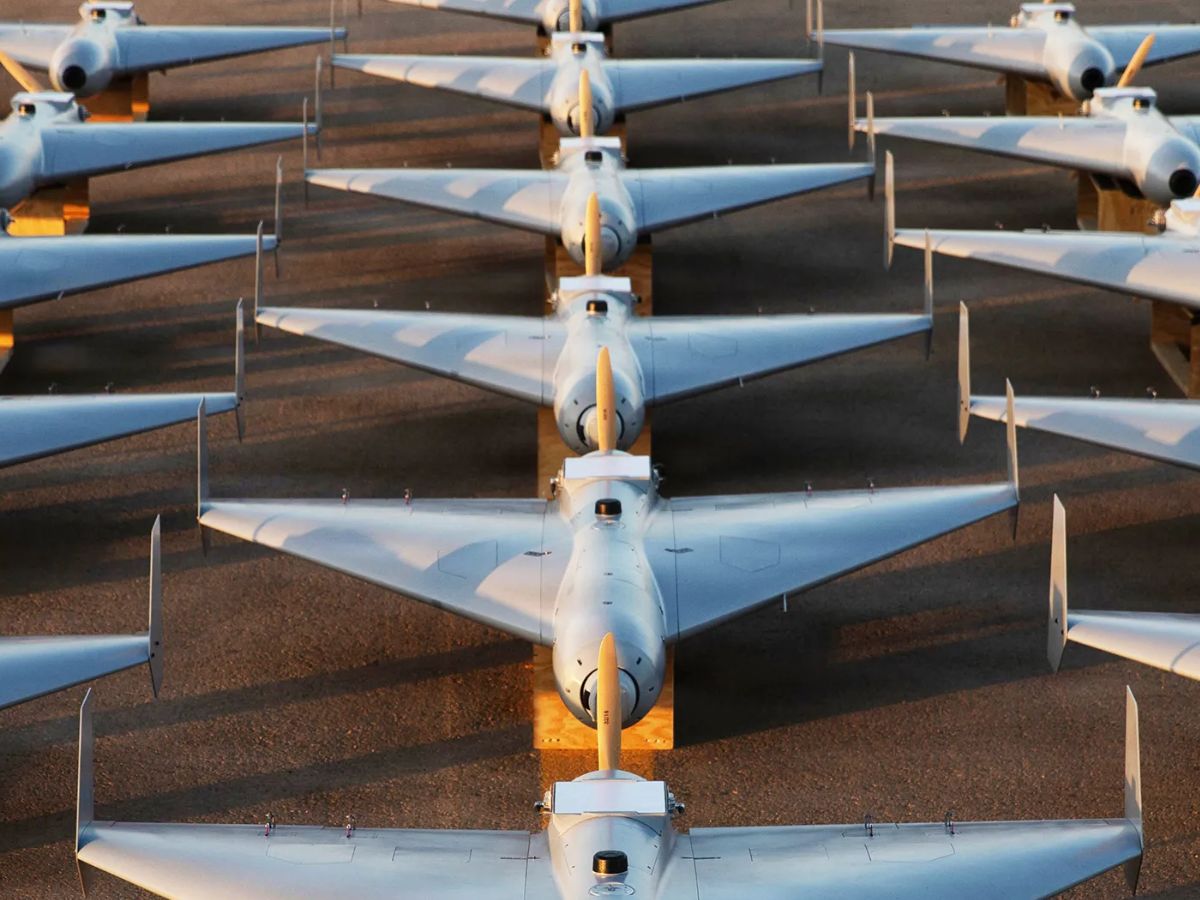
In the latest US–Israel strikes on Iran, the United States deployed a new type of autonomous weapon, a one‑way attack drone called LUCAS. This represents the first confirmed combat use of the Low‑Cost Uncrewed Combat Attack System (LUCAS), a “kamikaze” drone designed to loiter over enemy territory and detonate on impact.
Unlike traditional surveillance drones that gather intelligence and return home, LUCAS is built to be an expendable strike weapon; it flies out, hits a target, and is gone. Military experts say this kind of weapon signals how future wars could look, with drones playing a central role in frontline combat operations.
Iran-Israel War | What is LUCAS: US One‑Way Kamikaze Drone Used in Combat
The United States military confirmed that the LUCAS drone was used in combat for the first time during coordinated airstrikes against Iran’s military infrastructure under Operation Epic Fury.
CENTCOM, the US Central Command, announced that its Task Force Scorpion Strike deployed the Low‑Cost Uncrewed Combat Attack System as part of the mission. The system is a one‑way attack drone, also known as a loitering munition, that crashes into a target and detonates, rather than returning to base like typical unmanned systems.
These drones were used alongside conventional weapons such as Tomahawk cruise missiles and fighter jets in the strikes. Their inclusion reflects a shift in how modern militaries are approaching definable battlefields — favouring low‑cost, scalable strike capabilities.
Iran-Israel War: What is the Low‑Cost Uncrewed Combat Attack System?
LUCAS stands for Low‑Cost Uncrewed Combat Attack System, and it was developed by SpektreWorks, an Arizona‑based defence contractor.
The drone is essentially a reverse‑engineered version of Iran’s Shahed‑136, a type of loitering munition that has been widely used by Russia in Ukraine and by Iran and its allies in the Middle East.
LUCAS: Key Details
- Type: One‑way attack drone/loitering munition
- Origin: United States (reverse‑engineered from Iranian design)
- Designer: SpektreWorks
- Unit Cost: Approx. $35,000, much cheaper than traditional missiles
- Range: Around 500 miles (unconfirmed in combat)
- Payload: About 40 pounds of explosive capacity
- Role: Autonomous strike, saturating enemy air defences through quantity rather than expensive precision weapons
Because of its low cost and expendability, LUCAS allows the US military to deploy large numbers without the high price tags associated with precision missiles or larger UAVs.
Iran-Israel War: Why Deploy Experimental Systems in Active Combat?
LUCAS’s combat debut is significant not just because it was used, but because it marks a strategic shift in weapon deployment. Military officials and analysts argue that modern battlefields — especially those with dense electronic jamming, layered air defence systems and unpredictable terrain — provide unmatched real‑world test environments for new weapons.
Testing weapons like LUCAS in live combat gives engineers immediate feedback on performance under fire, helping refine software, counter‑jamming systems and navigation algorithms faster than training simulations ever could.
This approach underscores a broader military trend: introducing weapons before they are fully matured, learning from active use, and iterating rapidly to keep pace with evolving threats.
Iran-Israel War: How Modern Wars Have Changed?
The use of LUCAS reflects how warfare has shifted over the last decade. Earlier conflicts relied heavily on large manned platforms — fighter jets, armoured divisions and clearly defined frontlines.
Today’s combat environments — from Ukraine to West Asia — show that small, cheap drones with autonomous capabilities can deliver strategic impact far beyond their size. In Ukraine, thousands of inexpensive drones have carried out direct attacks and reconnaissance missions. In the Middle East, drones have allowed cross‑border strikes without deploying large ground forces.
Loitering munitions like LUCAS blur the line between missiles and UAVs. They can “loiter” in target zones until they find a strike opportunity, then crash into their target, detonating on impact. This combines the precision of guided weapons with the simplicity and low cost of unmanned systems.
Iran-Israel War: What Could Future Wars Look Like?
Military experts believe that if current trends continue, future conflicts may not be defined by massive invasions, but prolonged, networked engagements driven by autonomous systems. Instead of frontline armies, wars could revolve around swarm drones, cyberattacks on infrastructure, and rapid autonomous strikes that avoid traditional battlefield logistics.
One‑way drones like LUCAS may become a regular part of arsenals, supplementing or replacing more expensive weapons in certain mission profiles. Their adoption hints at a future where cost‑effective autonomous weapons play a central role in deterrence and tactical operations.
The LUCAS deployment thus offers a glimpse into that future, as militaries adapt to a landscape where technology evolves faster than doctrine.




