
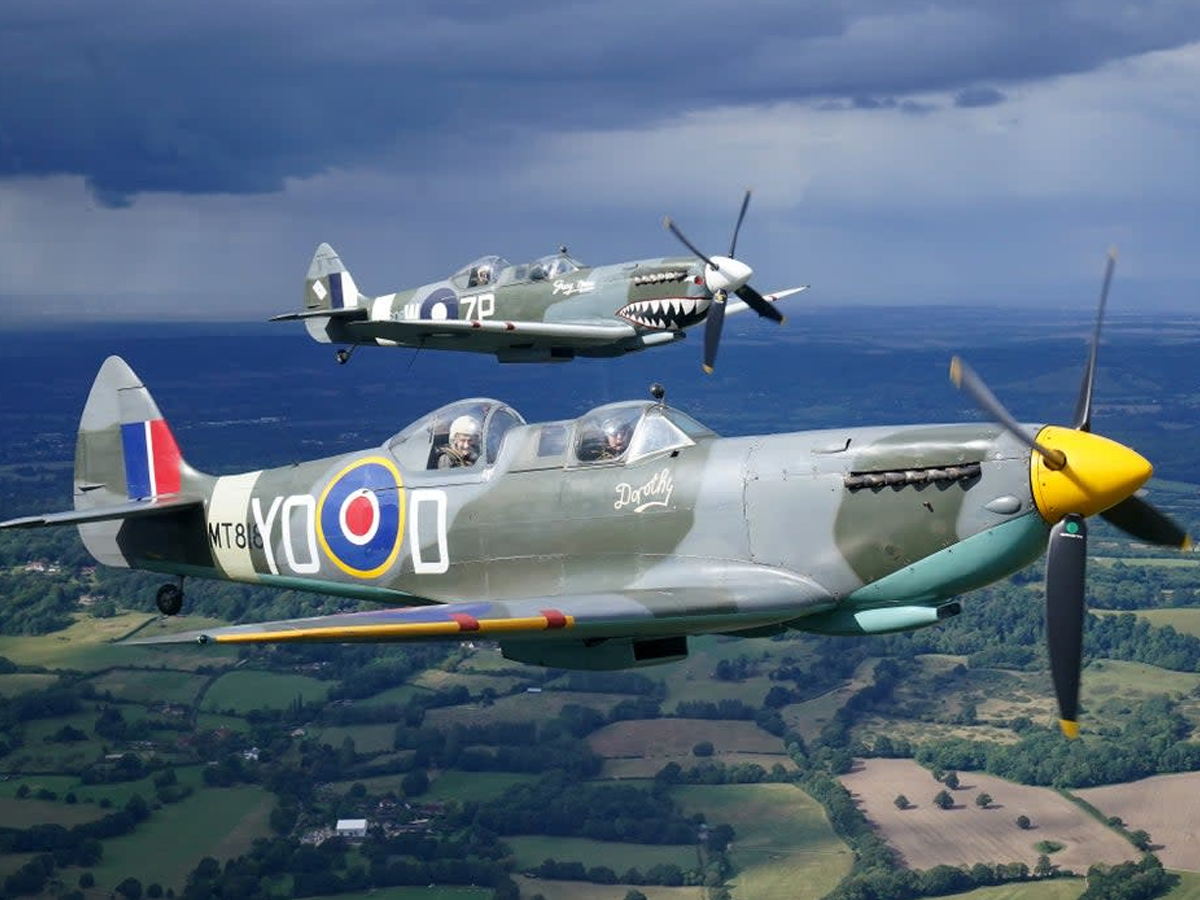
Britain is preparing to celebrate one of the most iconic aircraft in aviation history as the legendary Supermarine Spitfire completes 90 years since its first flight. To mark the milestone, aviation organisations have planned a series of special commemorative flights across the United Kingdom, allowing the public to witness the historic aircraft take to the skies once again.
The flights will retrace parts of Britain’s aviation heritage and honour the aircraft that played a crucial role during World War II. A specially painted two-seat Spitfire, designed to resemble the original prototype aircraft, will lead the nine-flight journey across several locations in the UK.
What is The Spitfire, And Why is It So Famous?
The Supermarine Spitfire remains one of the most recognisable fighter aircraft ever built. Designed in the 1930s by aviation engineer R.J. Mitchell, the aircraft gained worldwide fame during the Second World War for its role in defending Britain against German air attacks.
Its sleek elliptical wings, powerful engine, and exceptional manoeuvrability made it one of the most effective fighter planes of its time. The Spitfire quickly became a symbol of Britain’s resistance during the war, particularly during the Battle of Britain in 1940.
A spokesperson from the Battle of Britain Memorial Flight said the aircraft continues to hold a special place in aviation history.
“The Spitfire became a symbol of British resilience during the Second World War, playing a pivotal role in the Battle of Britain and securing its place as one of the most iconic aircraft in aviation history.
“Over 20,000 Spitfires were built during their production run, and it remains a celebrated symbol of innovation, courage, and engineering excellence.”
Spitfire 90th Anniversary Flights Across The UK
To celebrate the aircraft’s 90th anniversary, organisers have planned nine commemorative flights across the United Kingdom. The flights will feature a two-seat Spitfire carefully painted to replicate the historic K5054 prototype.
Each journey will begin and end in Southampton, Hampshire, where R.J. Mitchell originally designed and developed the aircraft. Aviation company Spitfires.com will operate the flights, and seats will be auctioned to the public.
The funds raised through the auctions will support two charities, the Mark Long Trust, which helps disabled people experience aviation, and the Royal Air Force Benevolent Fund, which supports RAF personnel and their families.
History Of The Spitfire K5054 Prototype
The aircraft used for the commemorative flights pays tribute to the original Spitfire prototype known as K5054. This historic plane made its maiden flight on 5 March 1936 from Eastleigh Aerodrome, which is now known as Southampton International Airport.
Captain Joseph “Mutt” Summers piloted the aircraft during that historic flight. After just eight minutes in the air, he reportedly delivered a famous verdict about the aircraft’s design.
“Don’t change a thing.”
The moment became one of the most memorable statements in aviation history and confirmed that the aircraft’s design was already close to perfect.
RAF Aircraft To Join Historic Spitfire Flights
The commemorative journey will also feature participation from historic and modern Royal Air Force aircraft. During the first flight next month, aircraft from the Battle of Britain Memorial Flight will accompany the Spitfire in the sky.
A BBMF spokeswoman explained the plan for the historic escort.
“The BBMF, which operates five Spitfires of its own, will join ‘K5054’ in the air during the first commemorative flight before escorting it to its first landing location at RAF Coningsby, the home of the BBMF.
“Throughout the remaining commemorative flights, modern Royal Air Force assets will also join the Spitfire before the aircraft arrive at each subsequent landing location.
“These flights will showcase the evolution of RAF aircraft over the years, set against the backdrop of the nation’s most iconic fighter aircraft.”
Full Route Of The Spitfire Anniversary Flights
The first commemorative flight will depart from Southampton on 7 April and fly to RAF Coningsby in Lincolnshire. After that, the aircraft will travel across several locations in Britain.
The route includes stops at RAF Leuchars, RAF Lossiemouth and Prestwick in Scotland, RAF Valley, MOD St Athan and RAF St Mawgan in Wales, and Exeter in Devon before returning to Southampton on 17 April.
The special journey will give aviation enthusiasts across the country a chance to see the historic aircraft in action while celebrating nine decades of one of the world’s most legendary fighter planes.




