
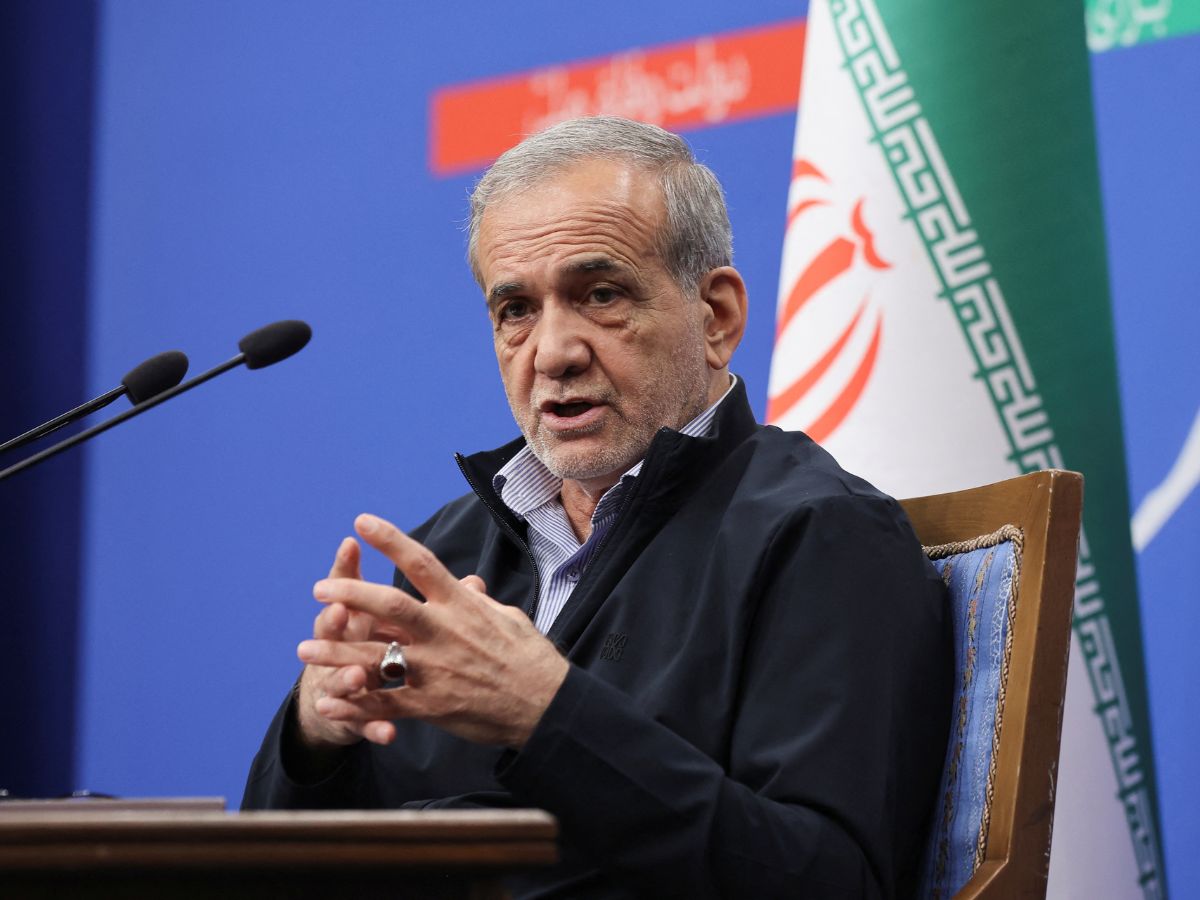
Rising tensions in the Middle East have prompted a major diplomatic message from Iran’s leadership. In a televised speech, Iranian President Masoud Pezeshkian addressed neighbouring countries and attempted to calm fears across the Gulf region after a series of missile and drone attacks linked to the escalating regional conflict.
The remarks came as military confrontations involving Iran, Israel and the United States continue to intensify. Several countries in the region have reported air defence interceptions, security alerts and temporary disruptions to travel and trade routes.
In his address, Pezeshkian emphasised that Iran does not seek to expand the conflict or invade neighbouring states. Instead, he said Tehran wants to reassure regional governments that its actions are defensive and linked to the ongoing confrontation with Israel and the United States.
Iran-Israel War Latest Update: Iran to Halt Missile Attacks on Neighbouring Countries
During the televised speech, Pezeshkian said Iran’s temporary leadership council had decided to stop launching attacks against neighbouring states unless those countries directly strike Iranian territory. The announcement marked a significant attempt by Tehran to reduce tensions with nearby nations that have grown concerned about the conflict spreading across the Gulf.
“The temporary leadership council announced yesterday that there will be no more attacks on neighbouring countries and no missile launches unless attacks originate from those countries against Iran,” Pezeshkian said.
This statement signals that Iran wants to avoid widening the conflict into a confrontation with other Middle Eastern states. Many Gulf countries host critical infrastructure such as major ports, oil facilities and international airports that could be affected if the war escalates further. Regional governments have been closely monitoring developments, particularly after several aerial threats were intercepted across the Gulf in recent days.
Iran-Israel War: No Intention to Invade Neighbours
In the same address, the Iranian president also delivered a direct apology to neighbouring countries that may have felt threatened by recent attacks connected to the conflict. “I apologise to the neighbouring countries. We have no intention of invading other countries,” the Iranian president said.
The statement appeared aimed at reassuring Gulf nations that Iran’s military actions are not part of a broader plan to expand territorial control.
Several countries in the Middle East have already heightened their security posture in response to the ongoing crisis. Air defence systems have been activated in multiple states, while authorities have increased surveillance around strategic infrastructure such as airports, ports and energy facilities.
Iran’s leadership appears to be trying to prevent the war from drawing in additional regional actors while continuing its confrontation with Israel and the United States.
Iran Rejects US Demand for Unconditional Surrender
While Pezeshkian offered conciliatory remarks toward neighbouring countries, he adopted a much stronger tone when addressing the United States. The Iranian president dismissed reported demands from Washington that Tehran accept unconditional surrender as part of efforts to end the confrontation. “They will take their dreams of us surrendering unconditionally to the grave,” he said in the address.
His statement reflects Iran’s firm stance that it will continue resisting pressure from the United States and its allies. The confrontation has intensified after recent military strikes targeted facilities and sites inside Iran. Iranian officials have repeatedly described their military actions as retaliation against what they call aggression by Washington and Tel Aviv.
Iran-Israel War: Middle East Tensions Continue
The latest remarks from Iran’s president come at a time when the Middle East is witnessing one of its most volatile security situations in recent years.
Recent days have seen missile launches, drone attacks and air defence interceptions reported across several parts of the region. Governments have increased security alerts while monitoring potential threats to aviation routes, shipping lanes and energy infrastructure.
The conflict escalated sharply after joint military operations by the United States and Israel targeted locations inside Iran. Tehran responded with retaliatory actions that have affected several parts of the region. As tensions remain high, diplomatic efforts continue behind the scenes to prevent the confrontation from expanding into a wider regional war.
For now, Iran’s leadership appears to be trying to balance two messages, reassuring neighbouring countries that they are not targets, while maintaining a defiant position against the United States and Israel.




