
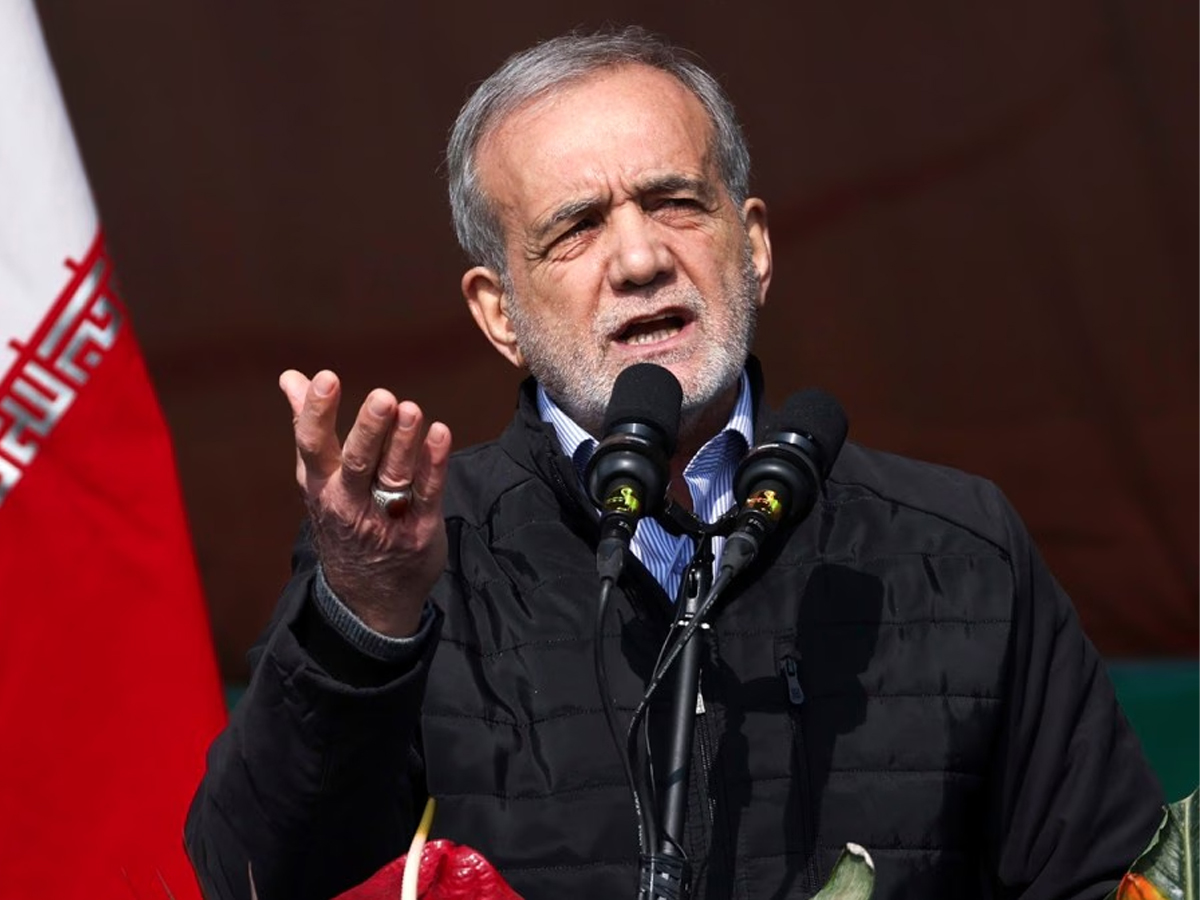
Iran has taken a significant step toward calming tensions in the Middle East as the war with Israel and the United States continues to escalate. Iranian President Masoud Pezeshkian has publicly apologised to neighbouring countries for missile and drone strikes that affected parts of the Gulf during the ongoing conflict.
In a televised address, Pezeshkian said Iran’s interim leadership council had decided to halt attacks on nearby countries unless those nations allow attacks on Iran from their territory. The statement comes amid growing regional fears that the conflict could expand across the Gulf.
“I must apologise on my own behalf and on behalf of Iran to the neighbouring countries that were attacked by Iran,” he said.
The move appears to be an attempt by Tehran to prevent the war from widening further and to reassure regional governments that Iran does not intend to target them directly.
Iran announces conditional halt to attacks on Gulf countries
According to the Iranian president, the country’s temporary leadership council approved a policy that suspends strikes against neighbouring states under specific conditions.
“The interim leadership council agreed yesterday that no more attacks will be made on neighbouring countries and no missiles will be fired unless an attack on Iran originates from those countries.”
Officials say the policy aims to reduce tensions with Gulf nations such as the United Arab Emirates, Qatar, Bahrain, Kuwait, and Saudi Arabia, which host several US military bases. Iranian missiles and drones previously targeted facilities linked to US forces across the region as part of Tehran’s retaliation against US-Israeli strikes.
Iran refuses to surrender despite US-Israel pressure
Despite the conciliatory message to neighbouring countries, Tehran maintained a defiant tone toward Israel and the United States. Pezeshkian rejected calls from Washington and its allies for Iran to surrender or end its retaliation.
“The enemies must take their wish for the surrender of the Iranian people to their graves,” AFP quoted Pezeshkian as saying, in a speech broadcast on state TV.
The war intensified after the United States and Israel launched large-scale airstrikes on Iran on February 28. The strikes reportedly killed Iran’s Supreme Leader Ayatollah Ali Khamenei and triggered widespread retaliation by Iranian forces across the region.
Explosions and missile alerts continue across the Gulf region
Even as Tehran signalled a possible de-escalation, several Gulf cities continued to experience security alerts and defensive missile interceptions. Residents in cities such as Dubai and Abu Dhabi reported hearing explosions and air-raid sirens as air defence systems intercepted drones and missiles.
Authorities in the United Arab Emirates temporarily suspended operations at Dubai International Airport following what officials described as a “minor incident.” The airport closure came after a loud explosion was heard near the facility while passengers sheltered inside the terminal.
Across the Gulf, several countries activated their air defence systems as Iranian missiles targeted locations hosting US military bases.
Rising casualties and the regional impact of the war
The ongoing war has already caused heavy casualties and major disruptions across the Middle East. Airstrikes and missile attacks have killed more than 1,200 people in Iran and over 200 in Lebanon, while around a dozen people have died in Israel. Several US troops have also been reported killed.
The conflict has also disrupted aviation across the region, with thousands of flights cancelled due to closed airspace over the Gulf.
As the war enters its second week, analysts say Iran’s apology and conditional halt to strikes may represent the first attempt by Tehran to prevent the conflict from expanding into a wider regional war.




