
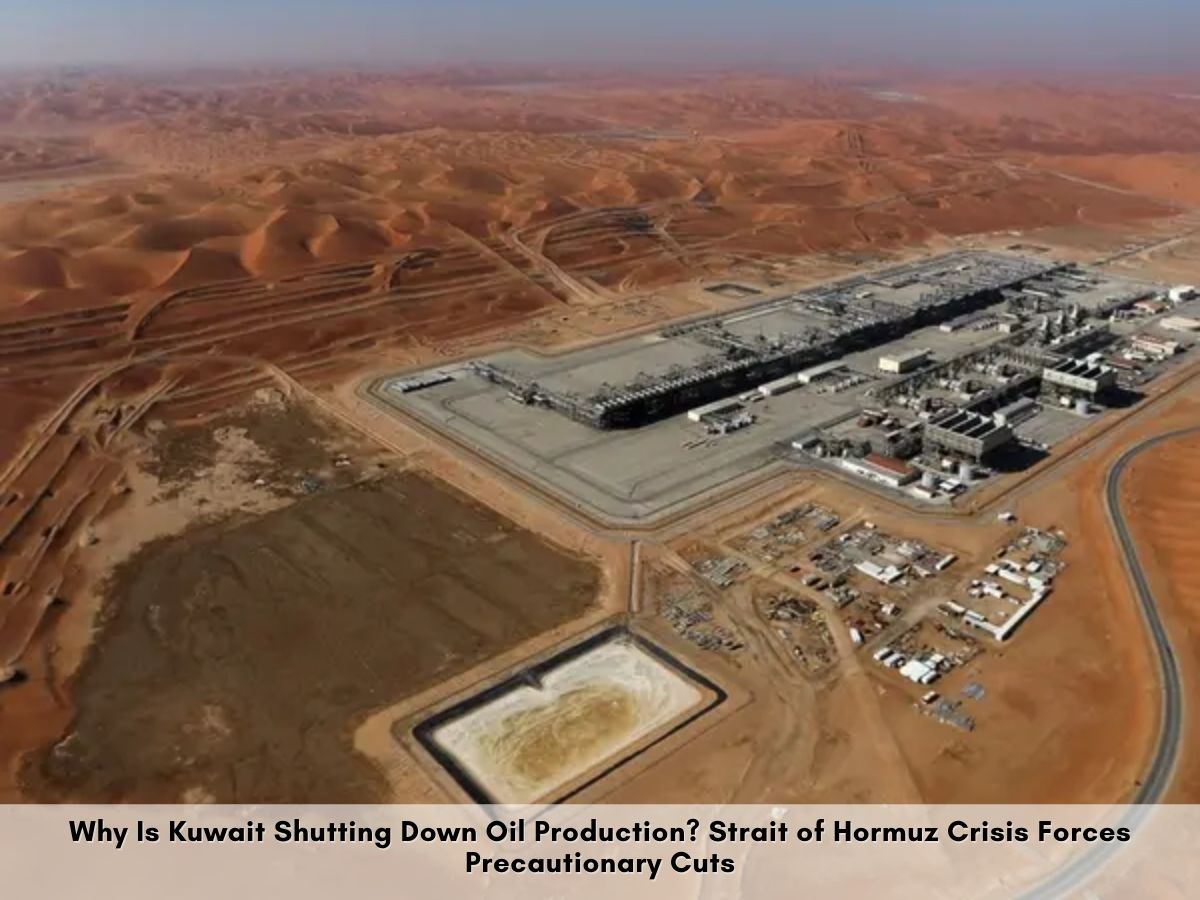
Kuwait’s state oil giant slammed the emergency brakes on production Saturday, declaring force majeure and slashing crude output as Iran’s war of retaliation choked off the Strait of Hormuz—the world’s most vital oil artery—for the eighth straight day. The Kuwait Petroleum Corporation cited explicit Iranian threats against tanker traffic, relentless attacks on Kuwaiti facilities, and a ghost fleet of vanished shipping in the Arabian Gulf. With Iraq and Qatar already curtailing flows, analysts warn Saudi Arabia and UAE storage tanks will force similar cuts within days.
Why Did Kuwait Declare Force Majeure Now?
Kuwait Petroleum Corporation acted after Iranian missiles and drones hammered Gulf targets, leaving virtually no tankers willing to brave Hormuz waters that carry 20% of global oil and LNG. February’s 2.6 million barrels per day output now faces precautionary throttling—exact figures undisclosed but certain to jolt Asian naphtha buyers and Europe’s jet fuel markets. KPC called the move temporary, promising review as threats evolve, but Gulf oil men know empty storage spells permanent losses.
What Iranian Threats Forced Kuwait’s Hand?
Tehran’s explicit warnings against Hormuz passage came alongside missile barrages targeting Kuwait directly, compounding the terror of unmanned Gulf shipping lanes. KPC’s trade notice spelled out the nightmare: no vessels available to haul their crude or products. The Islamic Revolutionary Guard Corps made clear any tanker flying foreign flags risks fiery interception, turning what was routine commerce into Russian roulette on water.
How Bad Is the Strait of Hormuz Blockade?
Eight days without safe passage through the 21-mile-wide chokepoint has stranded tens of millions of barrels, with US-Iran naval clashes keeping insurers away and satellite trackers showing ghost tankers circling aimlessly. Iraq slashed gas flows last week; Qatar followed with LNG cuts. Kuwait’s move signals the dominoes falling—when storage overflows, pumps shut off permanently, and global pump prices rocket toward uncharted territory.
Which Gulf Giants Face Output Cuts Next?
Saudi Aramco and ADNOC storage tanks edge toward capacity as alternate routes like UAE’s Habshan-Fujairah pipeline max out at 1.5 million b/d—mere fraction of normal Hormuz flows. Analysts predict both majors declare force majeure by mid-week unless ceasefires magically appear. Energy markets brace for $120+ crude while airlines and factories contemplate rationing the black gold that fuels modern life.
FAQs
Q: Why force majeure from Kuwait Petroleum?
A: Iranian threats to Hormuz shipping, direct attacks on Kuwait, vanished tanker fleet in Arabian Gulf.
Q: Kuwait’s normal daily oil output?
A: Around 2.6 million barrels per day in February; now under precautionary reduction.
Q: Who cut production before Kuwait?
A: Iraq reduced oil/gas earlier; Qatar followed with output slashes amid Hormuz blockade.
Q: What % of world oil goes through Hormuz?
A: 20% of global oil supply plus major LNG flows now completely disrupted.
Disclaimer: This information is based on inputs from news agency reports. TSG does not independently confirm the information provided by the relevant sources.




