
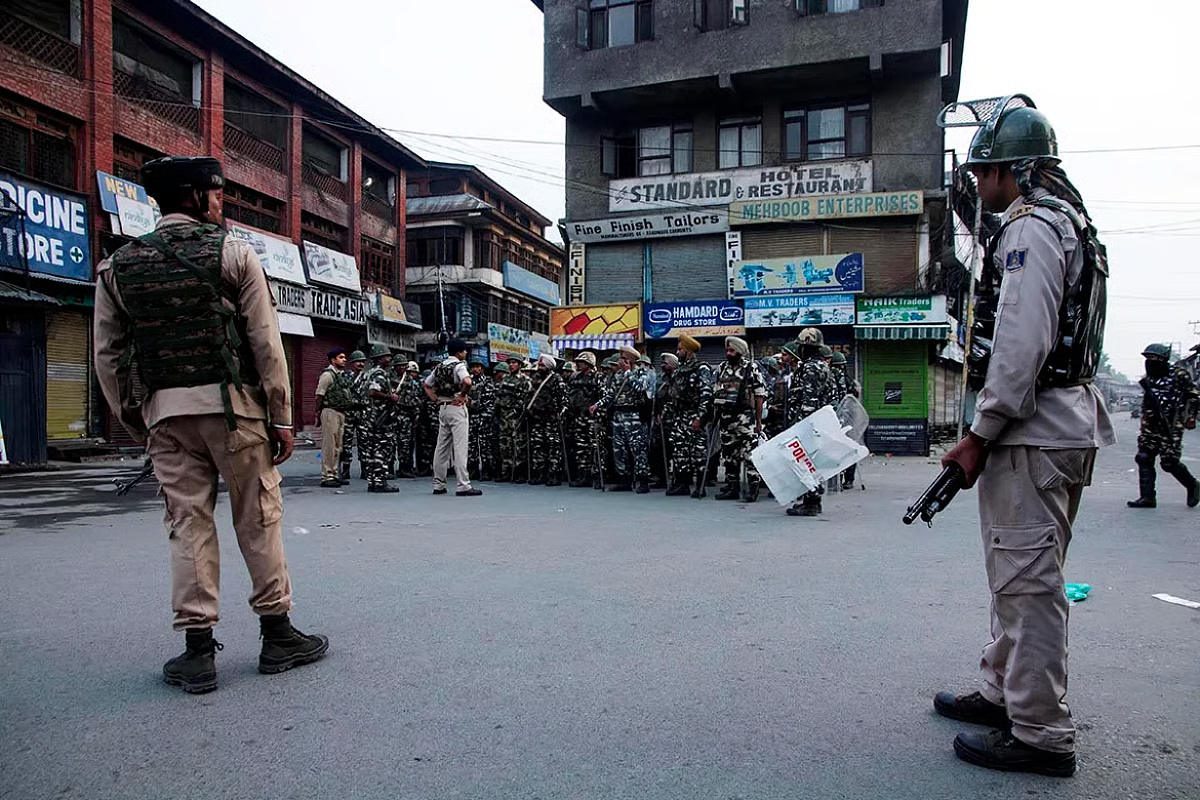
KASHMIR: Peace in Kashmir cannot be sustained solely through security arrangements or administrative measures. For stability to endure, it must take root within society and be reinforced through everyday conduct. In a region that has witnessed decades of turbulence, peace is strongest when it is carried forward by communities themselves.
Experiences across Jammu and Kashmir in recent years suggest that areas where sustained engagement takes place between institutions and local communities often witness greater social cooperation and fewer cycles of tension. Dialogue platforms, community outreach initiatives and youth engagement programmes have gradually contributed to building bridges of understanding in several parts of the Valley.
The recent Millat-e-Aalim interaction in Baramulla, organised by the Indian Army, reflects a growing emphasis on dialogue as a means of strengthening social harmony. Over the years, Baramulla has seen consistent engagement through community interactions, youth outreach and conversations with religious leaders. Such initiatives have contributed to improving public confidence and creating a more cooperative environment. At the heart of this approach lies the spirit of Tarjuman-e-Aman—a collective voice that interprets and advances peace for the Valley.
In Kashmir’s social landscape, religious leaders hold a special place of influence. Their guidance often extends beyond religious instruction into questions of ethics, social responsibility and community behaviour. The mosque, apart from being a place of worship, frequently serves as a space where social issues are discussed and community sentiments are shaped.
Because of this influence, engagement with religious scholars plays a crucial role in strengthening messages of harmony and restraint. When respected community voices emphasise patience, unity and social responsibility, their words resonate across households and neighbourhoods, strengthening the credibility of peace-oriented narratives.
The significance of initiatives such as Millat-e-Aalim also lies in the symbolism of dialogue itself. When uniformed officers and religious scholars share a platform, it challenges long-standing perceptions and promotes engagement over distance. In regions where mistrust has historically shaped public attitudes, regular interaction helps build familiarity and gradually strengthens confidence.
Over time, structured dialogue between institutions and civil society can help reduce perception gaps and create channels of communication that prove valuable during sensitive periods. When sustained, such communication contributes to a more stable and cooperative social environment.
The idea of Tarjuman-e-Aman therefore represents a shared responsibility. Religious leaders, by virtue of their reach and credibility, are uniquely positioned to act as messengers of peace. Their words travel far beyond the walls of mosques—reaching homes, marketplaces and community spaces. When these voices consistently emphasise harmony, discourage divisive tendencies and promote patience, they gradually influence social attitudes and behaviour.
Grassroots messaging can have a meaningful impact. Sermons discouraging substance abuse can help redirect vulnerable youth, while appeals for restraint during sensitive situations can prevent escalation of tensions. Similarly, efforts to counter misinformation can reduce the spread of rumours that often disturb public calm.
In recent years, misinformation circulating through social media has emerged as a new challenge in conflict-sensitive regions. In this context, credible local voices supported by constructive institutional engagement become especially important. When trusted community figures promote responsible communication and encourage verification before sharing information, they play a vital role in maintaining social stability.
The Valley also faces the challenge of providing constructive avenues for its youth. Young people carry immense energy and aspiration but often seek guidance and opportunity. Positive narratives that promote education, skill development and social responsibility can influence life choices in meaningful ways.
Youth engagement initiatives such as Ummed-e-Naujawan and Roshan Mustaqbil, carried out in collaboration with local institutions, demonstrate how mentorship and encouragement can help young people channel their energies into productive paths, strengthening social resilience and reducing vulnerability to negative influences.
The benefits of a stable environment are also visible in the developmental sphere. Stability encourages economic activity, tourism and local enterprise. One example is the Tuti Pal Hanging Stone site in Daniaghal village of Baramulla, which has begun attracting visitors from different parts of the country, generating income for local residents and creating new opportunities.
When uncertainty recedes, families feel more confident about planning for the future. Businesses grow, educational continuity improves and communities begin to experience the tangible benefits of stability. In this way, peace and development reinforce one another.
Dialogue-based initiatives also highlight the importance of community participation. Sustainable solutions are rarely imposed from outside; they are most effective when communities themselves feel involved in shaping them. When people feel heard and respected, they are more likely to support efforts that promote stability.
For Kashmir, the path toward lasting peace lies in convergence—where community leadership and institutional outreach move in alignment. When such alignment deepens, peace gradually becomes a shared social aspiration rather than merely a policy objective.
Ultimately, the success of peace in the Valley will be reflected not only in the absence of disturbances but also in the presence of optimism—classrooms filled with ambition, markets buzzing with activity and homes where families feel secure about the future.




